Sparking ideas from real life
Students start the year using their own memories, family, and surroundings as starting points for art. They sketch ideas in a journal before picking one to turn into a finished piece.
This is the year art moves from making to thinking about what the art means. Students plan a piece before they start, try different ideas, and go back to fix what isn't working. They also look closely at artwork from other times and places and talk about what the artist might have been saying. By spring, students can choose a finished piece to display and explain why they made it.
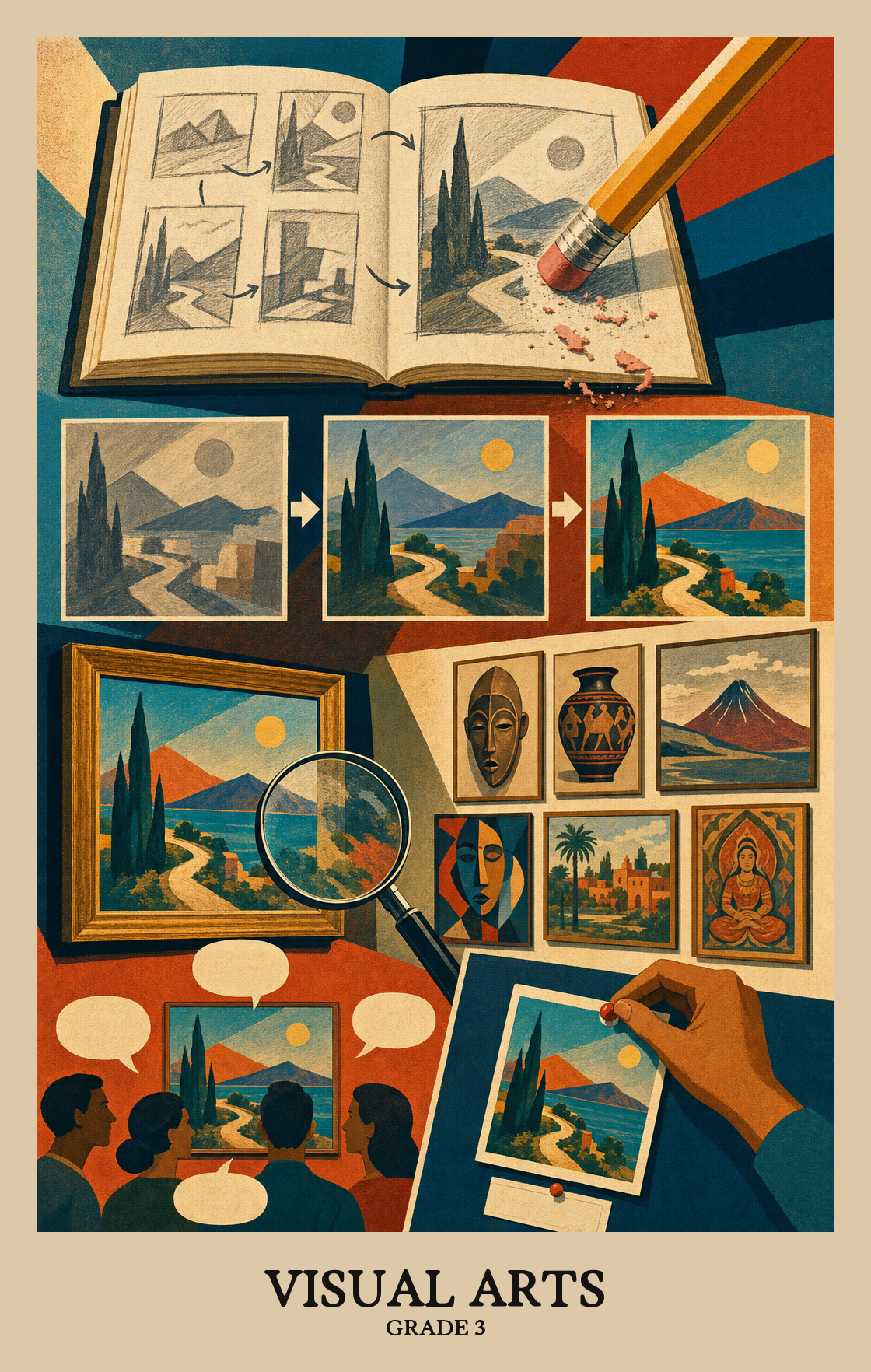
Students start the year using their own memories, family, and surroundings as starting points for art. They sketch ideas in a journal before picking one to turn into a finished piece.
Students practice with paint, clay, paper, and drawing tools. They learn how artists organize a picture so it feels balanced and how to fix something that is not working yet.
Students look at art from different cultures and time periods and talk about what they notice. They use those ideas to inspire their own pieces and connect art to history.
Students slow down and study artwork in detail. They share what they think a piece is about and back up their ideas with what they actually see in the image.
Students pick a finished piece, decide how to display it, and explain what they wanted to show. They also give kind, useful feedback on classmates' work using shared guidelines.
Students draw on things they already know and moments from their own life to make art that means something to them.
Students look at a piece of art and figure out when and where it came from, then explain how that background changes what the artwork means.
| Standard | Definition | Code |
|---|---|---|
| Synthesize and relate knowledge and personal experiences to make art | Students draw on things they already know and moments from their own life to make art that means something to them. | VA:Cn10.3 |
| Relate artistic ideas and works with societal, cultural | Students look at a piece of art and figure out when and where it came from, then explain how that background changes what the artwork means. | VA:Cn11.3 |
Students brainstorm ideas for artwork before they start making it. They think through what they want to create, sketch possibilities, and make choices about what their finished piece could look like.
Students plan and refine a piece of artwork by making choices about color, shape, and composition before calling it finished.
Students revisit a drawing or project, make changes based on feedback or their own eye, and decide when the work is finished.
| Standard | Definition | Code |
|---|---|---|
| Generate and conceptualize artistic ideas and work | Students brainstorm ideas for artwork before they start making it. They think through what they want to create, sketch possibilities, and make choices about what their finished piece could look like. | VA:Cr1.3 |
| Organize and develop artistic ideas and work | Students plan and refine a piece of artwork by making choices about color, shape, and composition before calling it finished. | VA:Cr2.3 |
| Refine and complete artistic work | Students revisit a drawing or project, make changes based on feedback or their own eye, and decide when the work is finished. | VA:Cr3.3 |
Students look at several pieces of their own artwork, talk about what makes each one strong, and choose which piece is ready to share with others.
Students practice and improve a piece of artwork to get it ready to share with others. That might mean adjusting colors, fixing details, or reworking a section until it looks the way they intended.
Students choose how to display their artwork so the viewer understands what they were trying to say. The arrangement and setting of the work are part of the message.
| Standard | Definition | Code |
|---|---|---|
| Analyze, interpret, and select artistic work for presentation | Students look at several pieces of their own artwork, talk about what makes each one strong, and choose which piece is ready to share with others. | VA:Pr4.3 |
| Develop and refine artistic techniques and work for presentation | Students practice and improve a piece of artwork to get it ready to share with others. That might mean adjusting colors, fixing details, or reworking a section until it looks the way they intended. | VA:Pr5.3 |
| Convey meaning through the presentation of artistic work | Students choose how to display their artwork so the viewer understands what they were trying to say. The arrangement and setting of the work are part of the message. | VA:Pr6.3 |
Students look closely at a piece of art and describe what they notice, from the colors and shapes to how the whole thing makes them feel.
Students look closely at a piece of artwork and explain what they think the artist was trying to say or show. They use details they see in the work to back up their thinking.
Students look at a piece of artwork and use specific questions or a checklist to decide what works well and what could be stronger. It's structured looking, not just "I like it."
| Standard | Definition | Code |
|---|---|---|
| Perceive and analyze artistic work | Students look closely at a piece of art and describe what they notice, from the colors and shapes to how the whole thing makes them feel. | VA:Re7.3 |
| Interpret intent and meaning in artistic work | Students look closely at a piece of artwork and explain what they think the artist was trying to say or show. They use details they see in the work to back up their thinking. | VA:Re8.3 |
| Apply criteria to evaluate artistic work | Students look at a piece of artwork and use specific questions or a checklist to decide what works well and what could be stronger. It's structured looking, not just "I like it." | VA:Re9.3 |
Students make art from their own ideas and experiences, then learn how to plan, refine, and finish a piece. They also talk about what art means, how it was made, and what they think of it. The year covers four big areas: creating, presenting, responding, and connecting.
Keep paper, pencils, and a few colors easy to grab. Ask students to sketch an idea, then try a second version that fixes one thing they didn't like. That habit of redoing and improving matters more than buying nice supplies.
Focus on effort and choices, not the finished picture. Ask what they were trying to show and what they might change next time. At this age, students are learning that art takes drafts, just like writing.
Plan in short cycles: brainstorm, sketch, make, revise, share. Three or four cycles a quarter give students room to practice refining work instead of treating every project as one and done. Save early sketches so students can see their own growth.
Students should describe what they see, guess what the artist might have meant, and say what they like or would change. Visiting a museum website or flipping through an art book together is plenty of practice. Ask open questions instead of quizzing them.
Planning before making, and giving useful feedback to a classmate. Many students jump straight to the final piece and freeze when asked to revise. Short, repeated practice with sketching options and simple critique sentence starters helps more than long lectures on technique.
Tie one artist or tradition to each making project. Students look at the work, talk about where it came from, then borrow one idea for their own piece. The connection sticks because students used it, not just read about it.
Students should be able to come up with an idea, make a rough plan, finish a piece, and explain their choices in a few sentences. They should also be able to look at another artwork and say something thoughtful about it. Confidence with the process matters more than skill with any one material.