Healthy habits at home and school
Students learn the basics of taking care of their bodies and minds. They cover sleep, food, hygiene, and feelings, and start to notice how daily choices affect how they feel.
These are the years health class shifts from simple rules like washing hands to thinking through real choices. Students learn how friends, family, and screens shape the way they eat, sleep, and feel. They practice talking through problems, setting a small goal, and walking through the steps of a decision before making it. By spring, students can name a trusted adult or resource to ask for help and explain one healthy habit they are working on and why.
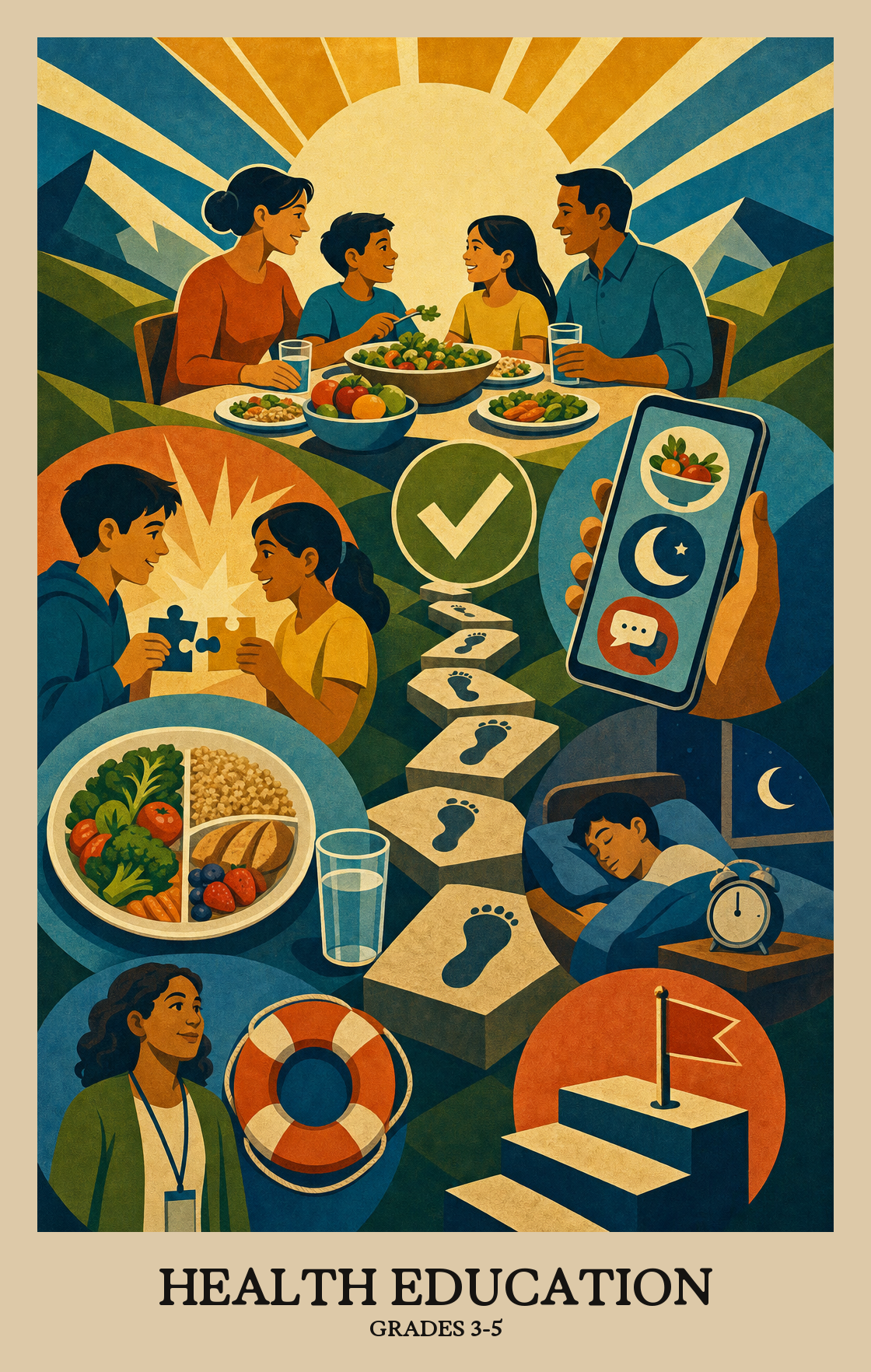
Students learn the basics of taking care of their bodies and minds. They cover sleep, food, hygiene, and feelings, and start to notice how daily choices affect how they feel.
Students look at how family, friends, ads, and screens push them toward certain choices. They practice spotting the difference between a good idea and a bad one.
Students learn where to turn when something feels wrong, from a trusted adult to a school nurse. They also practice telling a reliable website or source from a sketchy one.
Students practice saying no, asking for help, and working through a choice step by step. They also set a small health goal and track how it goes over a few weeks.
Students put it all together by sharing what they know with classmates and family. They make posters, give short talks, or write notes that encourage healthier habits at school and home.
Students take what they've learned about health, like handwashing, nutrition, or rest, and use that knowledge to make real choices that keep themselves and the people around them healthier.
Students learn to spot what shapes their health choices, like friends, ads, family habits, and media. They practice telling the difference between helpful influences and ones that push toward less healthy decisions.
Students learn to tell the difference between trustworthy health information and unreliable sources. They practice finding resources, like a school nurse, a doctor's office, or a reputable website, that give accurate help for real health questions.
Students practice how to speak up, listen, and respond in conversations that affect their health or someone else's. That might mean asking for help, saying no to something unsafe, or checking in on a friend.
Students practice a step-by-step process for making choices that protect their health and the health of people around them. They learn to think through options and pick what's safest and most helpful.
Students pick a health goal, like getting more sleep or being more active, and follow a plan to reach it. They also think about how their choices affect the people around them.
Students practice habits that keep themselves and the people around them healthy. That might mean washing hands, getting enough sleep, or speaking up when a friend needs help.
Students practice speaking up for healthy choices, for themselves and the people around them. That might mean encouraging a friend to drink water instead of soda, or asking an adult for help when something feels unsafe.
| Standard | Definition | Code |
|---|---|---|
| Use functional knowledge of health concepts to support health and well-being of… Grades 3-5 | Students take what they've learned about health, like handwashing, nutrition, or rest, and use that knowledge to make real choices that keep themselves and the people around them healthier. | FL-HE.1.3-5 |
| Analyze influences that affect health and well-being of self and others Grades 3-5 | Students learn to spot what shapes their health choices, like friends, ads, family habits, and media. They practice telling the difference between helpful influences and ones that push toward less healthy decisions. | FL-HE.2.3-5 |
| Access valid and reliable resources to support health and well-being of self… Grades 3-5 | Students learn to tell the difference between trustworthy health information and unreliable sources. They practice finding resources, like a school nurse, a doctor's office, or a reputable website, that give accurate help for real health questions. | FL-HE.3.3-5 |
| Use interpersonal communication skills to support health and well-being of self… Grades 3-5 | Students practice how to speak up, listen, and respond in conversations that affect their health or someone else's. That might mean asking for help, saying no to something unsafe, or checking in on a friend. | FL-HE.4.3-5 |
| Use a decision-making process to support health and well-being of self and… Grades 3-5 | Students practice a step-by-step process for making choices that protect their health and the health of people around them. They learn to think through options and pick what's safest and most helpful. | FL-HE.5.3-5 |
| Use a goal-setting process to support health and well-being of self and others Grades 3-5 | Students pick a health goal, like getting more sleep or being more active, and follow a plan to reach it. They also think about how their choices affect the people around them. | FL-HE.6.3-5 |
| Demonstrate practices and behaviors to support health and well-being of self… Grades 3-5 | Students practice habits that keep themselves and the people around them healthy. That might mean washing hands, getting enough sleep, or speaking up when a friend needs help. | FL-HE.7.3-5 |
| Advocate to promote health and well-being of self and others Grades 3-5 | Students practice speaking up for healthy choices, for themselves and the people around them. That might mean encouraging a friend to drink water instead of soda, or asking an adult for help when something feels unsafe. | FL-HE.8.3-5 |
Students learn how to take care of their bodies and minds in everyday situations. That covers food choices, sleep, hygiene, safety, feelings, and friendships. The focus shifts from just naming habits to actually practicing them and explaining why they matter.
Talk through small choices as they come up: what to pack for lunch, when to put the phone down, how to handle a hard day. Let students help plan a meal or set a bedtime. Five minutes of real conversation does more than a lecture.
Students should be able to set a simple health goal, name people and websites they trust for health information, and walk through a basic decision step by step. They should also speak up for themselves and others in safe, respectful ways.
Students learn to check who wrote something and why before believing it. At home, look up an answer together instead of just handing over a phone. Point out the difference between a doctor's site, a news story, and a random video.
Start with personal health basics like sleep, hygiene, and nutrition, then move into feelings and friendships, then safety and decision-making. Save advocacy and goal-setting projects for later in the year, once students have the vocabulary and confidence to use them.
Decision-making and goal-setting tend to stay shallow without repeated practice. Students name a goal but skip the steps to reach it. Build in short check-ins every few weeks so students revisit a goal, adjust it, and explain what worked.
Students start noticing how ads, shows, friends, and family shape what they eat, wear, and believe. Use short clips or product packages and ask what the message is and who benefits. Tie it back to a real choice students make that week.
Listen first and keep the reaction calm, even if the question catches you off guard. Give a short honest answer and offer to find out more together. Students who feel heard at home are more likely to ask for help before a small worry grows.
Lessons now spend less time on memorizing food groups and more time on real skills like asking for help, refusing pressure, and setting a goal. Students practice talking through situations out loud. The aim is habits students actually use, not facts they recite.