Knowing yourself
Students start the year by noticing their own feelings and what sets them off. They learn to name strong emotions and talk about what they are good at and what is still hard.
These are the years students move from naming feelings to managing them on their own. Students learn to notice when they are frustrated or stressed and try strategies like taking a breath, asking for help, or breaking a task into smaller steps. They also start to see situations from a classmate's point of view, especially when someone is different from them. By spring, students can talk through a conflict with a friend instead of shutting down or lashing out.
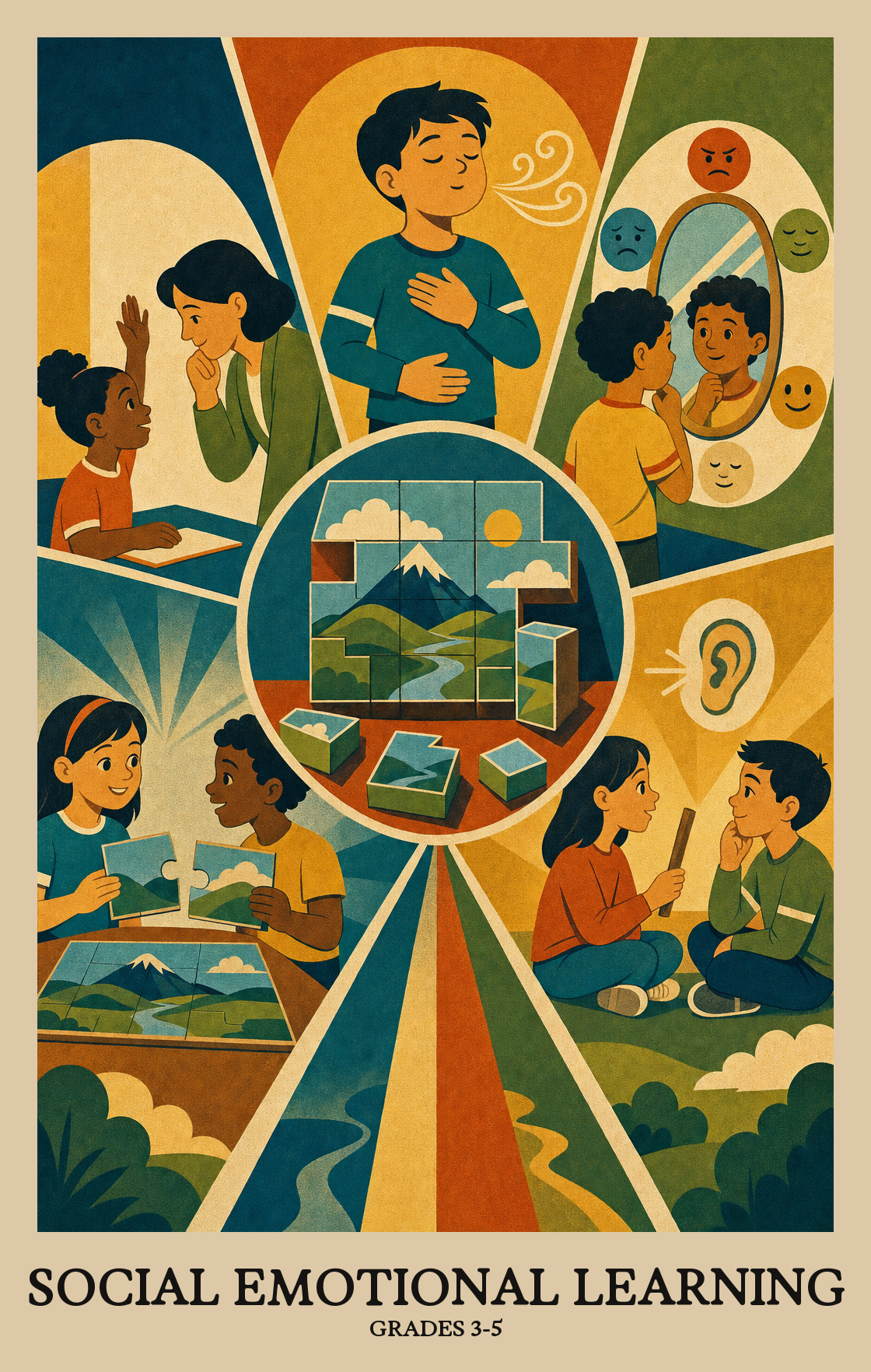
Students start the year by noticing their own feelings and what sets them off. They learn to name strong emotions and talk about what they are good at and what is still hard.
Students practice calming down before reacting, staying organized with their stuff, and sticking with a task when it gets frustrating. Parents may notice fewer meltdowns over homework.
Students learn to listen to classmates whose lives look different from their own and notice when someone needs help. They also learn which adults at home and school to go to when something is wrong.
Students work on getting along in groups, sharing ideas without taking over, and working out disagreements without it turning into a fight. They practice asking for help and offering it.
Students wrap up the year by thinking before they act. They weigh what could go right or wrong and consider how a choice affects the people around them.
Students learn to name their own feelings and notice how those feelings shape their choices. They also take stock of what they are good at and where they need to grow.
Students practice pausing before reacting, handling stress, and staying organized so they can follow through on their own goals.
Students practice seeing situations from someone else's point of view, including people whose backgrounds differ from their own. They also learn to spot the adults and resources around them at school, at home, and in their community who can help.
Students practice getting along with different kinds of people by listening, working together on shared tasks, and working through disagreements. They also learn when to ask for help and when to offer it.
Students practice making choices that are fair and kind, then think through what might happen as a result. This covers everyday decisions at school and with friends, weighing how each choice affects themselves and the people around them.
| Standard | Definition | Code |
|---|---|---|
| The abilities to understand one's own emotions, thoughts Grades 3-5 | Students learn to name their own feelings and notice how those feelings shape their choices. They also take stock of what they are good at and where they need to grow. | FL-SEL.1.3-5 |
| The abilities to manage emotions, thoughts Grades 3-5 | Students practice pausing before reacting, handling stress, and staying organized so they can follow through on their own goals. | FL-SEL.2.3-5 |
| The abilities to understand the perspectives of and empathise with others… Grades 3-5 | Students practice seeing situations from someone else's point of view, including people whose backgrounds differ from their own. They also learn to spot the adults and resources around them at school, at home, and in their community who can help. | FL-SEL.3.3-5 |
| The abilities to establish and maintain healthy and supportive relationships… Grades 3-5 | Students practice getting along with different kinds of people by listening, working together on shared tasks, and working through disagreements. They also learn when to ask for help and when to offer it. | FL-SEL.4.3-5 |
| The abilities to make caring and constructive choices about personal behavior… Grades 3-5 | Students practice making choices that are fair and kind, then think through what might happen as a result. This covers everyday decisions at school and with friends, weighing how each choice affects themselves and the people around them. | FL-SEL.5.3-5 |
Students learn to name what they are feeling, calm themselves down when upset, see things from someone else's point of view, get along with classmates, and think before they act. The goal is steadier days at school and at home, not perfect behavior.
When students melt down over homework or a friend, help them name the feeling first, then take a few slow breaths before talking it through. Short check-ins at dinner about a hard moment from the day build the same skill teachers are practicing in class.
Start with self-awareness and naming emotions in the first weeks, since students need that vocabulary before anything else works. Move into self-management and relationship skills once routines are set, and save the heavier work on perspective-taking and decision-making for later in the year.
Ask specific questions instead of broad ones, like who they sat with at lunch or what was the hardest part of the day. Students this age often feel stress before they can explain it, so naming it together is half the work.
Impulse control and conflict resolution come up again and again, especially after long weekends and around friendship shifts. Plan to revisit calming strategies and how to repair a problem with a classmate several times across the year rather than as a one-time lesson.
Listen first and let students vent before jumping to fix it. Then ask what they want to happen next and practice the actual words they could say. Stepping in directly is sometimes needed, but students grow more when they try the conversation themselves.
Students can name their emotions, use a strategy to calm down without an adult prompt, see why a classmate might feel differently, and think through a choice before making it. They will not do this perfectly, but the strategies should be familiar and used on their own.
Watch for signs that students can ask for help when stuck, recover from a bad moment within the same day, and stick with a goal across a week. Those habits matter more than whether they have a big group of friends.