Sparking ideas from real life
Students start the year by turning their own experiences and interests into ideas for videos, photos, animations, or sound projects. They learn that a good media project begins with a real thought worth sharing.
This is the year students start making media art on purpose, not by accident. Students plan a short video, photo, or sound piece around an idea that matters to them, then revise it before sharing. They look at how music, images, and stories from different places shape what an audience feels. By spring, students can show a finished piece, explain the choices they made, and say what worked.
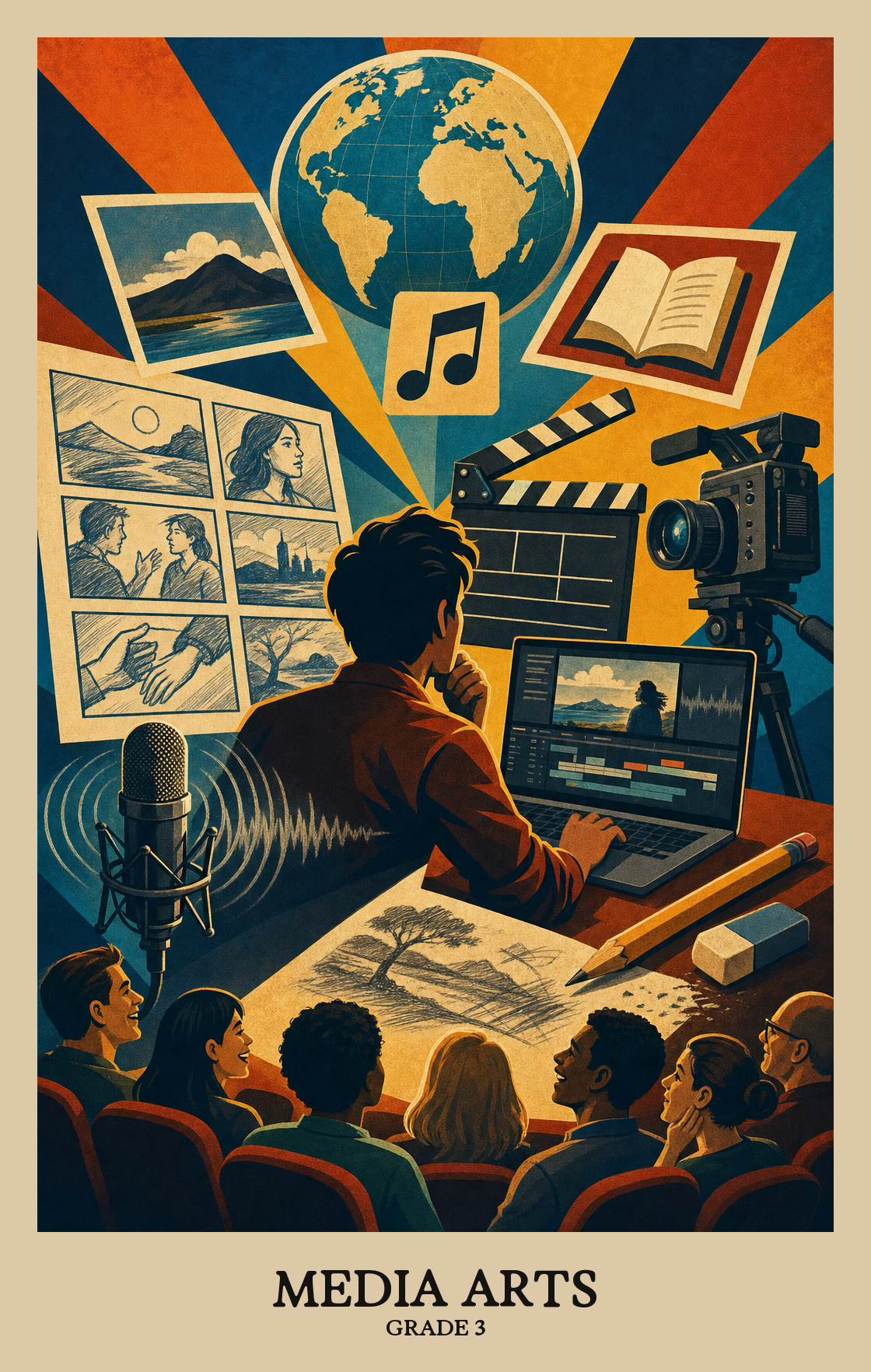
Students start the year by turning their own experiences and interests into ideas for videos, photos, animations, or sound projects. They learn that a good media project begins with a real thought worth sharing.
Students plan and put together short media pieces using simple tools like cameras, drawing apps, or recording software. They learn to organize their ideas before they start making, then improve the work as they go.
Students practice the small skills that make a project look and sound better, such as steady framing, clean audio, and clear timing. They pick which pieces are ready to share with an audience.
Students present finished projects to classmates, family, or a school audience. They think about how their choices change what viewers notice and feel, and what message comes through.
Students watch, listen to, and talk about media made by classmates and by others. They explain what the maker might have meant and use simple guidelines to say what works well and what could be stronger.
Students connect what they have made to media they see at home, in their community, and across cultures and history. They notice how stories and images change depending on who makes them and why.
Students connect something from their own life to a media arts project, using that personal experience to shape what they make and how they make it.
Students look at a photo, video, or artwork and connect it to when and where it was made. They explain what the work tells them about the people or place it came from.
| Standard | Definition | Code |
|---|---|---|
| Synthesize and relate knowledge and personal experiences to make art | Students connect something from their own life to a media arts project, using that personal experience to shape what they make and how they make it. | MA:Cn10.3 |
| Relate artistic ideas and works with societal, cultural | Students look at a photo, video, or artwork and connect it to when and where it was made. They explain what the work tells them about the people or place it came from. | MA:Cn11.3 |
Students brainstorm ideas for media art projects, like a short video, a digital drawing, or a photo story, before they start making anything.
Students plan and arrange their media art project before making it, thinking through how images, sound, or movement will fit together to tell a story or share an idea.
Students revisit a media project, make changes based on feedback or their own ideas, and decide when it is finished.
| Standard | Definition | Code |
|---|---|---|
| Generate and conceptualize artistic ideas and work | Students brainstorm ideas for media art projects, like a short video, a digital drawing, or a photo story, before they start making anything. | MA:Cr1.3 |
| Organize and develop artistic ideas and work | Students plan and arrange their media art project before making it, thinking through how images, sound, or movement will fit together to tell a story or share an idea. | MA:Cr2.3 |
| Refine and complete artistic work | Students revisit a media project, make changes based on feedback or their own ideas, and decide when it is finished. | MA:Cr3.3 |
Students choose a piece of media work to share and explain why they picked it. They think about what the work communicates and whether it's ready for an audience.
Students practice and improve a media arts project, like a short video or photo series, until it is ready to share with an audience.
Students choose how to share a media project (a video, photo, or digital image) so the audience understands the idea behind it. The presentation itself is part of the message.
| Standard | Definition | Code |
|---|---|---|
| Analyze, interpret, and select artistic work for presentation | Students choose a piece of media work to share and explain why they picked it. They think about what the work communicates and whether it's ready for an audience. | MA:Pr4.3 |
| Develop and refine artistic techniques and work for presentation | Students practice and improve a media arts project, like a short video or photo series, until it is ready to share with an audience. | MA:Pr5.3 |
| Convey meaning through the presentation of artistic work | Students choose how to share a media project (a video, photo, or digital image) so the audience understands the idea behind it. The presentation itself is part of the message. | MA:Pr6.3 |
Students look closely at a media artwork (a short video, a website, a photo collage) and explain what they notice and why the creator may have made those choices.
Students look at a media artwork, such as a photo, video, or animation, and explain what the creator was trying to say and why it feels that way.
Students look at a piece of media art and decide if it works, using a simple set of criteria like clarity, effort, or how well it fits the purpose.
| Standard | Definition | Code |
|---|---|---|
| Perceive and analyze artistic work | Students look closely at a media artwork (a short video, a website, a photo collage) and explain what they notice and why the creator may have made those choices. | MA:Re7.3 |
| Interpret intent and meaning in artistic work | Students look at a media artwork, such as a photo, video, or animation, and explain what the creator was trying to say and why it feels that way. | MA:Re8.3 |
| Apply criteria to evaluate artistic work | Students look at a piece of media art and decide if it works, using a simple set of criteria like clarity, effort, or how well it fits the purpose. | MA:Re9.3 |
Media arts means making things like short videos, photo stories, simple animations, podcasts, and digital drawings. Students learn to plan an idea, put it together with a tool like a tablet or camera, and share it with an audience.
By spring, most students can plan a short project, like a 30-second video or a slideshow story, and finish it from start to end. They can also explain what their project is about and what they would change next time.
A phone or tablet is plenty. Ask a child to film a 20-second how-to video, take three photos that tell a story, or record a short audio review of a favorite book. Five minutes of planning before they hit record makes a big difference.
No. The thinking matters more than the tool. Sketching a plan on paper, picking which photo is best, or deciding what music fits a mood all count as media arts practice and take very little screen time.
Start with short, low-stakes projects so students get comfortable with the tools and with sharing work. Build toward longer projects in the spring that ask students to plan, revise, and present with a clear purpose for a real audience.
Planning before producing is the biggest one. Students want to jump straight to filming or clicking. Time spent on storyboards, shot lists, or simple sketches pays off later when students revise and finish a project instead of abandoning it.
Use a short, shared checklist so feedback stays about the work, not the maker. Questions like what is this about, what worked, and what is one change to try give students a steady way to respond to each other's projects.
A book report can become a short trailer. A science observation can become a photo journal. A social studies topic can become an interview. Pointing out these links at home or in class helps students see media arts as a way to show what they know.
Students are ready when they can plan a small project, follow it through, revise based on feedback, and talk about choices they made. Finishing matters as much as starting, so look for projects that reach a clear ending.