Moving safely as a class
Students start the year learning how to move around the gym without bumping into each other. They practice listening for signals, sharing space, and following the rules of group games.
This is the year movement gets more skillful and more social. Students start combining basic moves like skipping, throwing, catching, and dribbling into real games, and they learn simple ideas about staying fit and healthy. They also practice taking turns, cooperating with a partner, and playing fair when things get competitive. By spring, students can join a group game, follow the rules, and explain one reason why being active is good for them.
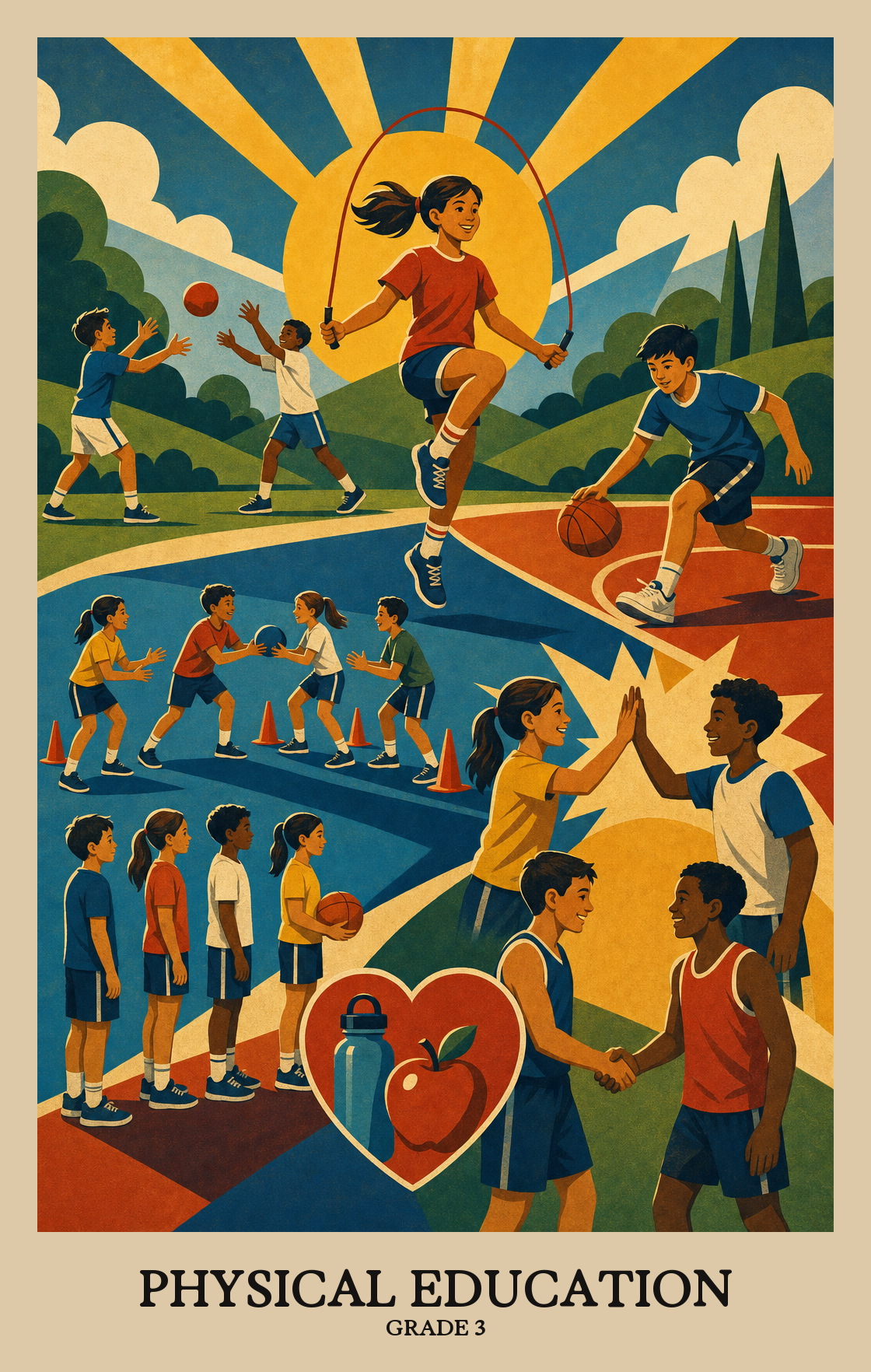
Students start the year learning how to move around the gym without bumping into each other. They practice listening for signals, sharing space, and following the rules of group games.
Students work on the basic ways the body moves. They run, skip, hop, jump, and balance, and they start to notice what makes each movement feel smooth and controlled.
Students practice using their hands and feet with balls and other equipment. They aim at targets, pass to a partner, and start to track how their accuracy improves with practice.
Students play small-sided games that depend on cooperation. They take turns, encourage teammates, handle wins and losses, and talk through problems instead of arguing.
Students learn why exercise matters and how their body feels during activity. They notice their heart rate, talk about why warm-ups help, and pick activities they enjoy outside of school.
Students practice moving their bodies in different ways: running, jumping, balancing, throwing, and catching. Building these skills early makes it easier to stay active and join in sports or games for years to come.
Students connect what they know about how the body moves and stays healthy to make better choices during physical activity. A third grader doing this might adjust their pace on a run or change their form while jumping.
Students practice working with others during movement activities. That means taking turns, listening, and being respectful whether they win, lose, or sit out.
Students name what physical activity does for their body and mood, then practice making choices that keep them moving. The goal is building a habit, not just completing a class requirement.
| Standard | Definition | Code |
|---|---|---|
| Develop a variety of motor skills, including locomotor, non-locomotor | Students practice moving their bodies in different ways: running, jumping, balancing, throwing, and catching. Building these skills early makes it easier to stay active and join in sports or games for years to come. | FL-PE.1.3 |
| Apply knowledge related to movement, performance | Students connect what they know about how the body moves and stays healthy to make better choices during physical activity. A third grader doing this might adjust their pace on a run or change their form while jumping. | FL-PE.2.3 |
| Develop social skills through movement, including respect for self and others… | Students practice working with others during movement activities. That means taking turns, listening, and being respectful whether they win, lose, or sit out. | FL-PE.3.3 |
| Develop personal skills, identify personal benefits of movement | Students name what physical activity does for their body and mood, then practice making choices that keep them moving. The goal is building a habit, not just completing a class requirement. | FL-PE.4.3 |
Students should run, skip, jump, dodge, and balance with control. They should throw, catch, kick, and strike a ball with reasonable accuracy. They should also follow rules, take turns, and play with a partner or small group without an adult constantly stepping in.
Ten minutes of active play counts. Play catch in the yard, kick a ball back and forth, jump rope, or set up a hopscotch grid with chalk. The goal is steady practice with throwing, catching, kicking, and balancing, not a structured workout.
Students learn that the heart beats faster during active play, that muscles get stronger with use, and that stretching helps the body move. They are not training for fitness tests. They are learning to notice how their body feels during and after movement.
A common path starts with locomotor skills like running, skipping, and galloping, then moves to ball-handling with hands and feet, then to striking with paddles and short bats. Cooperative games and small-sided play run across the whole year so social skills build alongside motor skills.
Coordination at this age varies a lot, and many students catch up with practice. Short, low-pressure repetitions at home help more than drills. Toss a rolled sock into a laundry basket, walk along a curb for balance, or play tag in the yard.
Catching a ball with the hands rather than trapping it against the chest, kicking with the laces instead of the toe, and striking with a paddle while tracking a moving ball. Plan to revisit these across several units rather than teach them once and move on.
Students rotate partners often, share equipment, and learn quick routines for disagreements during games. Small-sided games of two or three players give more chances to practice taking turns and encouraging teammates than full-class games do.
About an hour a day of active play is a good target, broken into shorter chunks. Walking to the park, riding a bike, playing tag, or shooting baskets all count. The aim is to build a habit of choosing to move.
Students should be able to combine skills, like running and then kicking a ball, or catching and then throwing to a partner. They should follow game rules with reminders, play fairly in small groups, and name one or two reasons that being active is good for them.