Moving safely together
Students learn how to move around the gym without bumping into classmates. They practice listening for signals, finding their own space, and following simple safety rules during games.
This is the year students learn that their body is something they can control on purpose. Students practice the basic movements that everything else is built on: running, jumping, hopping, balancing, and tossing or catching a ball. They also start learning how to share space safely, take turns, and follow simple directions during games. By spring, students can move through a gym or playground with control and play a simple group game without bumping into classmates.
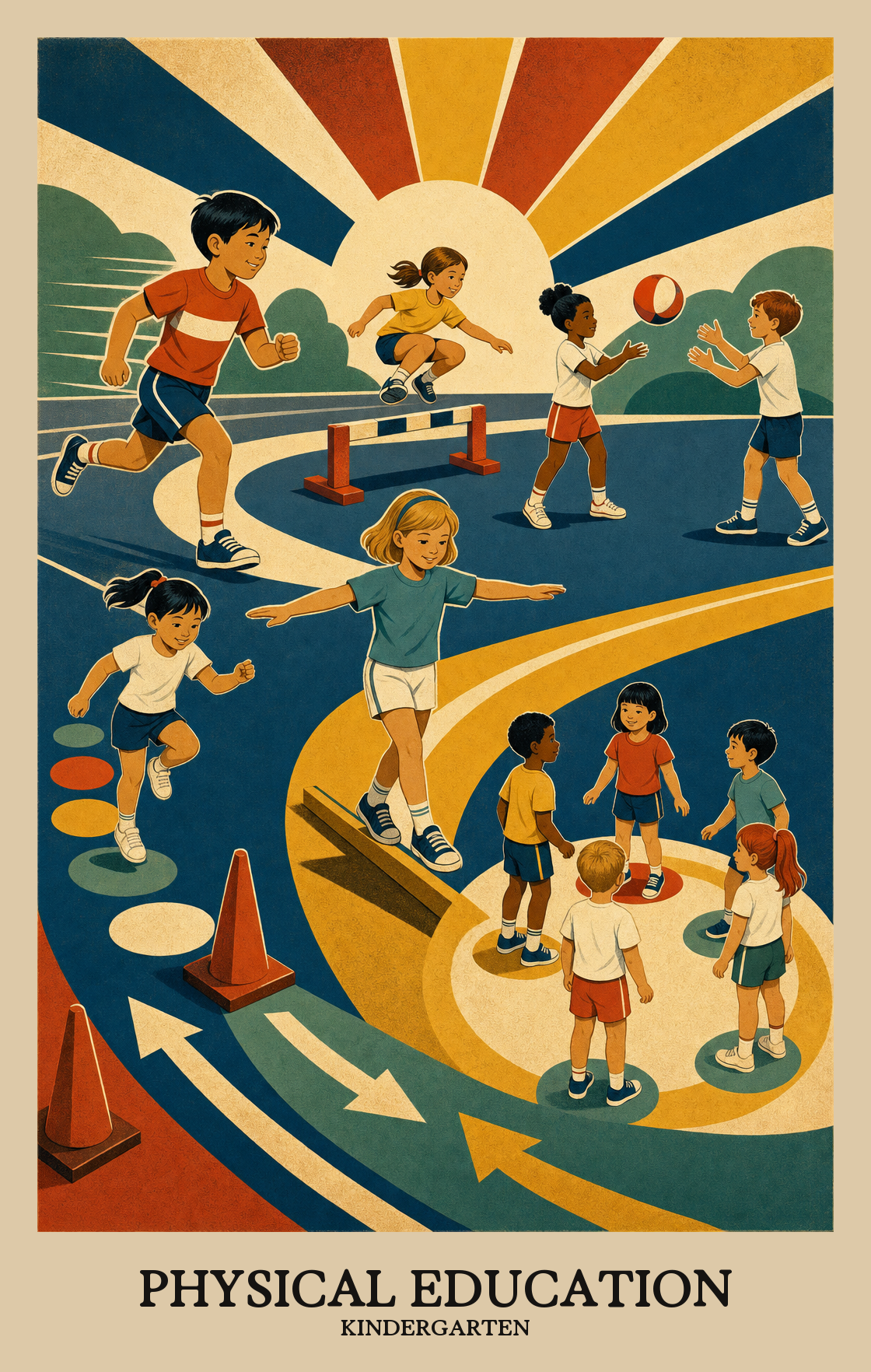
Students learn how to move around the gym without bumping into classmates. They practice listening for signals, finding their own space, and following simple safety rules during games.
Students try out the basic ways the body travels. They walk, run, hop, skip, and gallop in different directions and at different speeds during games and warm-ups.
Students start working with balls, beanbags, and other equipment. They practice tossing, catching, rolling, and kicking, getting more comfortable each time.
Students play simple group games that ask them to take turns, share equipment, and cheer on classmates. They learn what good sportsmanship looks like at this age.
Students talk about why moving the body feels good and what their heart and muscles do during activity. They notice how exercise, water, and rest fit together.
Students practice moving their bodies in different ways, like running, jumping, balancing, and throwing. Building these basic movement skills gives them the foundation to stay active as they grow.
Students learn basic ideas about how their bodies move and stay healthy, then put those ideas to work during activities. Knowing why to bend their knees when jumping or why moving fast makes the heart beat harder helps them move better and feel better.
Students practice taking turns, listening to classmates, and working together during movement activities. They learn how to treat others fairly and behave responsibly in a group.
Students practice basic movement skills and start to notice how moving their body feels good. The goal is building an early habit of staying active.
| Standard | Definition | Code |
|---|---|---|
| Develop a variety of motor skills, including locomotor, non-locomotor | Students practice moving their bodies in different ways, like running, jumping, balancing, and throwing. Building these basic movement skills gives them the foundation to stay active as they grow. | FL-PE.1.k |
| Apply knowledge related to movement, performance | Students learn basic ideas about how their bodies move and stay healthy, then put those ideas to work during activities. Knowing why to bend their knees when jumping or why moving fast makes the heart beat harder helps them move better and feel better. | FL-PE.2.k |
| Develop social skills through movement, including respect for self and others… | Students practice taking turns, listening to classmates, and working together during movement activities. They learn how to treat others fairly and behave responsibly in a group. | FL-PE.3.k |
| Develop personal skills, identify personal benefits of movement | Students practice basic movement skills and start to notice how moving their body feels good. The goal is building an early habit of staying active. | FL-PE.4.k |
Students spend most of class moving. They run, skip, hop, gallop, balance on one foot, throw and catch with both hands, and kick a ball. The focus is on trying skills, not winning games or keeping score.
Give students time to play outside every day. Toss a soft ball back and forth, set up a hopping path with sidewalk chalk, or race to the mailbox. Ten minutes of active play a few times a day builds the skills PE class is working on.
Praise effort, not results. Catching a ball or skipping takes practice, and kindergarten is where students first try these skills. Play together so it feels like fun, and let students see adults missing catches and laughing it off.
Start with locomotor skills like walking, running, and jumping in the first months. Layer in balance and non-locomotor work like bending and twisting. Save throwing, catching, and kicking for later in the year once students can control their bodies in open space.
Skipping, galloping, and catching with the hands instead of the body trip up most kindergarten students. Build in short practice rounds at the start of class throughout the year rather than teaching them once and moving on.
Teach a few simple class rules early: take turns, use kind words, keep hands to yourself. Practice them like skills, with short reminders and lots of repetition. Pair quieter students with a partner before moving to bigger group games.
Run, jump, skip, and gallop without falling. Throw a ball toward a target, catch a soft ball with the hands, and kick a ball forward. Students should also be able to take turns, follow simple directions, and name one reason moving feels good.
Sneakers that fasten securely and clothes students can move and stretch in are enough. Skip sandals, boots, and slippery soles on PE days. A water bottle helps on warm Florida afternoons.