Trying out media tools
Students get their first hands-on time with cameras, tablets, drawing apps, and recording tools. They learn how to start, stop, and save their work, and they share ideas they want to make.
This is the year students discover that pictures, sounds, and videos are things people make on purpose. Students come up with their own ideas and turn them into simple media projects, like a drawing, a photo, or a short recording. They share their work with the class and talk about what other people's pictures and videos might mean. By spring, students can finish a small project and explain what they were trying to show.
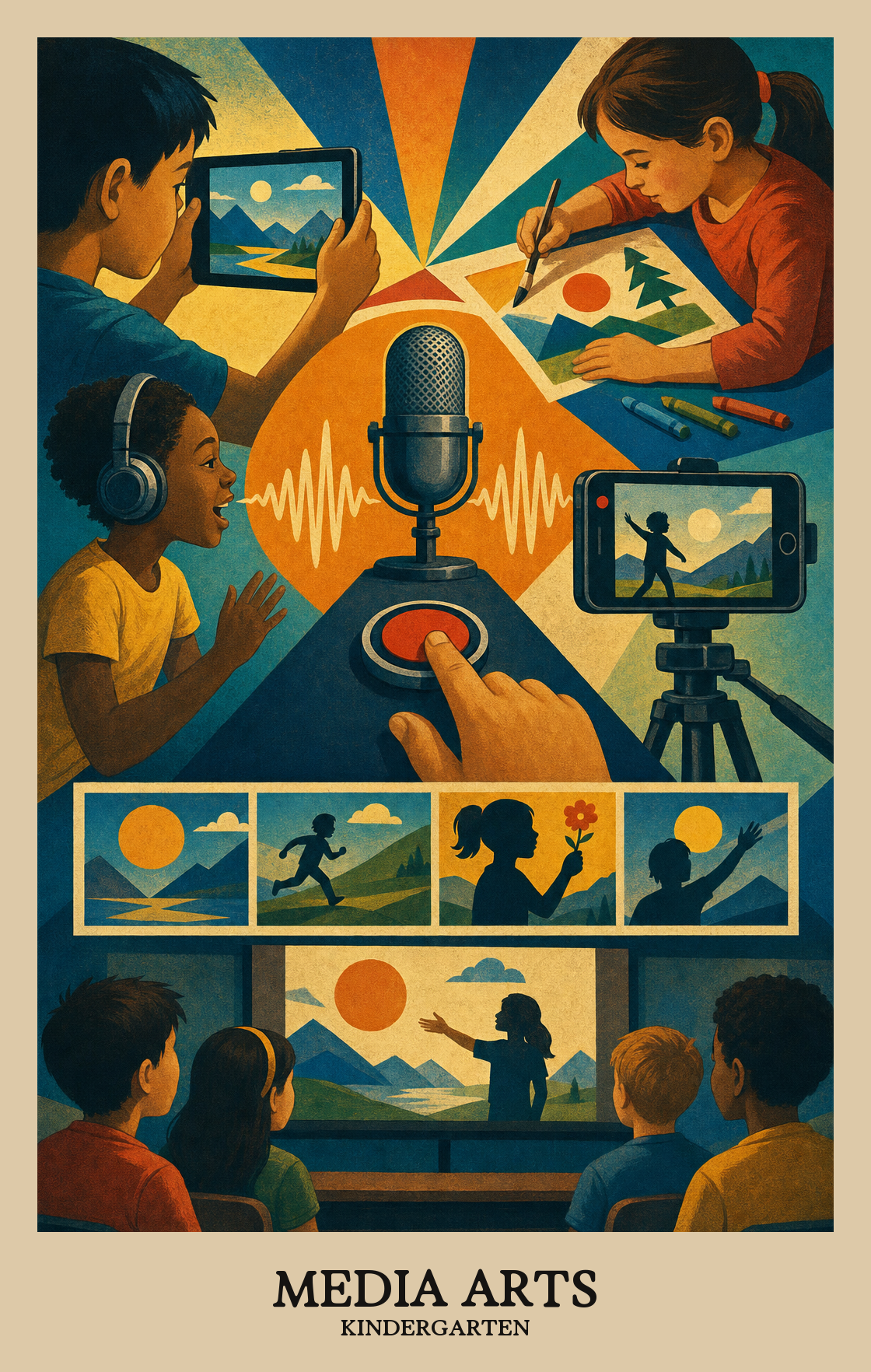
Students get their first hands-on time with cameras, tablets, drawing apps, and recording tools. They learn how to start, stop, and save their work, and they share ideas they want to make.
Students put their ideas into short projects like a photo, a drawing on a screen, or a quick sound clip. They practice arranging pieces on a page or screen so the project shows what they meant.
Students pick a favorite project and get it ready to show classmates or family. They practice telling the small story behind the piece and what they want viewers to notice.
Students watch, listen to, and look at media projects made by classmates and others. They say what they see, guess what the maker was trying to show, and tell what they liked and why.
Students tie their projects to things they know from home, school, and stories they have heard. They notice that pictures, videos, and sounds come from real people and real places.
Students connect something they already know or have done to create a simple media artwork. A drawing, photo, or video can start with a memory or idea from everyday life.
Students look at a piece of art and talk about where it came from: who made it, when, and why. That connection helps them understand what the art means.
| Standard | Definition | Code |
|---|---|---|
| Synthesize and relate knowledge and personal experiences to make art | Students connect something they already know or have done to create a simple media artwork. A drawing, photo, or video can start with a memory or idea from everyday life. | MA:Cn10.k |
| Relate artistic ideas and works with societal, cultural | Students look at a piece of art and talk about where it came from: who made it, when, and why. That connection helps them understand what the art means. | MA:Cn11.k |
Students come up with ideas for simple media projects, like deciding what to draw, photograph, or record before they start making something.
Students arrange pictures, sounds, or simple digital elements to build a short media project, like a drawing turned into a slideshow or a recorded story.
Students look at a media project they started and decide what to change before calling it finished. They practice the habit of improving their own work.
| Standard | Definition | Code |
|---|---|---|
| Generate and conceptualize artistic ideas and work | Students come up with ideas for simple media projects, like deciding what to draw, photograph, or record before they start making something. | MA:Cr1.k |
| Organize and develop artistic ideas and work | Students arrange pictures, sounds, or simple digital elements to build a short media project, like a drawing turned into a slideshow or a recorded story. | MA:Cr2.k |
| Refine and complete artistic work | Students look at a media project they started and decide what to change before calling it finished. They practice the habit of improving their own work. | MA:Cr3.k |
Students choose which of their media art projects to share with others, explaining why they picked that one over the rest.
Students practice and improve a piece of media work, like a drawing or short video, until it is ready to share with an audience.
Students share a drawing, photo, or video they made and talk about what they wanted it to show. The work itself tells a story, and students explain the choice behind it.
| Standard | Definition | Code |
|---|---|---|
| Analyze, interpret, and select artistic work for presentation | Students choose which of their media art projects to share with others, explaining why they picked that one over the rest. | MA:Pr4.k |
| Develop and refine artistic techniques and work for presentation | Students practice and improve a piece of media work, like a drawing or short video, until it is ready to share with an audience. | MA:Pr5.k |
| Convey meaning through the presentation of artistic work | Students share a drawing, photo, or video they made and talk about what they wanted it to show. The work itself tells a story, and students explain the choice behind it. | MA:Pr6.k |
Students look at photos, videos, or simple animations and describe what they notice. They share what they see before saying what they think it means.
Students look at a photo, video, or drawing and say what they think the person who made it was trying to show or say.
Students look at a drawing, video, or photo and say what they like about it and why. They practice giving a reason, not just a feeling.
| Standard | Definition | Code |
|---|---|---|
| Perceive and analyze artistic work | Students look at photos, videos, or simple animations and describe what they notice. They share what they see before saying what they think it means. | MA:Re7.k |
| Interpret intent and meaning in artistic work | Students look at a photo, video, or drawing and say what they think the person who made it was trying to show or say. | MA:Re8.k |
| Apply criteria to evaluate artistic work | Students look at a drawing, video, or photo and say what they like about it and why. They practice giving a reason, not just a feeling. | MA:Re9.k |
Media arts is making things with cameras, tablets, simple software, sound recorders, and printed images. At this age, students try out tools, take pictures, record short sounds or videos, and put pieces together to tell a small story or share an idea.
Students should come up with an idea for a picture, sound, or short video, make it with help, and share it with the class. They should also look at someone else's work and say what they notice and what it might mean.
Hand over a phone or tablet for five minutes and ask students to take three pictures of something they love. Talk about why they picked each shot. Recording a short voice memo of a story they made up counts too.
No. A phone camera, a free drawing app, a voice recorder, and paper for storyboards cover everything for this age. The point is the thinking behind the picture or sound, not the tool.
Start with exploring one tool at a time, such as the camera, then drawing apps, then sound. Move from single images to short sequences by winter. By spring, students can plan a small project, make it, and present it to classmates.
Two things tend to stick slowly: planning before making, and finishing a piece instead of restarting. Short planning sheets with three boxes for beginning, middle, and end help. So does setting a clear stopping point before students touch a device.
Ready students can name what they want to make, choose a tool, work on it across more than one sitting, and tell a classmate what their piece is about. They can also point to something they like in another student's work and say why.
This is normal at five. Praise one specific choice they made, such as the close-up shot or the loud part of the sound. Ask what they want to change next time instead of letting them scrap the whole piece.