Getting started with art tools
Students learn how to use crayons, markers, paint, and scissors with care. They practice safe habits and start sharing ideas they want to draw or build.
This is the year art class moves from playing with materials to making art on purpose. Students draw from their own lives and from stories they know, then pick colors, shapes, and tools that fit the idea. They also start talking about art, sharing what they see in a picture and what they think the artist meant. By spring, they can finish a piece, hang it up, and explain what it is about.
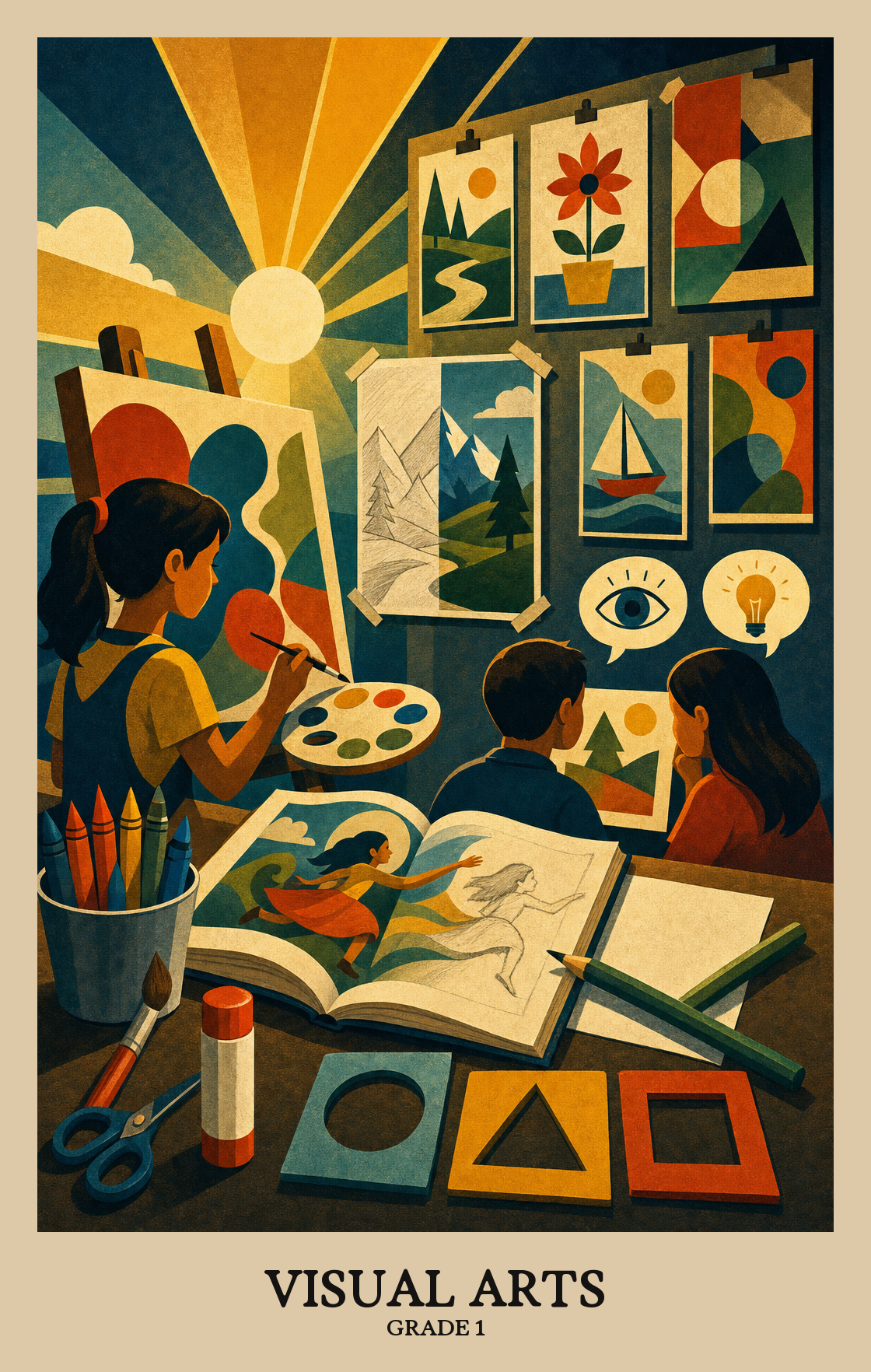
Students learn how to use crayons, markers, paint, and scissors with care. They practice safe habits and start sharing ideas they want to draw or build.
Students pull from things they know, like family, pets, and places they go, to make their own pictures. They notice lines, shapes, and colors in the world around them.
Students look at artwork made by people from different times and cultures. They talk about what they see and connect it to stories or holidays they recognize.
Students pick a favorite piece, add finishing touches, and get it ready to display. They explain what their art is about and what they want others to notice.
Students draw on things they already know and moments from their own life to make art. A memory, a favorite place, or something learned in class can become the starting point for a drawing or painting.
Students look at artwork and talk about when it was made, who made it, and what was happening in the world at that time. That context helps them understand why the work looks the way it does.
| Standard | Definition | Code |
|---|---|---|
| Synthesize and relate knowledge and personal experiences to make art | Students draw on things they already know and moments from their own life to make art. A memory, a favorite place, or something learned in class can become the starting point for a drawing or painting. | VA:Cn10.1 |
| Relate artistic ideas and works with societal, cultural | Students look at artwork and talk about when it was made, who made it, and what was happening in the world at that time. That context helps them understand why the work looks the way it does. | VA:Cn11.1 |
Students come up with ideas for their own artwork. They think about what they want to make before they start drawing, painting, or building.
Students take a first sketch or idea and work through it, making choices about color, shape, and arrangement until the artwork feels finished.
Students look at their own artwork, decide what to fix or finish, and make changes before calling it done.
| Standard | Definition | Code |
|---|---|---|
| Generate and conceptualize artistic ideas and work | Students come up with ideas for their own artwork. They think about what they want to make before they start drawing, painting, or building. | VA:Cr1.1 |
| Organize and develop artistic ideas and work | Students take a first sketch or idea and work through it, making choices about color, shape, and arrangement until the artwork feels finished. | VA:Cr2.1 |
| Refine and complete artistic work | Students look at their own artwork, decide what to fix or finish, and make changes before calling it done. | VA:Cr3.1 |
Students choose which of their drawings or artwork to share with others, and explain why that piece feels ready to show.
Students practice a drawing or craft project more than once, improving details before sharing it with others.
Students choose how to display a drawing or artwork so viewers understand what it means or how it feels. The way a piece is shown is part of the message.
| Standard | Definition | Code |
|---|---|---|
| Analyze, interpret, and select artistic work for presentation | Students choose which of their drawings or artwork to share with others, and explain why that piece feels ready to show. | VA:Pr4.1 |
| Develop and refine artistic techniques and work for presentation | Students practice a drawing or craft project more than once, improving details before sharing it with others. | VA:Pr5.1 |
| Convey meaning through the presentation of artistic work | Students choose how to display a drawing or artwork so viewers understand what it means or how it feels. The way a piece is shown is part of the message. | VA:Pr6.1 |
Students look closely at a piece of art and talk about what they notice, like colors, shapes, or how the artwork makes them feel.
Students look at a piece of art and explain what they think the artist was trying to say or show. They use details in the artwork to back up their thinking.
Students look at their own artwork or a classmate's and decide what works well and what could change, using a simple set of questions or rules to explain their thinking.
| Standard | Definition | Code |
|---|---|---|
| Perceive and analyze artistic work | Students look closely at a piece of art and talk about what they notice, like colors, shapes, or how the artwork makes them feel. | VA:Re7.1 |
| Interpret intent and meaning in artistic work | Students look at a piece of art and explain what they think the artist was trying to say or show. They use details in the artwork to back up their thinking. | VA:Re8.1 |
| Apply criteria to evaluate artistic work | Students look at their own artwork or a classmate's and decide what works well and what could change, using a simple set of questions or rules to explain their thinking. | VA:Re9.1 |
Students draw, paint, cut, glue, and build small projects using their own ideas. They learn to talk about what they made, look closely at art by others, and connect art to stories and life at home. The focus is on trying things, not making everything look perfect.
Keep paper, crayons, markers, and scrap materials in one spot students can reach. Ask them to draw a story from their day or build something from a cereal box. Ten quiet minutes a few times a week does more than any kit.
At this age, art is about ideas and choices, not skill. Ask what the picture is about and what part was tricky. Praise specific choices, like the color they picked or how big they made something, instead of saying it looks good.
Start with line, shape, and color so students have a shared vocabulary, then move into texture, pattern, and simple composition. Save mixed-media and small sculpture for later in the year once scissor and glue habits are steady. Revisit drawing every few weeks so skills stack.
Holding scissors, controlling glue, and cleaning up a workspace take longer to settle than the art itself. Talking about art also needs practice. Students often say a piece is good or bad before they can describe what they actually see.
Students should be comfortable with words like line, shape, color, pattern, and texture, and be able to point them out in a picture. Use the words at home when you notice them on signs, clothes, or in books. That repetition is enough.
Tie projects to current read-alouds, science topics, or community helpers so students have something real to draw from. A short discussion before making, even two minutes, raises the quality of the work. Display finished pieces with a sentence the student dictated or wrote.
By spring, students should plan a piece before starting, use basic tools without constant help, and describe their work in a few sentences. They should also be able to look at someone else's art and say one thing they notice and one thing they wonder.