Naming feelings and getting to know me
Students learn to name what they feel, like happy, sad, frustrated, or nervous. They start noticing what they are good at and what feels hard, and practice talking about themselves with confidence.
These are the years students learn to name what they feel and start handling it instead of melting down. Students put words to big feelings like frustration or worry, and try simple ways to calm back down. They practice taking turns, listening when a classmate is upset, and asking for help when something is too hard. By spring, students can name a feeling, share a toy or idea without a fight, and bounce back after a small setback.
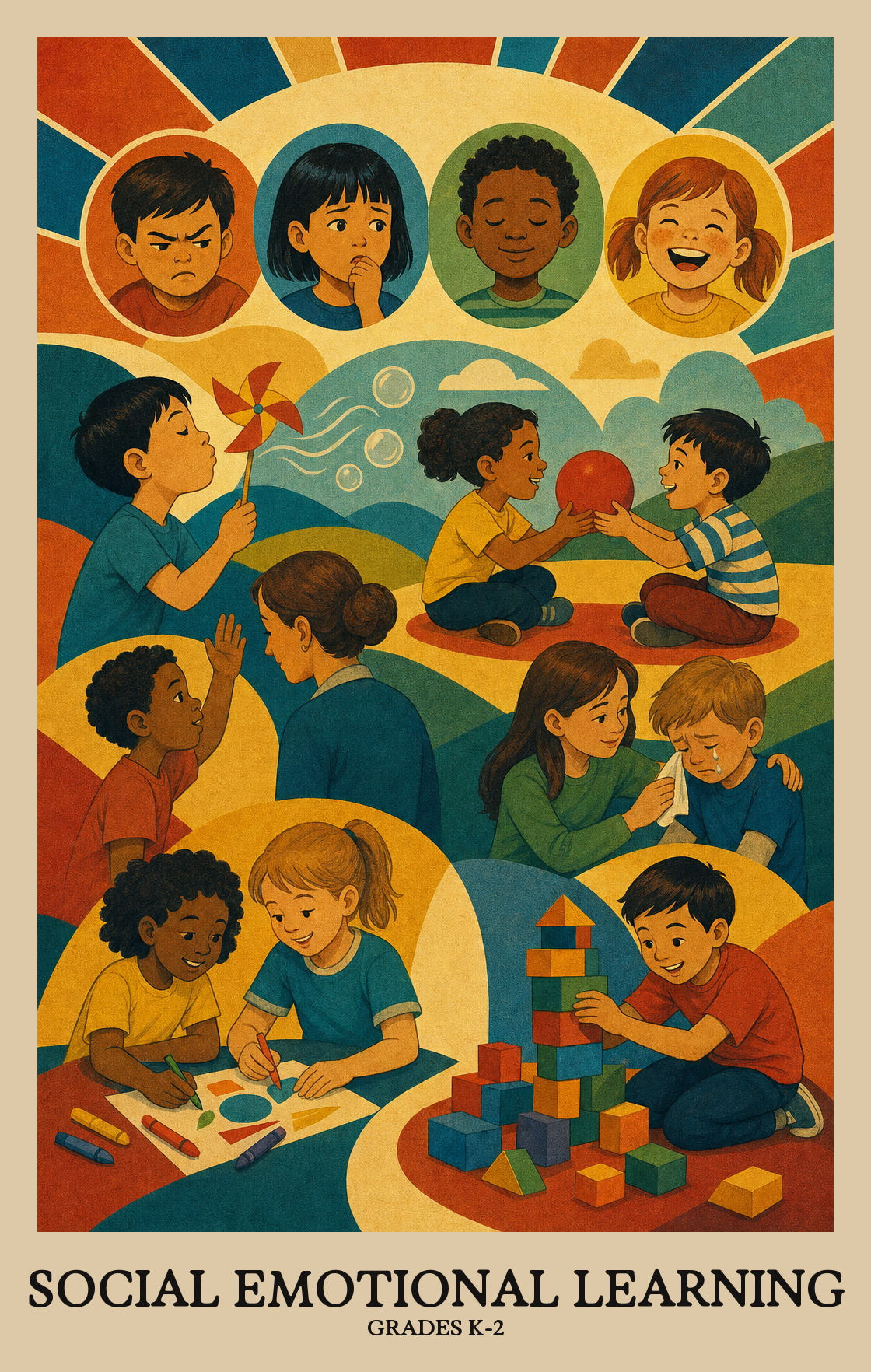
Students learn to name what they feel, like happy, sad, frustrated, or nervous. They start noticing what they are good at and what feels hard, and practice talking about themselves with confidence.
Students practice handling big feelings without losing control. They try simple tools like deep breaths and counting, and learn small habits for finishing a task and keeping their space ready.
Students start to notice that classmates may feel or think differently than they do. They practice listening, asking about other families and traditions, and naming adults at school and home who can help.
Students work on making and keeping friends. They practice taking turns, sharing, using kind words, asking for help, and working out small disagreements without it turning into a fight.
Students learn to stop and think before they act. They talk through what might happen if they pick one choice over another, and start thinking about how their actions affect classmates and family.
Students learn to name their own feelings and notice how those feelings affect what they do. They also start to spot what they are good at and what is still hard for them.
Students practice pausing before reacting, handling frustration, and staying organized enough to finish what they started. These habits help them work toward goals even when things feel hard.
Students practice seeing a situation through someone else's eyes and noticing how that person might feel. They also learn who to turn to for help at school, at home, and in their neighborhood.
Students practice getting along with others by listening, taking turns, and asking for help when something feels hard. These skills help them build friendships and work well with classmates who are different from them.
Students practice making choices that are kind and safe, thinking about how those choices affect other people. They learn to weigh what might go wrong before they act.
| Standard | Definition | Code |
|---|---|---|
| The abilities to understand one's own emotions, thoughts Grades K-2 | Students learn to name their own feelings and notice how those feelings affect what they do. They also start to spot what they are good at and what is still hard for them. | FL-SEL.1.k-2 |
| The abilities to manage emotions, thoughts Grades K-2 | Students practice pausing before reacting, handling frustration, and staying organized enough to finish what they started. These habits help them work toward goals even when things feel hard. | FL-SEL.2.k-2 |
| The abilities to understand the perspectives of and empathise with others… Grades K-2 | Students practice seeing a situation through someone else's eyes and noticing how that person might feel. They also learn who to turn to for help at school, at home, and in their neighborhood. | FL-SEL.3.k-2 |
| The abilities to establish and maintain healthy and supportive relationships… Grades K-2 | Students practice getting along with others by listening, taking turns, and asking for help when something feels hard. These skills help them build friendships and work well with classmates who are different from them. | FL-SEL.4.k-2 |
| The abilities to make caring and constructive choices about personal behavior… Grades K-2 | Students practice making choices that are kind and safe, thinking about how those choices affect other people. They learn to weigh what might go wrong before they act. | FL-SEL.5.k-2 |
Students learn to name what they feel, calm down when upset, take turns, and notice how others feel. Most of this happens through everyday moments like sharing crayons, lining up, or working through a disagreement at recess.
Use feeling words during normal moments. Try saying things like, I can tell you're frustrated that the tower fell. Reading picture books and pausing to ask how a character feels also gives students practice in low-pressure ways.
By the end of second grade, students can name basic feelings, use a calming strategy like deep breaths, listen while a friend talks, and ask an adult for help. They can also start to think about how a choice might affect someone else.
Stay calm and keep words short. Wait until the storm passes before talking it through. Later, when everyone is settled, name what happened and practice one small strategy together, like taking three slow breaths or squeezing a pillow.
Start with naming feelings and classroom routines in the first weeks. Move into calming strategies and listening skills mid-year. Save conflict resolution and thinking about consequences for later, once students have the vocabulary and trust to use them.
Impulse control and conflict resolution. Most students can name a feeling long before they can pause and choose a response. Expect to model and practice these dozens of times across the year, especially after breaks.
Empathy grows from noticing. Point out faces and body language during read-alouds and after small conflicts. Ask what someone else might be feeling and why. Short, frequent conversations work better than a single big lesson.
A student is ready when they can name a feeling without an adult prompting them, use one calming strategy on their own, work with a partner for a short task, and ask for help when stuck.
No. The goal is using feeling words in real moments, not reciting them. Aim for steady use of words like happy, sad, mad, scared, frustrated, proud, and worried during everyday situations at home.