Naming feelings and strengths
Students start the year learning to put words to how they feel and what they are good at. They notice when they are happy, frustrated, or nervous, and begin to talk about it instead of acting it out.
These are the years students learn to name what they feel and start handling it on their own. Students put words to emotions like frustrated, proud, or left out, and they practice small ways to calm down before reacting. They learn to notice when a classmate is upset, take turns, and ask for help from a grown-up. By spring, students can pause when they are angry and use words to work out a problem with a friend.
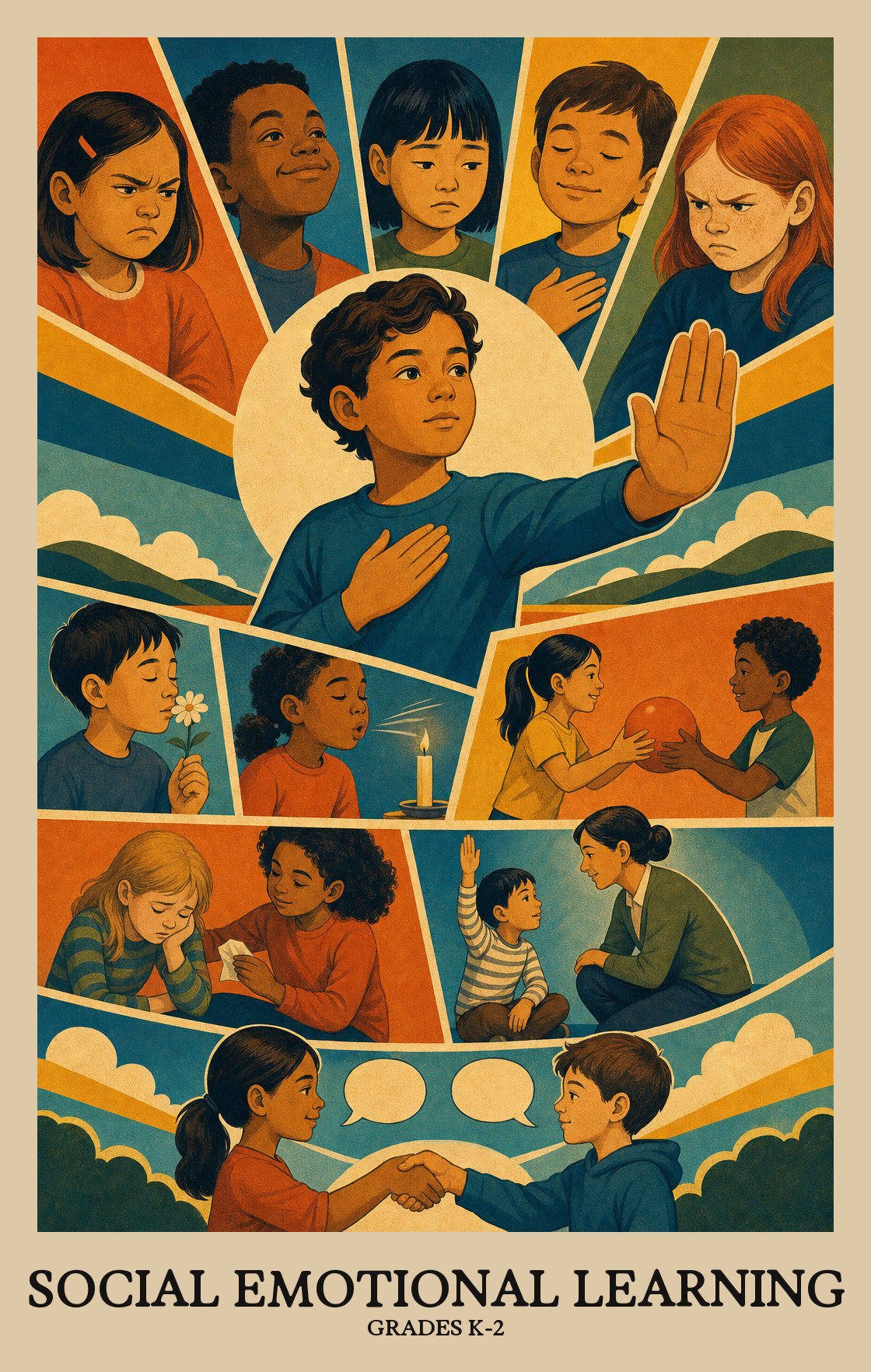
Students start the year learning to put words to how they feel and what they are good at. They notice when they are happy, frustrated, or nervous, and begin to talk about it instead of acting it out.
Students practice what to do when feelings get strong. They try simple tools like deep breaths, counting, or taking a break, and work on waiting their turn and finishing small tasks without giving up.
Students learn to read faces, listen, and think about what someone else might be feeling. They notice that classmates and families can have different backgrounds and still share many of the same feelings.
Students practice the day-to-day work of being a friend. They share, take turns, ask for help, and figure out small disagreements with words instead of hands or tears.
By the end of the year, students think before they act. They consider what might happen next, choose actions that are safe and kind, and start to understand how one choice can affect the whole class.
Students learn to notice their own feelings and thoughts, understand why they act the way they do, and recognize what they are good at and where they need help.
Students practice calming down when upset, stopping to think before acting, and staying organized enough to finish what they start.
Students practice seeing a situation from someone else's point of view and noticing how that person might feel. They also learn who to turn to for help at school, at home, and in their neighborhood.
Students practice getting along with others by listening, sharing, solving disagreements, and asking for help when something feels hard. These habits help them build friendships and work well with people who are different from them.
Students practice making choices that are fair and kind, thinking about how their actions might affect themselves and the people around them.
| Standard | Definition | Code |
|---|---|---|
| The abilities to understand one's own emotions, thoughts Grades K-2 | Students learn to notice their own feelings and thoughts, understand why they act the way they do, and recognize what they are good at and where they need help. | DC-SEL.1.k-2 |
| The abilities to manage emotions, thoughts Grades K-2 | Students practice calming down when upset, stopping to think before acting, and staying organized enough to finish what they start. | DC-SEL.2.k-2 |
| The abilities to understand the perspectives of and empathise with others… Grades K-2 | Students practice seeing a situation from someone else's point of view and noticing how that person might feel. They also learn who to turn to for help at school, at home, and in their neighborhood. | DC-SEL.3.k-2 |
| The abilities to establish and maintain healthy and supportive relationships… Grades K-2 | Students practice getting along with others by listening, sharing, solving disagreements, and asking for help when something feels hard. These habits help them build friendships and work well with people who are different from them. | DC-SEL.4.k-2 |
| The abilities to make caring and constructive choices about personal behavior… Grades K-2 | Students practice making choices that are fair and kind, thinking about how their actions might affect themselves and the people around them. | DC-SEL.5.k-2 |
Students learn to name what they feel, calm down when upset, listen to friends, take turns, and make fair choices. A lot of it happens in small moments like lining up, sharing markers, or losing a game. By second grade, students can talk about feelings and try simple fixes when something goes wrong.
Give the feeling a name out loud, like "that looks frustrating." Then offer a short break, a drink of water, or a few deep breaths before talking about what happened. Once students feel calmer, ask what they could try next time.
Talk about feelings at dinner or in the car. Read a picture book and ask how a character felt and why. Practice taking turns in a board game and notice out loud when students wait, share, or help. These small habits add up fast.
Start with naming feelings and classroom routines in the first weeks. Move into calming strategies and listening skills by winter. Spend the second half of the year on friendship, conflict, and making choices that consider other people. Revisit earlier skills often.
Impulse control, repairing a friendship after a fight, and asking an adult for help instead of melting down. These show up all year and need short practice in real moments, not just lessons. Brief role-plays after recess work better than long sit-down talks.
Listen first and let the sad feeling out before fixing anything. Then ask one small question, like who they sat near today or who likes the same game. Practice one friendly opener at home, such as "can I play too," so it feels easier tomorrow.
By the end of second grade, students can name common feelings, use a calming strategy with a reminder, share and take turns most of the time, and tell an adult when something is wrong. They can also say sorry and mean it after a small conflict.