Moving safely together
Students practice running, skipping, and hopping in a shared space without bumping into classmates. They learn the routines that keep gym time safe and fair for everyone.
This is the year movement gets more skillful and more social. Students sharpen the basics like running, skipping, jumping, throwing, catching, and balancing, and they start linking those moves together in games and activities. They also learn to play well with a partner, take turns, follow directions, and treat classmates with respect. By spring, students can join a group game, use a skill like throwing or catching with better control, and explain one reason staying active feels good.
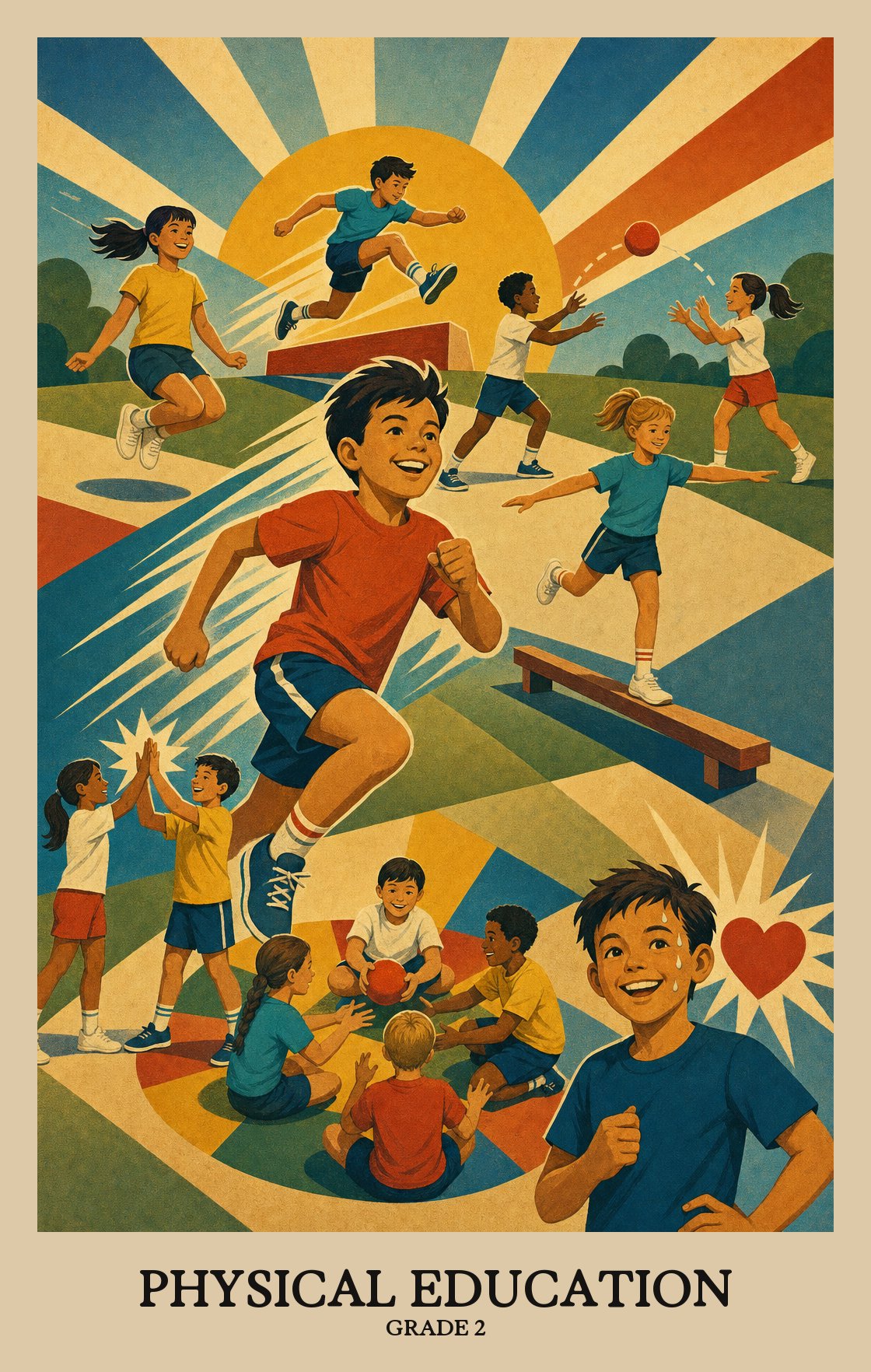
Students practice running, skipping, and hopping in a shared space without bumping into classmates. They learn the routines that keep gym time safe and fair for everyone.
Students work on sending and receiving a ball with hands and feet. Aim and control start to improve, and partner games become more fun than frustrating.
Students practice taking turns, cheering on classmates, and sorting out small disagreements during games. They learn that how you treat teammates matters as much as the score.
Students notice how their heart and breathing speed up during activity and why that feels good. They start to pick movement they enjoy and understand why daily activity keeps them healthy.
Students practice moving in different ways: running, jumping, balancing, throwing, and catching. Building these skills early helps students stay active and enjoy physical activity as they grow.
Students use what they know about how the body moves and stays healthy to take part in games, exercises, and activities. Knowing the concept helps them move better and make smarter choices during physical activity.
Students practice working with others during movement activities. They take turns, follow group rules, and treat classmates with respect.
Students practice basic movement skills and start to notice how being active makes them feel. They begin choosing activities they enjoy so that staying active becomes a habit, not a chore.
| Standard | Definition | Code |
|---|---|---|
| Develop a variety of motor skills, including locomotor, non-locomotor | Students practice moving in different ways: running, jumping, balancing, throwing, and catching. Building these skills early helps students stay active and enjoy physical activity as they grow. | DC-PE.1.2 |
| Apply knowledge related to movement, performance | Students use what they know about how the body moves and stays healthy to take part in games, exercises, and activities. Knowing the concept helps them move better and make smarter choices during physical activity. | DC-PE.2.2 |
| Develop social skills through movement, including respect for self and others… | Students practice working with others during movement activities. They take turns, follow group rules, and treat classmates with respect. | DC-PE.3.2 |
| Develop personal skills, identify personal benefits of movement | Students practice basic movement skills and start to notice how being active makes them feel. They begin choosing activities they enjoy so that staying active becomes a habit, not a chore. | DC-PE.4.2 |
Students should run, skip, hop, and gallop with control, and start to throw, catch, kick, and bounce a ball without losing balance. They should also follow game rules, take turns, and play safely with a partner or small group.
Ten minutes of active play makes a real difference. Roll, toss, and bounce a ball back and forth. Play tag, jump rope, or set up a simple obstacle course in the yard or hallway. The goal is steady practice, not perfect form.
Yes. At this age, coordination is still developing. Catching a bouncing ball is usually easier than catching one out of the air, so start there. A soft ball or rolled-up sock works fine for indoor practice.
Start with locomotor skills like running, skipping, and hopping, then layer in non-locomotor moves like balancing, twisting, and stretching. Save manipulative skills like throwing, catching, kicking, and dribbling for the middle and end of the year, once balance and body control are steady.
Catching a thrown ball, skipping, and kicking a moving ball are the common sticking points. Break each one into smaller pieces, slow the pace, and use larger or softer equipment before moving back to standard balls.
Aim for at least 60 minutes of active play each day, spread across recess, PE, and time at home. It does not need to happen all at once. Short bursts of movement throughout the day add up and keep students focused in class.
Start with partner activities before moving to small groups. Teach simple routines for taking turns, sharing equipment, and handling disagreements. Name the behavior in the moment, such as good passing or waiting your turn, so students learn what cooperation looks like.
By spring, students should move confidently through running, jumping, and skipping, throw and catch with a partner, and follow rules in small group games. They should also explain why warming up, drinking water, and being active matter for their bodies.