Moving safely together
Students learn how to move around the gym without bumping into classmates. They practice listening for signals, sharing space, and following directions during warm-ups and simple group activities.
This is the year students start moving with more control and purpose. They practice basic skills like running, hopping, jumping, balancing, throwing, and catching, and they begin to notice how their bodies feel during activity. Students also learn how to share space, take turns, and play safely with classmates. By spring, they can follow simple game rules and join group activities without bumping into others.
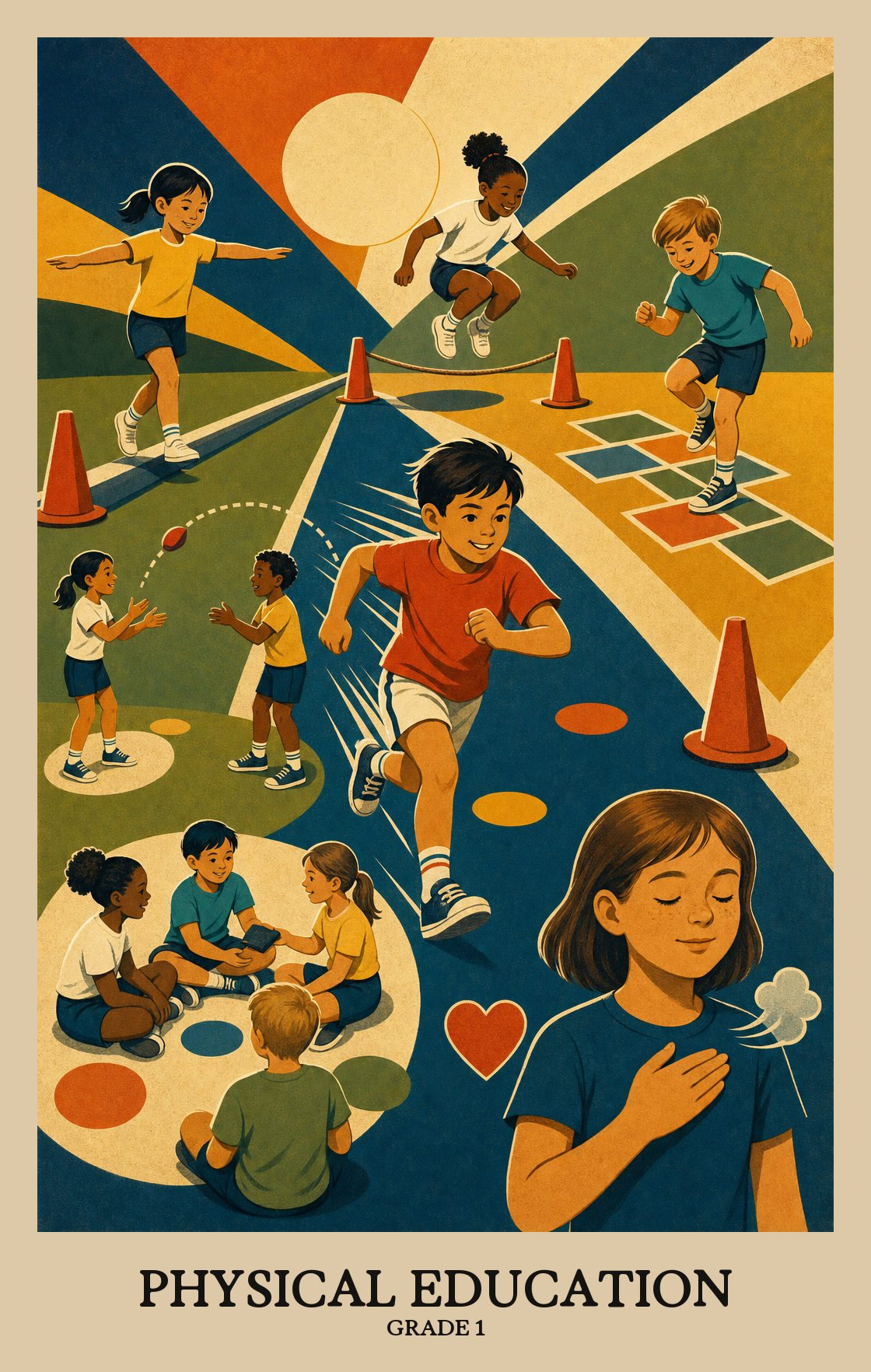
Students learn how to move around the gym without bumping into classmates. They practice listening for signals, sharing space, and following directions during warm-ups and simple group activities.
Students build the basic ways the body travels. They practice running, hopping, skipping, and galloping, and start to notice which movements feel strong and steady.
Students work with balls and beanbags. They practice tossing, catching with two hands, rolling, and kicking toward a target, and they keep trying when something is hard.
Students put their skills into simple games and partner activities. They practice taking turns, cheering each other on, and following the rules so everyone has a chance to play.
Students talk about why moving feels good and how the body warms up, breathes harder, and cools down. They name activities they enjoy and can keep doing outside of school.
Students practice moving their bodies in different ways: running, jumping, balancing, and throwing or catching. Building these skills early helps students stay active as they grow.
Students learn basic ideas about how their body moves and stays healthy, then use those ideas while being active. This might mean knowing why stretching helps or how to pace themselves during a run.
Students practice working with classmates during movement activities. They take turns, listen to others, and follow shared rules so everyone can participate safely.
Students practice basic movement skills and start to notice how being active makes them feel. They learn to choose activities they enjoy so staying active becomes a habit, not a chore.
| Standard | Definition | Code |
|---|---|---|
| Develop a variety of motor skills, including locomotor, non-locomotor | Students practice moving their bodies in different ways: running, jumping, balancing, and throwing or catching. Building these skills early helps students stay active as they grow. | DC-PE.1.1 |
| Apply knowledge related to movement, performance | Students learn basic ideas about how their body moves and stays healthy, then use those ideas while being active. This might mean knowing why stretching helps or how to pace themselves during a run. | DC-PE.2.1 |
| Develop social skills through movement, including respect for self and others… | Students practice working with classmates during movement activities. They take turns, listen to others, and follow shared rules so everyone can participate safely. | DC-PE.3.1 |
| Develop personal skills, identify personal benefits of movement | Students practice basic movement skills and start to notice how being active makes them feel. They learn to choose activities they enjoy so staying active becomes a habit, not a chore. | DC-PE.4.1 |
Students practice the basics of moving their bodies: running, skipping, jumping, hopping, balancing, throwing, catching, and kicking. They also learn how to share space safely, take turns, and follow simple directions during games and activities.
Aim for 30 to 60 minutes of active play most days. Tossing a ball back and forth, jumping rope, dancing in the kitchen, or playing tag in the yard all count. The goal is regular movement, not a structured workout.
At this age, coordination is still developing and kids grow at different rates. Short, playful practice helps a lot: bouncing a ball, walking along a curb for balance, or playing catch with a soft ball for a few minutes a day.
No. The focus is on building movement skills and a positive attitude about being active, not on competition or winning. Effort, listening, and trying new activities matter much more than athletic talent right now.
Start with locomotor skills like running, hopping, and skipping, then layer in balance and body control. Manipulative skills like throwing, catching, and kicking come next, first with hands or feet alone and then with simple targets or partners.
Catching and skipping tend to lag behind running and jumping. Underhand throwing to a target and tracking a moving ball also need extra practice. Build in short skill stations across units rather than teaching each skill only once.
Offer two or three versions of the same task: a closer target, a bigger ball, a slower partner. Students pick what feels like a good challenge. This keeps everyone moving without singling anyone out.
Students can run, jump, hop, and skip with control, toss and catch a ball with a partner, and kick a still ball toward a target. They can also follow safety rules, take turns, and cooperate in small group games.
Practice short turn-taking games at home, like rolling a ball back and forth or playing simple card games. Talk about what to do when a game feels unfair or frustrating. These small habits carry straight into P.E. class.