Healthy habits at school
Students learn the basics that keep a body well during a school day. They practice washing hands, covering coughs, drinking water, and naming the parts of a healthy routine.
These are the years students learn that small daily choices add up to feeling good. Students start naming the basics of staying healthy, like washing hands, eating real food, getting sleep, and telling a trusted adult when something feels wrong. They practice asking for help, setting a simple goal, and noticing what shapes their choices at home and on TV. By spring, students can describe one healthy habit they want to build and one safe adult they can turn to.
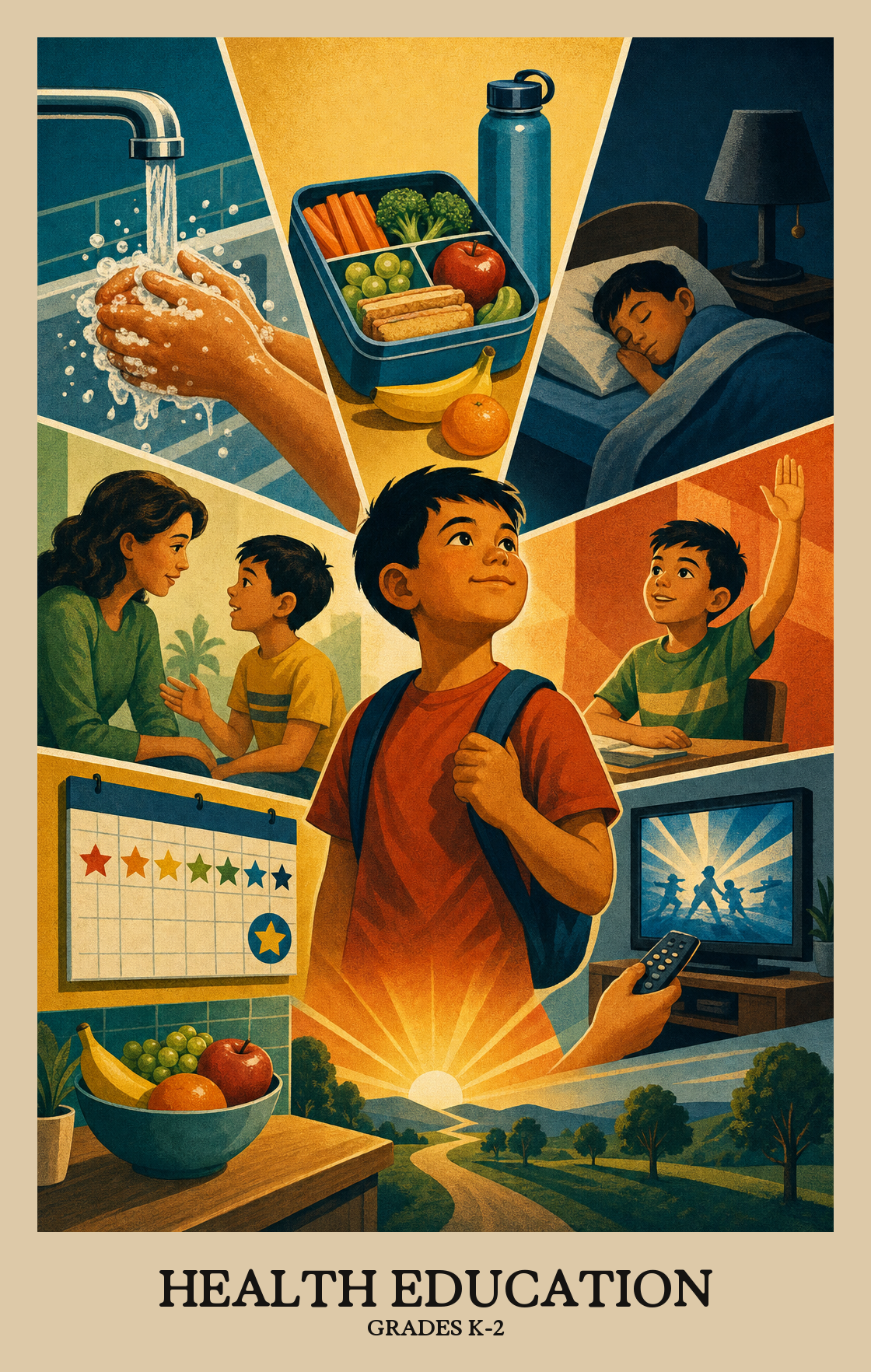
Students learn the basics that keep a body well during a school day. They practice washing hands, covering coughs, drinking water, and naming the parts of a healthy routine.
Students put words to big feelings and practice kind ways to talk with classmates. They learn which trusted adults to go to when something feels wrong or unsafe.
Students learn rules that keep them safe at home, in the car, on the playground, and around strangers. They practice saying no, moving away, and telling an adult.
Students start making small health choices on their own, like picking a fruit at snack, getting enough sleep, or moving their body each day. They notice what helps them feel their best.
Students practice sharing what they have learned with family and friends. They might remind someone to buckle up, wear a helmet, or wash their hands before lunch.
Students learn basic health facts, like why sleep matters or how germs spread, and use that knowledge to make simple choices that keep themselves and the people around them healthier.
Students look at what shapes their health choices, like family habits, friends, and what they see on TV. They start to notice which influences help them stay healthy and which ones don't.
Students learn where to find trustworthy health information, like a school nurse, a doctor, or a parent. They practice asking for help and finding the right people or places when someone feels sick or unsafe.
Students practice asking for help, saying no, and listening carefully so they and the people around them stay safe and feel good.
Students practice a simple set of steps to make smart choices, like whether to wash their hands or tell a grown-up about a problem. The goal is making choices that keep themselves and the people around them healthier.
Students pick a health goal, like drinking more water or getting to bed on time, and practice the steps to reach it. They also think about how their choices can help the people around them.
Students practice habits that keep themselves and the people around them healthy, like washing hands, getting enough sleep, or speaking up when something feels wrong.
Students practice speaking up for their own health and the health of those around them. That might mean asking an adult for help, encouraging a friend to wash their hands, or saying something kind to a classmate who feels sick.
| Standard | Definition | Code |
|---|---|---|
| Use functional knowledge of health concepts to support health and well-being of… Grades K-2 | Students learn basic health facts, like why sleep matters or how germs spread, and use that knowledge to make simple choices that keep themselves and the people around them healthier. | DC-HE.1.k-2 |
| Analyze influences that affect health and well-being of self and others Grades K-2 | Students look at what shapes their health choices, like family habits, friends, and what they see on TV. They start to notice which influences help them stay healthy and which ones don't. | DC-HE.2.k-2 |
| Access valid and reliable resources to support health and well-being of self… Grades K-2 | Students learn where to find trustworthy health information, like a school nurse, a doctor, or a parent. They practice asking for help and finding the right people or places when someone feels sick or unsafe. | DC-HE.3.k-2 |
| Use interpersonal communication skills to support health and well-being of self… Grades K-2 | Students practice asking for help, saying no, and listening carefully so they and the people around them stay safe and feel good. | DC-HE.4.k-2 |
| Use a decision-making process to support health and well-being of self and… Grades K-2 | Students practice a simple set of steps to make smart choices, like whether to wash their hands or tell a grown-up about a problem. The goal is making choices that keep themselves and the people around them healthier. | DC-HE.5.k-2 |
| Use a goal-setting process to support health and well-being of self and others Grades K-2 | Students pick a health goal, like drinking more water or getting to bed on time, and practice the steps to reach it. They also think about how their choices can help the people around them. | DC-HE.6.k-2 |
| Demonstrate practices and behaviors to support health and well-being of self… Grades K-2 | Students practice habits that keep themselves and the people around them healthy, like washing hands, getting enough sleep, or speaking up when something feels wrong. | DC-HE.7.k-2 |
| Advocate to promote health and well-being of self and others Grades K-2 | Students practice speaking up for their own health and the health of those around them. That might mean asking an adult for help, encouraging a friend to wash their hands, or saying something kind to a classmate who feels sick. | DC-HE.8.k-2 |
Students learn the basics of taking care of their body and feelings. That means washing hands, brushing teeth, eating a range of foods, moving their body, sleeping enough, and noticing how they feel. They also practice being kind and asking for help when something is wrong.
Talk through small daily choices out loud. Why do we wash hands before eating? Why do we wear a helmet? Let students pick a healthy snack at the store or set a bedtime goal for the week. Five minutes of real conversation does more than a worksheet.
Students should name basic ways to stay healthy and safe, ask a trusted adult for help, and make a simple choice between two options. They should also be able to set a small goal, like drinking more water this week, and notice if they met it.
Most teachers start with personal care and safety routines in the fall, since those tie into classroom habits. Feelings, friendship, and asking for help fit well in the middle of the year. Nutrition, movement, and goal-setting work well in spring when students can track a habit over a few weeks.
Decision-making and goal-setting take the longest to stick. Young students can name a healthy choice but struggle to pause and pick one in the moment. Plan short, repeated practice with real scenarios across the year, not a single unit.
Students learn to name people who can help: a parent, a teacher, a school nurse, a doctor, a coach. They also learn the difference between something a friend says and something an adult or a doctor says. The goal is knowing who to ask, not researching on their own.
Keep the language concrete and the examples general. Use picture books, puppets, or simple role-plays instead of personal stories. Tell families ahead of time what topics are coming up so they can continue the conversation at home.
Those habits matter, but health at this age also covers feelings, friendship, safety, food, and sleep. Ask what they did in health class this week and listen for words like calm, kind, safe, or goal. That tells you the rest is sinking in too.
Advocating looks small in the early grades. A student might remind a friend to wear a seatbelt, ask a classmate to join a game, or tell an adult that someone is hurt. Praise these moments out loud so students see that speaking up counts.