Health basics and daily habits
Students start by learning how the body works and what keeps it well. They look at sleep, food, movement, and stress, and how small daily choices add up over a lifetime.
This is the year health class shifts from learning rules to making real choices. Students study how friends, family, social media, and stress shape the decisions they make about their bodies and minds. They practice spotting trustworthy information online and talking through tough situations with clear words. By spring, students can walk through a real decision, set a personal health goal, and explain who they would turn to for help.
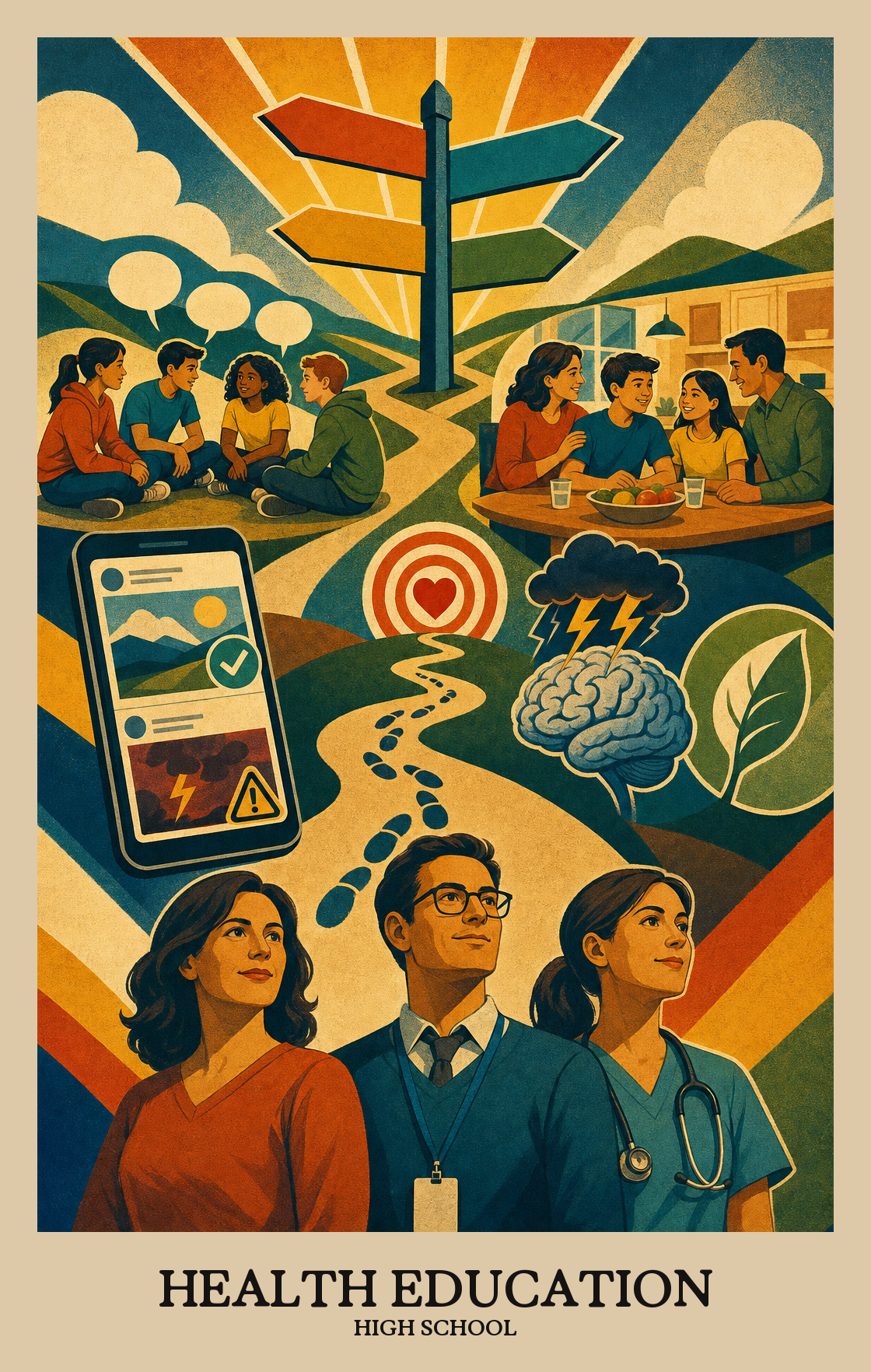
Students start by learning how the body works and what keeps it well. They look at sleep, food, movement, and stress, and how small daily choices add up over a lifetime.
Students look at the people and messages around them, from friends and family to social media and advertising. They learn to spot pressure and figure out how those forces shape what they eat, buy, and believe.
Students practice telling a solid health source from a sketchy one. They learn where to turn for real answers about doctors, medications, and mental health, and how to skip the noise online.
Students work on saying no, asking for help, and handling conflict without making it worse. They practice the kinds of conversations that come up with friends, partners, parents, and coaches.
Students walk through a clear way to weigh choices about food, relationships, substances, and safety. They also set personal health goals and track real steps toward them over weeks, not days.
Students put it all together by practicing safe behaviors and speaking up for others. They learn how to support a friend in a hard moment and how to push for healthier choices at school and at home.
Students apply what they know about physical, mental, and social health to make real decisions, for themselves and the people around them.
Students examine what shapes health choices, from family and friends to social media and advertising, then consider how those same forces affect the people around them.
Students practice finding trustworthy sources, like a clinic website or a public health hotline, to answer real health questions for themselves or someone they know.
Practicing how to speak up, listen, and respond in real conversations about health. Students learn to ask for help, set limits, and support others facing tough situations.
Students practice a step-by-step thinking process to make choices about their health, from weighing risks to considering how a decision affects the people around them.
Students pick a real health goal, map out steps to reach it, and track their progress. The focus is on making a plan that actually holds up over time, not just setting the goal.
Students practice real health habits, like handwashing, sleep routines, or supporting a friend through stress. The focus is on actions they can use every day, not just facts to memorize.
Students practice speaking up for healthier choices, whether for themselves or for people around them. That might mean researching a health issue, making a case for change, or encouraging others to act.
| Standard | Definition | Code |
|---|---|---|
| Use functional knowledge of health concepts to support health and well-being of… High School | Students apply what they know about physical, mental, and social health to make real decisions, for themselves and the people around them. | FL-HE.1.9-12 |
| Analyze influences that affect health and well-being of self and others High School | Students examine what shapes health choices, from family and friends to social media and advertising, then consider how those same forces affect the people around them. | FL-HE.2.9-12 |
| Access valid and reliable resources to support health and well-being of self… High School | Students practice finding trustworthy sources, like a clinic website or a public health hotline, to answer real health questions for themselves or someone they know. | FL-HE.3.9-12 |
| Use interpersonal communication skills to support health and well-being of self… High School | Practicing how to speak up, listen, and respond in real conversations about health. Students learn to ask for help, set limits, and support others facing tough situations. | FL-HE.4.9-12 |
| Use a decision-making process to support health and well-being of self and… High School | Students practice a step-by-step thinking process to make choices about their health, from weighing risks to considering how a decision affects the people around them. | FL-HE.5.9-12 |
| Use a goal-setting process to support health and well-being of self and others High School | Students pick a real health goal, map out steps to reach it, and track their progress. The focus is on making a plan that actually holds up over time, not just setting the goal. | FL-HE.6.9-12 |
| Demonstrate practices and behaviors to support health and well-being of self… High School | Students practice real health habits, like handwashing, sleep routines, or supporting a friend through stress. The focus is on actions they can use every day, not just facts to memorize. | FL-HE.7.9-12 |
| Advocate to promote health and well-being of self and others High School | Students practice speaking up for healthier choices, whether for themselves or for people around them. That might mean researching a health issue, making a case for change, or encouraging others to act. | FL-HE.8.9-12 |
Students learn how to take care of their body and mind, make smart choices about food, sleep, stress, relationships, and substances, and know where to turn for trustworthy help. They also practice talking through hard topics with friends, family, and doctors.
Talk about real situations as they come up, like how to handle a stressful week, a tricky friendship, or a question about a medication. Short, honest conversations in the car or at dinner do more than long lectures.
Keep the door open without pushing. Share a short article or a news story and ask what they think. Listening without jumping in to correct is often what gets them talking again later.
A common arc is mental and emotional health first to build trust, then nutrition and physical activity, then substances, relationships, and sexual health, and finally personal safety and advocacy. Revisit decision-making and goal-setting in every unit so the skills stick.
Evaluating sources and using a decision-making process under pressure are the two that lag. Students can list steps but freeze in a realistic scenario. Short role-plays and quick source-check warm-ups across the year help more than one big lesson.
Look at who runs the site, when it was updated, and whether it cites doctors or research. Hospitals, universities, and government health sites are safer bets than social media posts or sites trying to sell something.
Set clear ground rules early, give students a private way to ask questions, and stick to medically accurate information. Frame lessons around skills and decisions rather than personal beliefs, and tell families ahead of time what is coming up.
By spring, students should be able to read a nutrition label, refill a prescription, schedule their own doctor visit, name signs of a mental health concern, and know two reliable places to get help. If those feel automatic, the year did its job.
Pick one small health goal for the week, like eight hours of sleep or a 15-minute walk after dinner. Write it on the fridge, check in on Friday, and adjust. Short cycles teach more than big resolutions.