Knowing yourself and your goals
Students take stock of their interests, strengths, and what kind of work and life they want after high school. They start mapping out classes, certifications, and steps that could get them there.
This is the stretch when students stop asking what they want to be and start mapping how to get there. Students set a real plan for life after graduation, weighing college costs, training programs, and jobs against their own goals and budget. They practice the habits employers actually notice: showing up on time, working with people who think differently, communicating clearly in writing and in meetings. By spring, students can explain their next step after high school and name the skills and money it will take to get there.
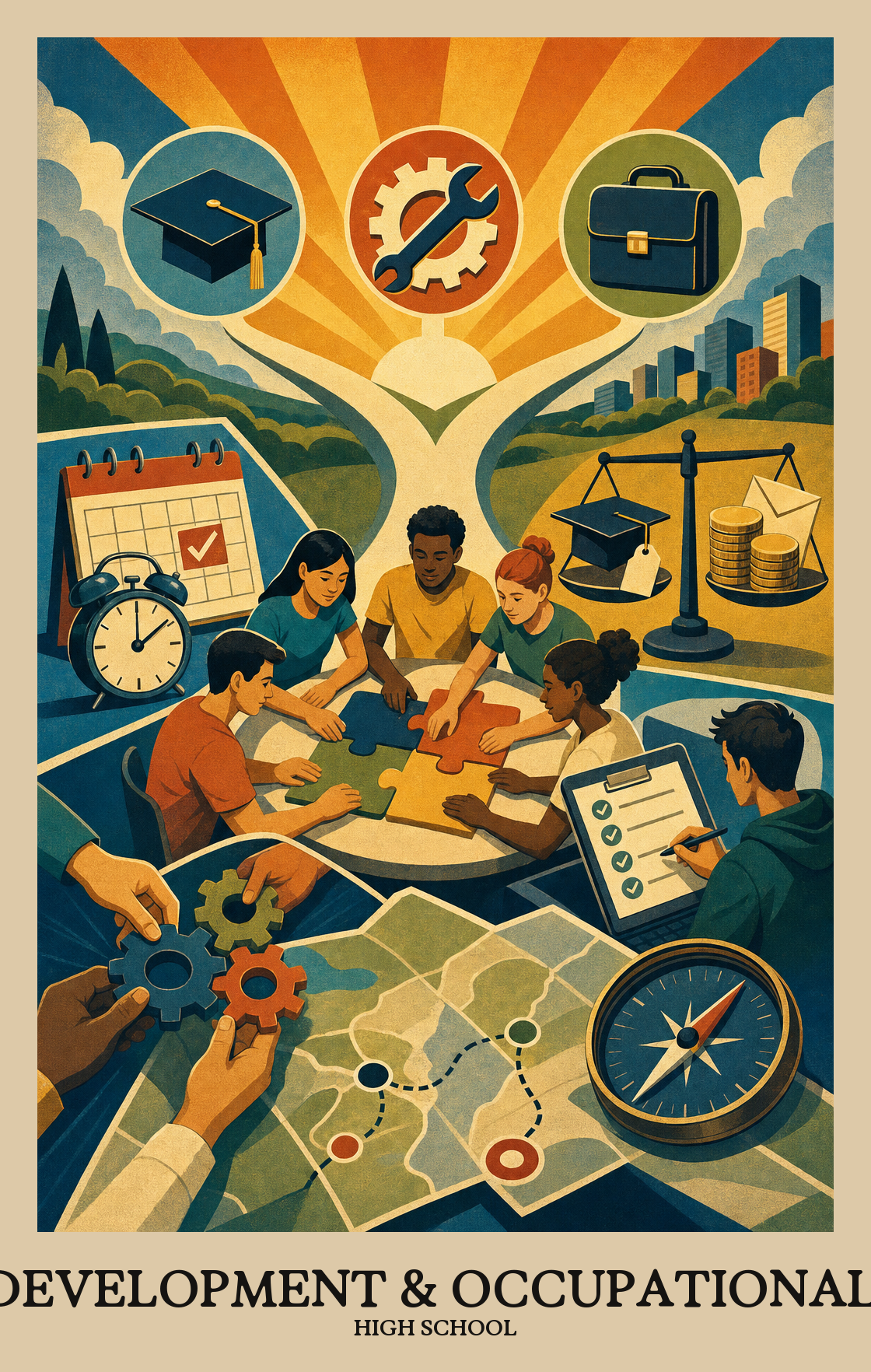
Students take stock of their interests, strengths, and what kind of work and life they want after high school. They start mapping out classes, certifications, and steps that could get them there.
Students practice the everyday habits that make someone reliable on the job. That means being on time, following through, working honestly, and looking after their own health and money.
Students learn to speak, write, and present in ways that fit the audience, whether that is a teacher, a customer, or a teammate. They also practice working in groups with people who think and live differently than they do.
Students take on open-ended problems and stick with them. They research, weigh options, think through who is affected, and try new ideas when the first attempt does not work.
Students apply what they have learned in class to real projects, internships, or job-like tasks. They use current tools and software the way an employee would and reflect on what they want to do next.
Students map out a realistic plan for school and work after high school, connecting their actual interests and goals to what real jobs and programs require to get there.
Students learn to choose the right digital tools for a given task, adjust when new tools replace old ones, and use technology to work faster and communicate more clearly.
Working in teams with people from different backgrounds takes practice. Students learn to listen across differences, split up tasks fairly, and get work done together even when teammates think or communicate differently.
Students take ownership of their choices at school, at work, and in the community. That means following through on commitments, owning mistakes, and showing up as someone others can count on.
Students take skills learned in class, like math, writing, or hands-on technical work, and apply them to actual workplace problems. This is the bridge between school and a real job.
Students learn to make everyday choices, like managing money and staying healthy, with both today and the future in mind. The goal is building habits that hold up over a lifetime, not just the next semester.
Students practice matching how they speak, write, or present online to whoever they're talking to and why. A job interview, a group text, and a formal report each call for a different approach.
Before making a decision, students think through how it might affect the environment, other people, and money. They use that thinking to shape their plans and actions.
Students come up with original ideas and find new ways to use tools or processes they already know. This is the habit of asking "what if we tried it differently?" and following through.
Students practice finding information they can actually trust, checking whether sources are credible, and pulling key details together into a clear picture. The goal is knowing the difference between a solid source and a shaky one before acting on what they find.
When students hit a real problem at work or in class, they slow down, break it into smaller pieces, and try more than one solution before giving up.
Students practice honest decision-making and follow through on commitments at school, at work, and in their community. They lead and work with others in ways that are fair, reliable, and responsible.
| Standard | Definition | Code |
|---|---|---|
| Plan an education and career path aligned to personal goals, interests High School | Students map out a realistic plan for school and work after high school, connecting their actual interests and goals to what real jobs and programs require to get there. | FL-CDOS.CRP10.9-12 |
| Use technology to enhance productivity, communication High School | Students learn to choose the right digital tools for a given task, adjust when new tools replace old ones, and use technology to work faster and communicate more clearly. | FL-CDOS.CRP11.9-12 |
| Work productively in teams while using cultural and global competence to… High School | Working in teams with people from different backgrounds takes practice. Students learn to listen across differences, split up tasks fairly, and get work done together even when teammates think or communicate differently. | FL-CDOS.CRP12.9-12 |
| Act as a responsible and contributing citizen and employee, taking personal… High School | Students take ownership of their choices at school, at work, and in the community. That means following through on commitments, owning mistakes, and showing up as someone others can count on. | FL-CDOS.CRP1.9-12 |
| Apply appropriate academic and technical skills learned through career and… High School | Students take skills learned in class, like math, writing, or hands-on technical work, and apply them to actual workplace problems. This is the bridge between school and a real job. | FL-CDOS.CRP2.9-12 |
| Attend to personal health and financial well-being and make decisions that… High School | Students learn to make everyday choices, like managing money and staying healthy, with both today and the future in mind. The goal is building habits that hold up over a lifetime, not just the next semester. | FL-CDOS.CRP3.9-12 |
| Communicate clearly, effectively High School | Students practice matching how they speak, write, or present online to whoever they're talking to and why. A job interview, a group text, and a formal report each call for a different approach. | FL-CDOS.CRP4.9-12 |
| Consider the environmental, social High School | Before making a decision, students think through how it might affect the environment, other people, and money. They use that thinking to shape their plans and actions. | FL-CDOS.CRP5.9-12 |
| Demonstrate creativity and innovation by generating new ideas and approaches… High School | Students come up with original ideas and find new ways to use tools or processes they already know. This is the habit of asking "what if we tried it differently?" and following through. | FL-CDOS.CRP6.9-12 |
| Employ valid and reliable research strategies to gather, evaluate High School | Students practice finding information they can actually trust, checking whether sources are credible, and pulling key details together into a clear picture. The goal is knowing the difference between a solid source and a shaky one before acting on what they find. | FL-CDOS.CRP7.9-12 |
| Use critical thinking to make sense of problems and persevere in solving them… High School | When students hit a real problem at work or in class, they slow down, break it into smaller pieces, and try more than one solution before giving up. | FL-CDOS.CRP8.9-12 |
| Model integrity, ethical leadership High School | Students practice honest decision-making and follow through on commitments at school, at work, and in their community. They lead and work with others in ways that are fair, reliable, and responsible. | FL-CDOS.CRP9.9-12 |
Students build the habits adults use at work: showing up on time, communicating clearly, solving problems, and working with people who are different from them. They also start mapping out what comes after high school, whether that is college, a trade program, the military, or a job.
Ask open questions over dinner. What do they like doing? What kind of schedule do they want? What jobs have they noticed lately? Five minutes of real conversation a few times a week beats one big lecture. Help them notice that interests, money, and training time all factor into the choice.
No. The goal is to explore options and narrow them over time, not lock in a job at 15. Students should leave high school with a plan and a backup plan, knowing what training or schooling each one requires.
Front-load the habits that affect everything else: responsibility, clear communication, and teamwork. Layer in research, critical thinking, and ethical decision-making once routines hold. Save the bigger career-planning work for the back half of the year, when students have more self-knowledge to draw on.
Let teens see the real numbers. Show a paycheck, a grocery receipt, a phone bill, or a car insurance quote. Talk about sleep, screens, and food the same way. Small, regular conversations build judgment better than one big talk.
Professional communication and follow-through. Students often know what to do but struggle to email an adult clearly, meet a deadline without reminders, or own a mistake. Build short, repeated practice into regular classwork rather than treating it as a one-time lesson.
Projects with a real audience and a real deadline. A community problem to research, a product to pitch, a budget to defend, or a mock interview with someone outside the school. The closer the task is to adult work, the more the practices stick.
They can hold a real conversation with an adult, manage their own schedule, finish what they start, and explain a plan for after graduation in plain language. If those four things are in place, they are in good shape, even if the plan changes later.
By spring, students should be able to research an option, weigh trade-offs, communicate a decision in writing and out loud, and work with a team they did not choose. A short capstone or portfolio review near the end of the year is a good final check.