Moving with control
Students sharpen the basics of running, skipping, hopping, and balancing. The goal is moving safely in a shared space and getting more control over their bodies before games get more demanding.
This is the year movement gets more skilled and more strategic. Students sharpen running, jumping, throwing, catching, and dribbling, and they start using those skills inside real games and routines. They also learn how their body responds to exercise, how to warm up safely, and how to work with a partner or team without things falling apart. By spring, students can play a simple game with rules, keep up with steady activity, and explain one fitness habit that keeps them healthy.
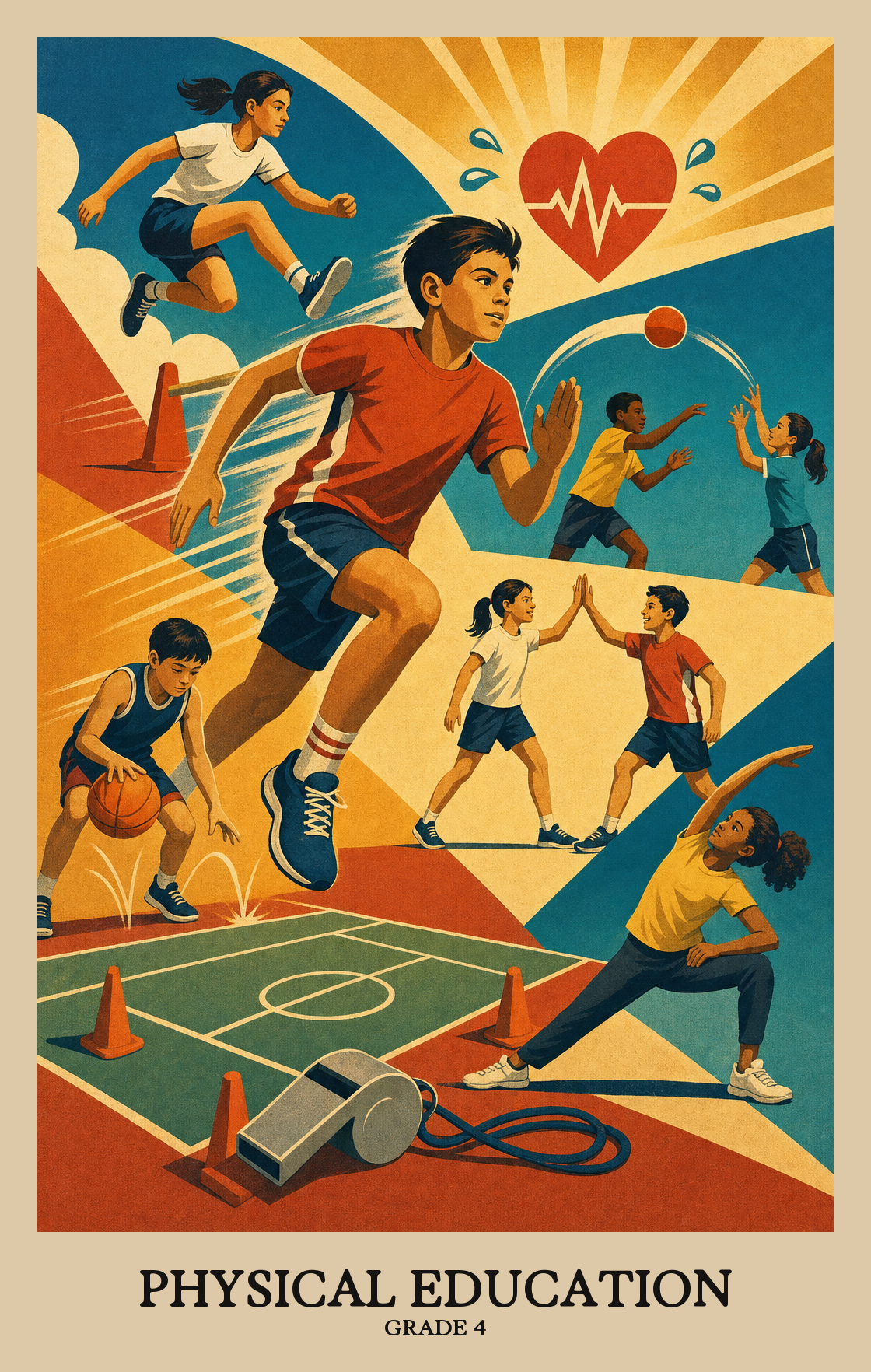
Students sharpen the basics of running, skipping, hopping, and balancing. The goal is moving safely in a shared space and getting more control over their bodies before games get more demanding.
Students practice handling balls and other equipment with more accuracy. Expect work on throwing to a target, catching while moving, dribbling, and kicking with either foot.
Small-sided games and team activities take center stage. Students learn to follow rules, take turns, encourage teammates, and handle winning and losing without losing their cool.
Students learn what a warm-up does, why their heart beats faster during exercise, and how to track simple fitness goals. They also start picking activities they enjoy outside of school.
Students practice moving skills like running, jumping, balancing, and throwing. Building a range of these skills helps students stay active and take part in more games and activities.
Students connect what they know about how the body moves and stays fit to make smarter choices during games, exercises, and other physical activities.
Students practice working with others during movement activities: taking turns, listening, and being a fair teammate. The focus is on how students treat each other, not just how well they move.
Students identify what they personally enjoy about being active and start choosing activities they want to keep doing as they grow up. The focus is building habits now that support health for life.
| Standard | Definition | Code |
|---|---|---|
| Develop a variety of motor skills, including locomotor, non-locomotor | Students practice moving skills like running, jumping, balancing, and throwing. Building a range of these skills helps students stay active and take part in more games and activities. | FL-PE.1.4 |
| Apply knowledge related to movement, performance | Students connect what they know about how the body moves and stays fit to make smarter choices during games, exercises, and other physical activities. | FL-PE.2.4 |
| Develop social skills through movement, including respect for self and others… | Students practice working with others during movement activities: taking turns, listening, and being a fair teammate. The focus is on how students treat each other, not just how well they move. | FL-PE.3.4 |
| Develop personal skills, identify personal benefits of movement | Students identify what they personally enjoy about being active and start choosing activities they want to keep doing as they grow up. The focus is building habits now that support health for life. | FL-PE.4.4 |
Students should run, jump, skip, throw, catch, kick, and strike with steady control. They should also play games fairly, follow rules, and explain why moving every day keeps the body healthy.
Pick one active habit and stick with it: a walk after dinner, catch in the yard, or a bike ride on weekends. Twenty to thirty minutes of real movement a day adds up fast, and doing it together makes it stick.
Start with locomotor skills and fitness routines, move into throwing and catching games, then add striking with hands, paddles, and feet. Finish the year with small-sided team games where students apply skills under real pressure.
No. The focus is on practicing movement skills, working with classmates, and building habits that keep the body healthy. Effort and improvement matter more than winning a game or scoring points.
Overhand throwing form, catching a moving ball, and striking with a paddle tend to need repeated practice. Build short skill stations into warm-ups so students get many quick reps before applying the skill in a game.
Find one activity that feels fun, not graded, like dancing, swimming, biking, or playing tag. Confidence usually grows when students get to practice a skill at home where no one is watching.
Cooperation, fair play, and respect are built into the games themselves. Use clear roles, quick team huddles, and brief reflection at the end of class so students name what worked and what to fix next time.
They can combine skills in a game, such as catching and then throwing to a teammate, and they can keep moving for longer stretches without quitting. They should also explain a simple fitness idea, like why a warm-up matters.