Moving with skill and control
Students sharpen the basics of running, jumping, throwing, catching, and dodging. Parents will notice steadier footwork and better aim in backyard games and pickup play.
Sixth grade is the year gym class shifts from learning the moves to using them in real games and workouts. Students combine skills like dribbling, passing, and striking inside team sports and fitness routines. They also start tracking their own fitness and learning how to work with classmates who play at different levels. By spring, students can join a game, follow the rules, and explain how an activity keeps their body healthy.
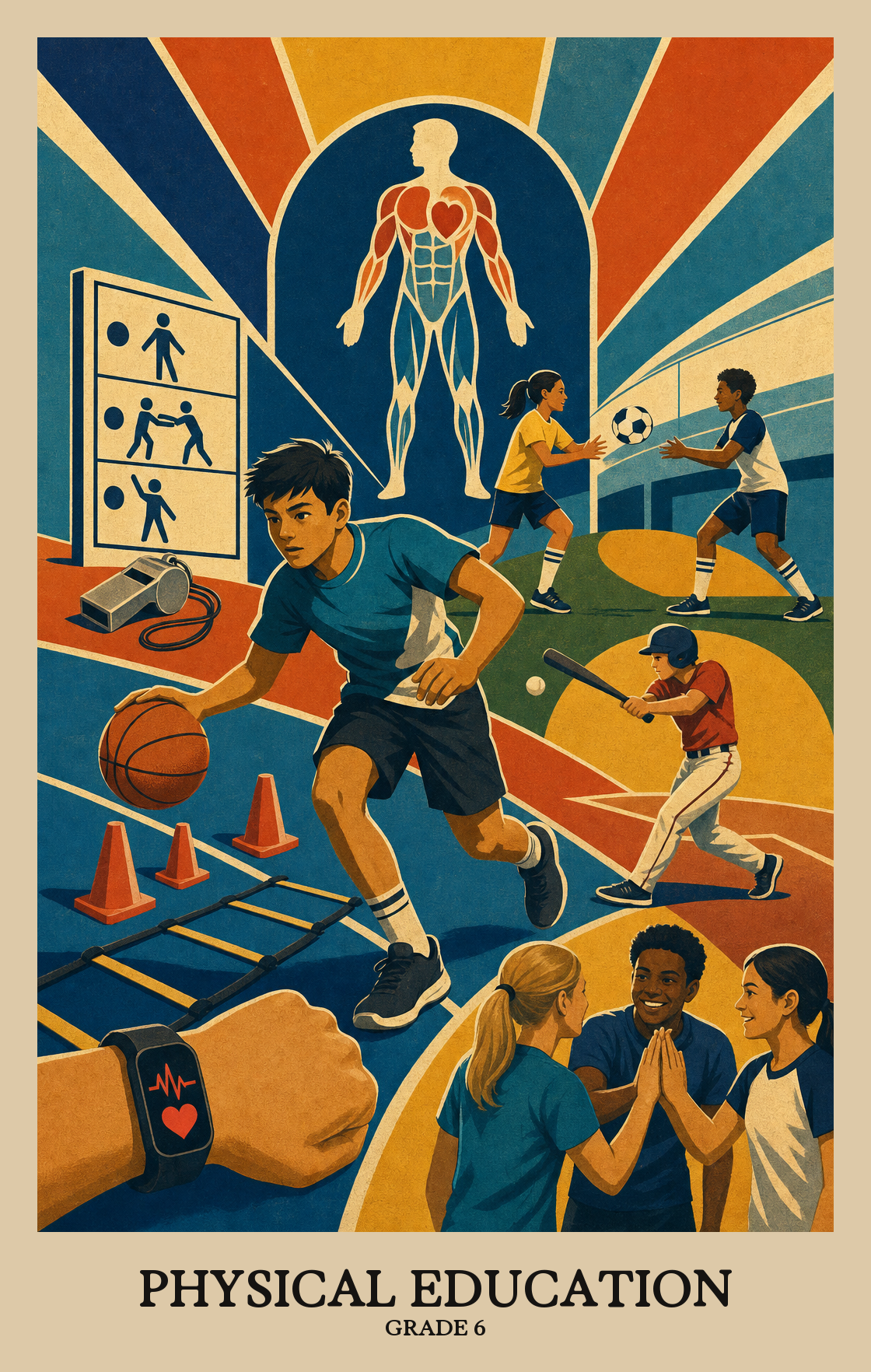
Students sharpen the basics of running, jumping, throwing, catching, and dodging. Parents will notice steadier footwork and better aim in backyard games and pickup play.
Students practice teamwork through partner drills and small-sided games. They learn to communicate on the field, take turns leading, and handle wins and losses without drama.
Students learn what makes a workout count, including warming up, heart rate, strength, and flexibility. They start to explain why certain activities build endurance and others build power.
Students set personal activity goals and try a range of sports and fitness routines to find what they enjoy. The aim is choosing to stay active outside of class.
Students practice moving their bodies in different ways, such as throwing, catching, balancing, and changing direction. Building these skills makes it easier to stay active in sports, games, and everyday movement.
Students use what they know about how the body moves and stays fit to make better decisions during games, workouts, and other physical activities.
Students practice working with others during physical activities: taking turns, listening, and handling wins or losses without making it a big deal.
Students practice setting fitness goals, reflect on how regular movement makes them feel, and make choices about staying active, building habits they can use long after school.
| Standard | Definition | Code |
|---|---|---|
| Develop a variety of motor skills, including locomotor, non-locomotor | Students practice moving their bodies in different ways, such as throwing, catching, balancing, and changing direction. Building these skills makes it easier to stay active in sports, games, and everyday movement. | DC-PE.1.6 |
| Apply knowledge related to movement, performance | Students use what they know about how the body moves and stays fit to make better decisions during games, workouts, and other physical activities. | DC-PE.2.6 |
| Develop social skills through movement, including respect for self and others… | Students practice working with others during physical activities: taking turns, listening, and handling wins or losses without making it a big deal. | DC-PE.3.6 |
| Develop personal skills, identify personal benefits of movement | Students practice setting fitness goals, reflect on how regular movement makes them feel, and make choices about staying active, building habits they can use long after school. | DC-PE.4.6 |
Students keep building movement skills like running, jumping, throwing, catching, and dribbling, and start using them in real games and activities. They also learn how exercise affects the body, how to work with a team, and how to build habits that keep them active outside of school.
Pick something they enjoy and do it together a few times a week. A walk after dinner, a bike ride on the weekend, shooting hoops in the driveway, or following a short workout video all count. The goal is regular movement, not perfect form.
Sixth grade is a hard year for this because bodies are changing fast. Help them find one activity where the focus is effort, not winning, such as hiking, dance, swimming, or martial arts. Praise showing up and trying, not the score.
Start with skill refreshers and fitness baselines, then move into team activities in the fall, individual and lifetime activities like fitness, dance, or racquet sports in the winter, and striking and fielding games in the spring. Revisit fitness concepts in every unit instead of treating them as one block.
Students can combine basic skills under pressure, such as dribbling while a defender approaches or passing to a moving teammate. They can explain why warmups matter, set a simple fitness goal, and play cooperatively without needing constant reminders about rules or sportsmanship.
Manipulative skills under game conditions are the big one. Students can often throw or catch in isolation but lose the skill when a defender or time pressure is added. Plan for repeated small-sided games that force students to use skills while making decisions.
The focus shifts from learning isolated skills to using them in real games and fitness routines. Students are also expected to take more responsibility for their own effort, work through conflict with teammates, and start connecting activity to long-term health.
Students should be comfortable participating in a range of activities without sitting out, follow rules and safety expectations on their own, and describe at least one way they like to stay active. Strong test scores matter less here than steady effort and willingness to try new activities.