Finding ideas worth making
Students start the year gathering ideas for media projects like short videos, digital images, or sound clips. They pull from their own lives and the shows, games, and songs they already know.
This is the year media projects start with a real idea instead of just playing with tools. Students plan a short video, podcast, or digital piece, then revise it based on feedback before sharing it with an audience. They also learn to look at media the way a critic would, asking what the creator meant and whether it works. By spring, they can produce a finished media piece and explain the choices behind it.
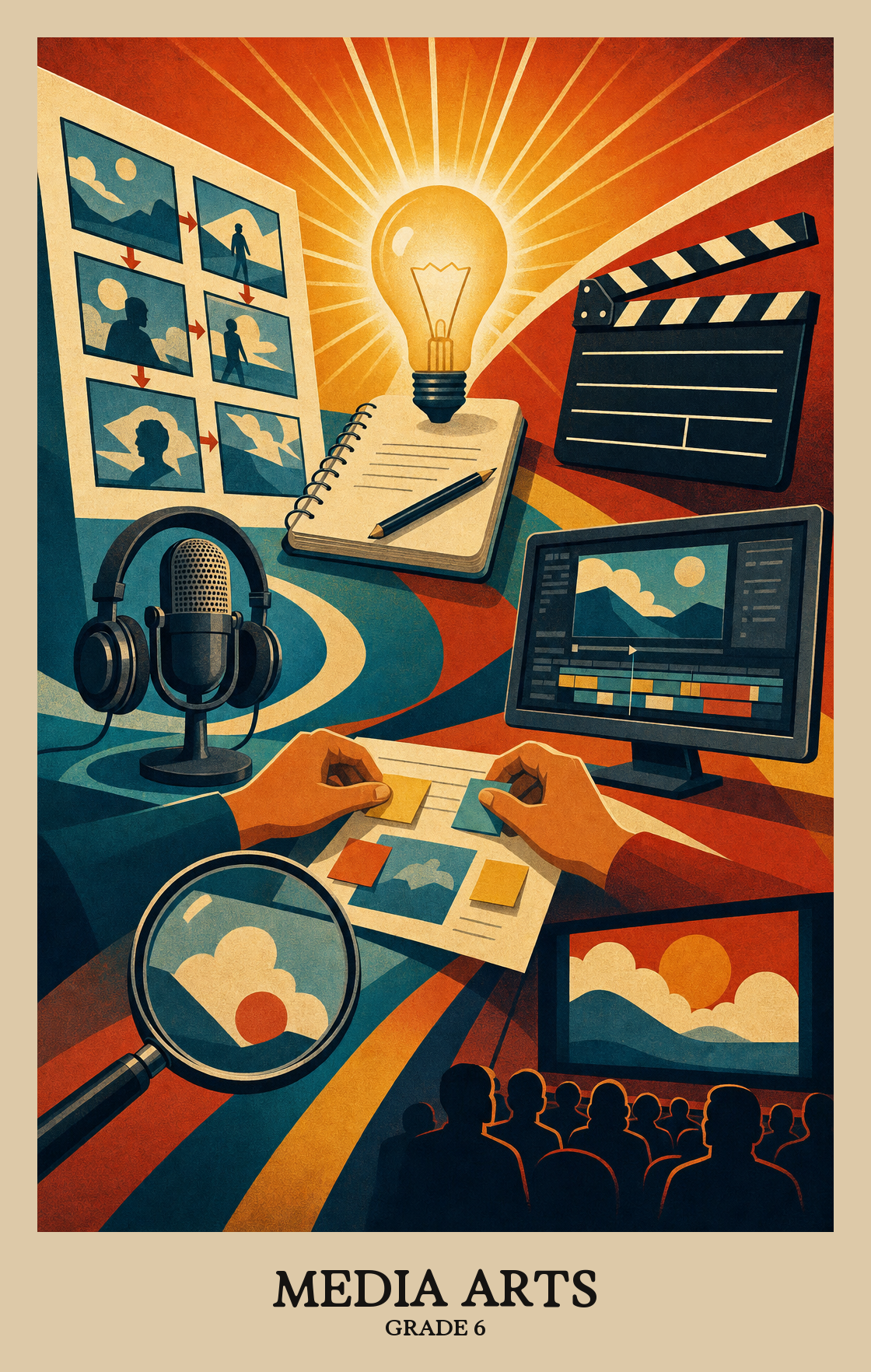
Students start the year gathering ideas for media projects like short videos, digital images, or sound clips. They pull from their own lives and the shows, games, and songs they already know.
Students move from ideas to real drafts. They organize clips, images, or audio into something a viewer can follow, and they learn the basic tools used to put a piece together.
Students rework their projects based on feedback from classmates and the teacher. They tighten the timing, fix rough spots, and decide what stays and what gets cut before sharing.
Students present finished projects to an audience and talk about what the work means. They also study media made by others and connect it to history, culture, and what they see online every day.
Students connect what they already know and what they have lived through to the media art they create. Personal experience shapes the choices they make in the work.
Students connect a media artwork (a film, website, or digital image) to the time, place, and culture it came from. That context helps explain why the work looks the way it does and what it meant to its audience.
| Standard | Definition | Code |
|---|---|---|
| Synthesize and relate knowledge and personal experiences to make art | Students connect what they already know and what they have lived through to the media art they create. Personal experience shapes the choices they make in the work. | MA:Cn10.6 |
| Relate artistic ideas and works with societal, cultural | Students connect a media artwork (a film, website, or digital image) to the time, place, and culture it came from. That context helps explain why the work looks the way it does and what it meant to its audience. | MA:Cn11.6 |
Students brainstorm and develop original ideas for media art projects, deciding what story, message, or effect they want their work to create before they start building it.
Students plan and refine a media arts project by making deliberate choices about images, sound, and structure. The goal is a finished piece that clearly communicates an idea.
Students review a media project (a short video, photo series, or digital image) and make deliberate changes to improve it before calling it finished.
| Standard | Definition | Code |
|---|---|---|
| Generate and conceptualize artistic ideas and work | Students brainstorm and develop original ideas for media art projects, deciding what story, message, or effect they want their work to create before they start building it. | MA:Cr1.6 |
| Organize and develop artistic ideas and work | Students plan and refine a media arts project by making deliberate choices about images, sound, and structure. The goal is a finished piece that clearly communicates an idea. | MA:Cr2.6 |
| Refine and complete artistic work | Students review a media project (a short video, photo series, or digital image) and make deliberate changes to improve it before calling it finished. | MA:Cr3.6 |
Students review a collection of media projects, weigh the strengths of each, and choose which ones are worth sharing with an audience.
Students practice and improve their media art projects before sharing them with an audience. That might mean editing a video, adjusting sound, or reworking a design until it's ready to present.
Students choose how to present their media work so the audience understands the idea behind it. The format, tone, and visuals all serve the message.
| Standard | Definition | Code |
|---|---|---|
| Analyze, interpret, and select artistic work for presentation | Students review a collection of media projects, weigh the strengths of each, and choose which ones are worth sharing with an audience. | MA:Pr4.6 |
| Develop and refine artistic techniques and work for presentation | Students practice and improve their media art projects before sharing them with an audience. That might mean editing a video, adjusting sound, or reworking a design until it's ready to present. | MA:Pr5.6 |
| Convey meaning through the presentation of artistic work | Students choose how to present their media work so the audience understands the idea behind it. The format, tone, and visuals all serve the message. | MA:Pr6.6 |
Students look closely at a media artwork, such as a video, website, or digital image, and explain how the creator's choices shape what the audience sees and feels.
Students examine a media artwork and explain what the creator was trying to say and why specific choices, like color, sound, or camera angle, support that meaning.
Students use a set of criteria, like a checklist or rubric, to judge whether a media arts project is working and explain why it succeeds or falls short.
| Standard | Definition | Code |
|---|---|---|
| Perceive and analyze artistic work | Students look closely at a media artwork, such as a video, website, or digital image, and explain how the creator's choices shape what the audience sees and feels. | MA:Re7.6 |
| Interpret intent and meaning in artistic work | Students examine a media artwork and explain what the creator was trying to say and why specific choices, like color, sound, or camera angle, support that meaning. | MA:Re8.6 |
| Apply criteria to evaluate artistic work | Students use a set of criteria, like a checklist or rubric, to judge whether a media arts project is working and explain why it succeeds or falls short. | MA:Re9.6 |
Media arts covers things students make with technology, like short videos, podcasts, photo projects, animations, and simple digital designs. Sixth graders learn to plan a project, build it, share it with an audience, and talk about what works and what could be stronger.
Watch a short video or listen to a podcast together and ask what choices the creator made and why. A phone camera, a free editing app, and ten quiet minutes are enough to let students practice telling a small story or recording an idea.
Plan around a few bigger projects rather than many small ones. A video story, an audio piece, and an image-based or animation project give room to practice planning, drafting, revising after feedback, and presenting to an audience.
No. Phones, school tablets, and free editing tools are enough for almost everything sixth graders do. The thinking behind the project matters more than the gear.
Work is judged on the ideas behind it and the craft, not on taste. Students explain their choices, show that they revised based on feedback, and connect their project to a purpose or audience.
Planning before recording and revising after feedback are the two big ones. Most sixth graders want to shoot or record once and call it done, so building in storyboards, rough cuts, and a real revision step pays off all year.
Build short critique routines into every project, not just at the end. Watching a clip, naming what the creator did, and suggesting one change gives students the language they need when it is their turn to revise.
By spring, students should be able to take a project from idea to finished piece, explain their creative choices, and use feedback to make it better. They should also be able to look at someone else's work and say what is working and why.