Moving with skill and control
Students sharpen the basics of running, jumping, throwing, catching, and balancing. Parents may notice steadier coordination during games at home or in the yard.
This is the year gym class shifts from learning skills to using them in real games and workouts. Students refine how they run, throw, catch, and move so they can hold their own in team sports and fitness activities. They start tracking their own heart rate, effort, and progress, and they practice working through disagreements with teammates. By spring, students can lead themselves through a warm-up and explain why staying active matters for their health.
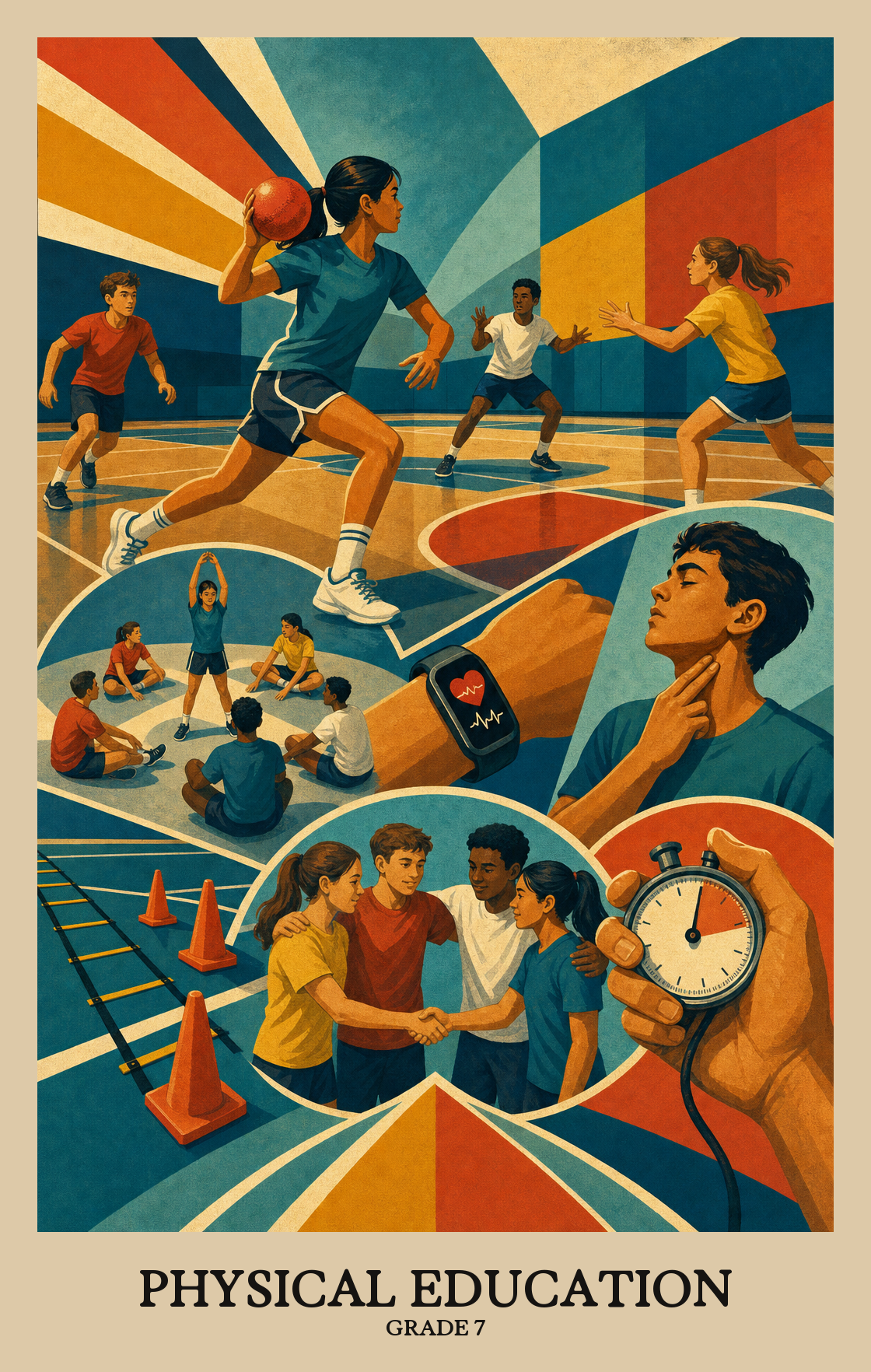
Students sharpen the basics of running, jumping, throwing, catching, and balancing. Parents may notice steadier coordination during games at home or in the yard.
Students learn how strength, endurance, and flexibility work, and how warm-ups and pacing affect a workout. They start tracking their own effort during activity.
Students practice teamwork during games and group activities. They work on communication, fair play, and handling wins and losses without drama.
Students set personal activity goals and try sports or fitness routines they could keep up outside of school. They reflect on what kinds of movement they actually enjoy.
Students practice moving their bodies in different ways, from throwing and catching to balancing and changing direction. These skills build the physical confidence to stay active inside and outside of school.
Students use what they know about how the body moves and gets stronger to make smart choices during exercise and physical activity.
Students practice working with classmates during physical activities, taking turns, listening, and following group norms. The focus is on how students treat each other, not just how well they move.
Students practice setting their own fitness goals and think about why staying active matters to them personally. The focus is on building habits they'll actually keep, not just moving because class requires it.
| Standard | Definition | Code |
|---|---|---|
| Develop a variety of motor skills, including locomotor, non-locomotor | Students practice moving their bodies in different ways, from throwing and catching to balancing and changing direction. These skills build the physical confidence to stay active inside and outside of school. | DC-PE.1.7 |
| Apply knowledge related to movement, performance | Students use what they know about how the body moves and gets stronger to make smart choices during exercise and physical activity. | DC-PE.2.7 |
| Develop social skills through movement, including respect for self and others… | Students practice working with classmates during physical activities, taking turns, listening, and following group norms. The focus is on how students treat each other, not just how well they move. | DC-PE.3.7 |
| Develop personal skills, identify personal benefits of movement | Students practice setting their own fitness goals and think about why staying active matters to them personally. The focus is on building habits they'll actually keep, not just moving because class requires it. | DC-PE.4.7 |
Students build skills in team sports, individual activities, and fitness routines. They work on things like passing a ball accurately, keeping a steady jog, and stretching with good form. The focus shifts from just learning skills to using them in games and workouts.
Aim for about an hour of movement most days. That can be a walk after dinner, shooting hoops in the driveway, biking, or following a short workout video. Doing it together makes it more likely to stick.
Help students find one activity they actually enjoy, even if it is not a team sport. Hiking, dancing, swimming, and biking all count. The goal at this age is building a habit of moving, not winning games.
A common path is fitness basics first, then invasion games like soccer or basketball, then net and target activities, then individual fitness or dance. Revisit fitness concepts in every unit so students see the connection between skills and health.
By spring, students should perform basic skills smoothly in a real game or activity, not just in drills. They should also explain why warm-ups matter, track their own fitness, and work well with a partner or small group.
Start with a quiet conversation about what is getting in the way. Body image, social worries, and skill gaps are common at this age. Offering choice within an activity and small early wins usually brings reluctant students back in.
Grades usually reflect effort, skill growth, knowledge of fitness ideas, and behavior with classmates. Students are not graded on being the fastest or strongest. Showing up ready and trying hard is most of the grade.
Students should move confidently in a few different activities, follow the rules of common games, and know how to warm up and cool down on their own. They should also be able to set a simple fitness goal and stick with it for a few weeks.