Listening with a sharper ear
Students start the year by listening closely to different kinds of music and describing what they hear. They learn to notice choices a composer or performer made and explain why those choices matter.
This is the year music shifts from following directions to making real choices. Students come up with their own musical ideas, shape them into pieces they can perform, and polish the parts that need work before sharing. They listen closely to music from different times and places and explain what the composer was going for. By spring, students can perform a piece they helped create and talk about why it sounds the way it does.
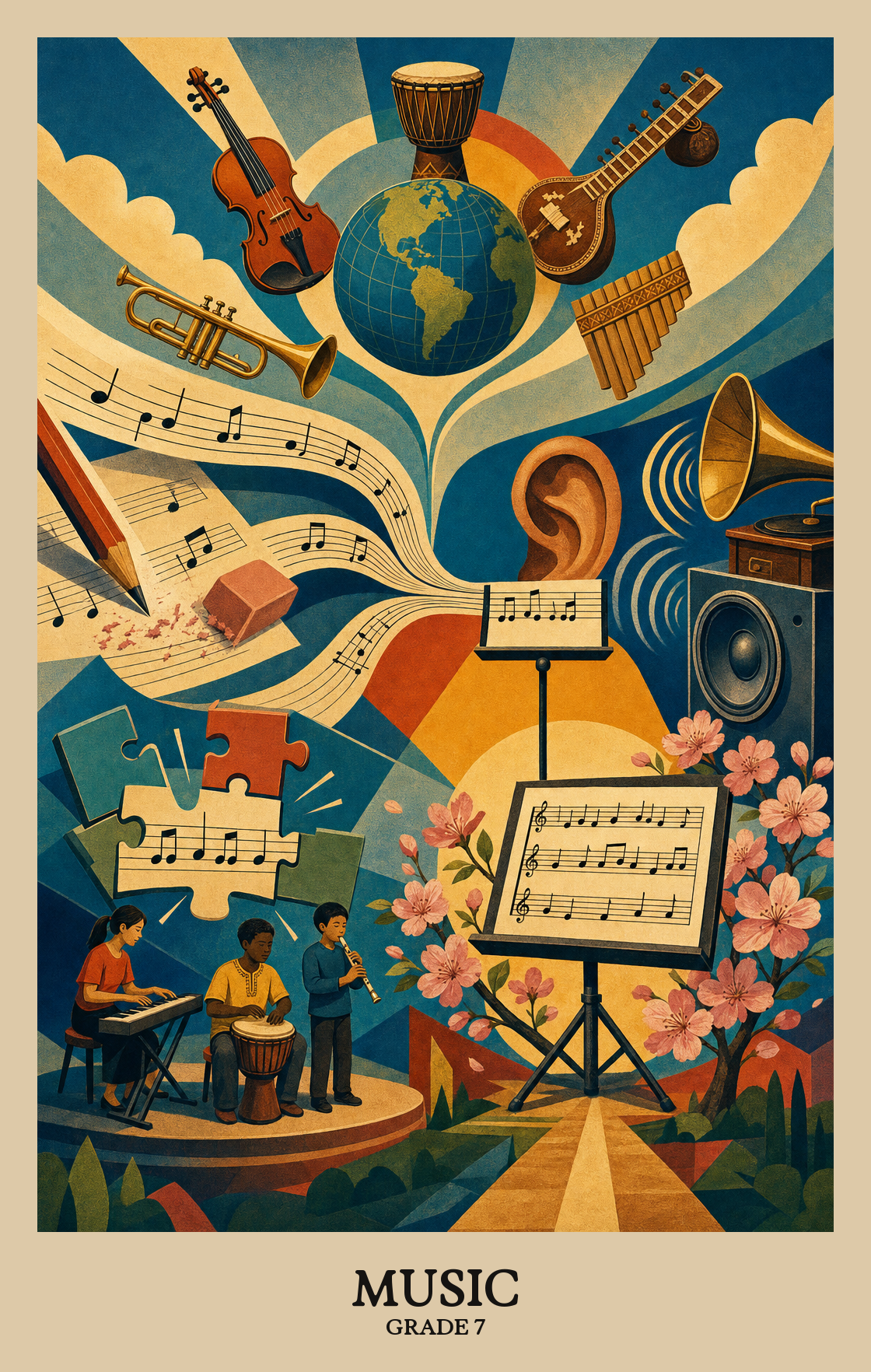
Students start the year by listening closely to different kinds of music and describing what they hear. They learn to notice choices a composer or performer made and explain why those choices matter.
Students connect songs to the people, places, and moments that shaped them. They draw on their own lives and what they are learning in other classes to make sense of why a piece sounds the way it does.
Students come up with their own musical ideas and shape them into something they can play or share. They try out options, get feedback, and revise until a short piece feels finished.
Students pick music to perform and work on the skills it takes to play or sing it well. They practice with a goal in mind and think about how to share the meaning of the piece with an audience.
Students wrap up the year by interpreting what a piece is trying to say and evaluating how well it works. They back up their opinions with specific reasons instead of just liking or disliking a song.
Students connect what they already know and have lived through to the music they create or perform. Personal experience shapes the choices they make as musicians.
Students connect a piece of music to the time, place, or culture it came from. Knowing that context changes how they hear and interpret the work.
| Standard | Definition | Code |
|---|---|---|
| Synthesize and relate knowledge and personal experiences to make art | Students connect what they already know and have lived through to the music they create or perform. Personal experience shapes the choices they make as musicians. | MU:Cn10.7 |
| Relate artistic ideas and works with societal, cultural | Students connect a piece of music to the time, place, or culture it came from. Knowing that context changes how they hear and interpret the work. | MU:Cn11.7 |
Students come up with original musical ideas, whether that means writing a melody, inventing a rhythm, or sketching out a short piece from scratch.
Students take a musical idea and shape it into something more complete, choosing how notes, rhythms, and structure fit together to make the piece work.
Students review a piece of music they composed, make edits to improve it, and bring it to a finished state ready to share or perform.
| Standard | Definition | Code |
|---|---|---|
| Generate and conceptualize artistic ideas and work | Students come up with original musical ideas, whether that means writing a melody, inventing a rhythm, or sketching out a short piece from scratch. | MU:Cr1.7 |
| Organize and develop artistic ideas and work | Students take a musical idea and shape it into something more complete, choosing how notes, rhythms, and structure fit together to make the piece work. | MU:Cr2.7 |
| Refine and complete artistic work | Students review a piece of music they composed, make edits to improve it, and bring it to a finished state ready to share or perform. | MU:Cr3.7 |
Students choose a piece of music to perform and explain why it suits the moment, the audience, or their own skill level. The choice itself is part of the work.
Students practice and improve a piece of music until it's ready to perform, fixing technical problems along the way.
Students perform a piece of music with a clear intention, making choices about dynamics, tone, and phrasing so the audience can feel what the music is meant to express.
| Standard | Definition | Code |
|---|---|---|
| Analyze, interpret, and select artistic work for presentation | Students choose a piece of music to perform and explain why it suits the moment, the audience, or their own skill level. The choice itself is part of the work. | MU:Pr4.7 |
| Develop and refine artistic techniques and work for presentation | Students practice and improve a piece of music until it's ready to perform, fixing technical problems along the way. | MU:Pr5.7 |
| Convey meaning through the presentation of artistic work | Students perform a piece of music with a clear intention, making choices about dynamics, tone, and phrasing so the audience can feel what the music is meant to express. | MU:Pr6.7 |
Students listen to a piece of music and break down what they hear, noticing how rhythm, melody, or structure shape the overall effect.
Students explain what a piece of music means and what the composer or performer was trying to express, using what they hear in the rhythm, melody, and dynamics to back up their thinking.
Students listen to a piece of music and judge it using a specific set of criteria, explaining why it works or falls short.
| Standard | Definition | Code |
|---|---|---|
| Perceive and analyze artistic work | Students listen to a piece of music and break down what they hear, noticing how rhythm, melody, or structure shape the overall effect. | MU:Re7.7 |
| Interpret intent and meaning in artistic work | Students explain what a piece of music means and what the composer or performer was trying to express, using what they hear in the rhythm, melody, and dynamics to back up their thinking. | MU:Re8.7 |
| Apply criteria to evaluate artistic work | Students listen to a piece of music and judge it using a specific set of criteria, explaining why it works or falls short. | MU:Re9.7 |
Students make their own short pieces, perform music alone and in groups, listen carefully to other people's music, and connect what they hear to history and their own lives. The work shifts from following directions to making choices and explaining why those choices fit the song.
Listen to a song together and ask what the music is trying to make a listener feel, and what the artist did to pull that off. Five minutes a few times a week is plenty. Pick songs from different times and places so students hear a wider range.
By spring, students can take a piece from a rough idea to a finished performance, give a clear reason for the choices they made, and use specific musical words to judge their own work and others. They should also connect a song to when, where, and why it was written.
No. Seventh grade music is about making thoughtful choices, listening closely, and explaining ideas. Students who think they aren't musical often do well once they see that careful listening and revision count just as much as natural talent.
Pair them on purpose instead of teaching them in separate units. A short composing project works best when students also perform it, get feedback, revise, and analyze a professional recording in the same genre. That loop is where the standards actually land.
Set a short, regular time, around 15 to 20 minutes, and ask students to play one easy part, one hard part, and one thing they want to fix. Ending with something they enjoy keeps them coming back the next day.
Two areas tend to drag: giving specific feedback instead of saying a piece is good or bad, and revising their own work after a first draft. Build short routines around both. A sentence stem for feedback and a required second draft go a long way.
They should be able to prepare a piece for a small audience, explain why they picked it, and talk about a recording using words like tempo, dynamics, and mood. Comfort with rehearsing, getting feedback, and trying again matters more than the difficulty of the piece.
Use a short rubric with three or four traits, such as musical choices, technique, revision, and reflection. Score the process and the final product, not just the performance. Sharing the rubric before the project keeps feedback tied to something students can actually act on.