Skip to content

What does a student learn in ?

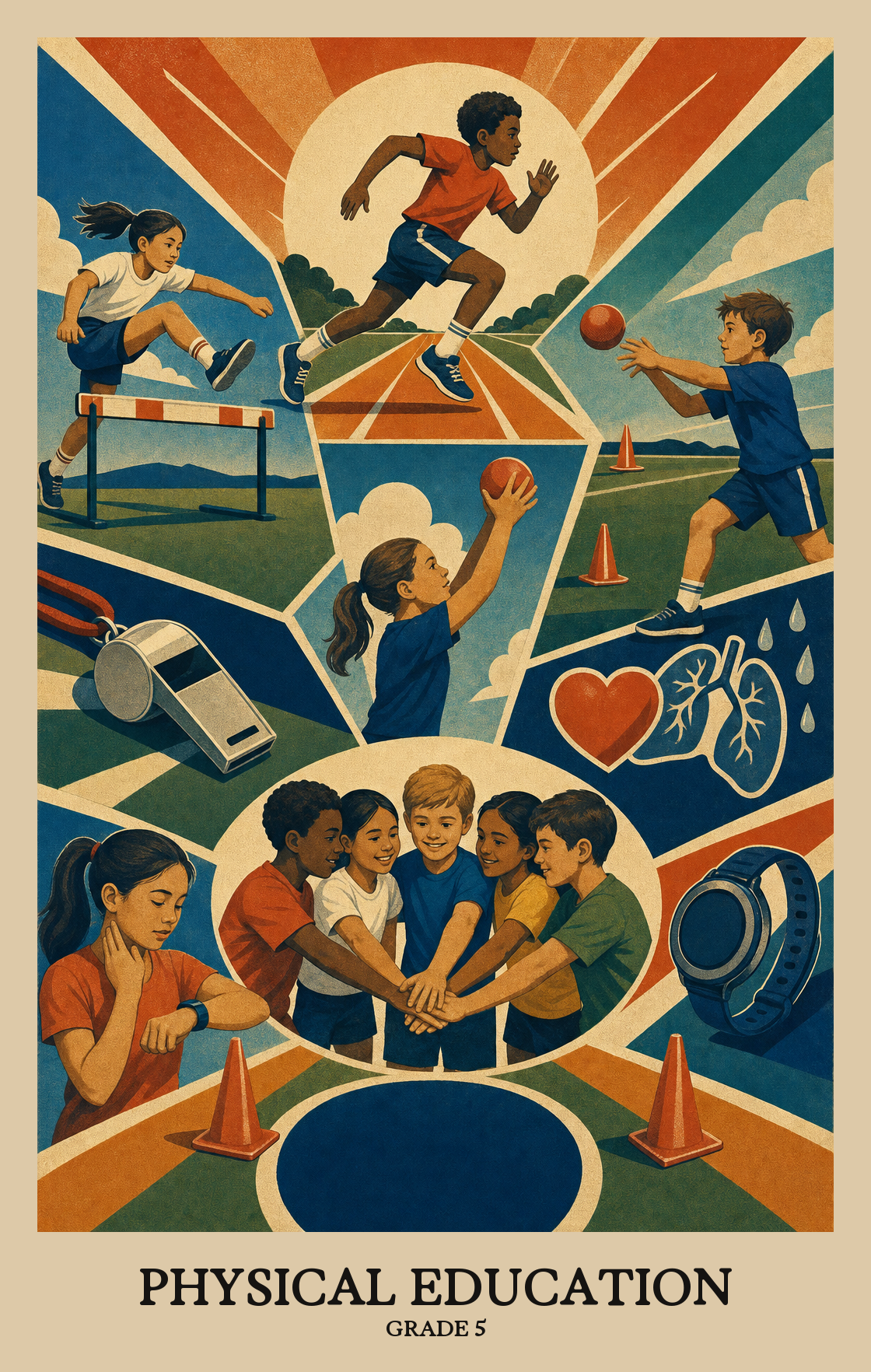
This is the year movement skills start coming together in real games and team activities. Students combine running, jumping, throwing, and catching to play sports and fitness games with growing control. They learn how their body responds to exercise and start tracking their own fitness. By spring, students can cooperate on a team, follow the rules of a game, and explain why staying active matters for their health.

  • Team sports
  • Fitness
  • Throwing and catching
  • Cooperation
  • Healthy habits
Source: Delaware Delaware Content Standards
Year at a glance
How the year usually goes. Every school and district set their own curriculum, so treat this as a guide, not official pacing.
  1. 1

    Movement skills and teamwork basics

    Students sharpen running, jumping, throwing, catching, and kicking through games and drills. They also practice working in small groups, taking turns, and following rules with classmates they may not know well yet.

  2. 2

    Fitness and how the body works

    Students learn what makes a workout strong for the heart, muscles, and flexibility. They try activities that get them out of breath on purpose and start to notice how their body feels before, during, and after.

  3. 3

    Skills in real games and sports

    Students put their skills into team and partner games, working on strategy, fair play, and clear communication. They practice handling wins, losses, and disagreements without dropping out of the game.

  4. 4

    Lifelong active habits

    Students set small fitness goals, track their own progress, and try activities they could keep doing outside of school, like biking, dancing, or hiking. They talk about why staying active matters as they get older.

Mastery Learning Standards
The required skills a student should display by the end of Grade 5.
Physical Education
  • Develop a variety of motor skills, including locomotor, non-locomotor

    Students practice moving their bodies in different ways, from running and jumping to throwing and catching. These skills build the physical foundation students need to stay active as they grow.

  • Apply knowledge related to movement, performance

    Students use what they know about how the body moves and stays healthy to make smarter choices during exercise and games. They connect fitness ideas to real activity, not just memorize them.

  • Develop social skills through movement, including respect for self and others…

    Students practice working with classmates during movement activities, taking turns, listening to others, and handling disagreements without giving up or giving others a hard time.

  • Develop personal skills, identify personal benefits of movement

    Students identify what physical activity does for them personally, then choose activities they actually want to keep doing. The goal is building habits that last past gym class.

Common Questions
  • What does physical education look like this year?

    Students practice movement skills like running, jumping, throwing, catching, kicking, and striking, and start using them in games and small-sided activities. They also learn how exercise affects the body and how to work well with teammates.

  • How can I help my child stay active at home?

    Aim for about 60 minutes of movement a day, even in short bursts. A walk after dinner, a game of catch in the yard, bike riding, or dancing in the living room all count. Let students pick the activity sometimes so they build the habit of choosing to move.

  • My child says they are not good at sports. What can I do?

    Focus on practice, not performance. Pick one skill, like dribbling a ball or jumping rope, and work on it together for five minutes a few times a week. Small wins build confidence faster than playing a full game.

  • How should I sequence skills across the year?

    Start with locomotor and non-locomotor basics, then layer in manipulative skills like throwing, catching, and striking. By mid-year, combine skills into small-sided games. Save the cooperative team activities for later, once students have the movement vocabulary to play them well.

  • Which skills usually need the most reteaching?

    Overhand throwing form, catching with hands away from the body, and striking with a racket or bat tend to need the most practice. Cooperation under pressure is the other big one. Students often know the rules but struggle to apply them once a game speeds up.

  • How do fitness concepts fit into class?

    Students learn the difference between cardio, strength, and flexibility, and start tracking how their body responds to activity. Heart rate checks, simple warm-ups, and short fitness stations during class help connect the vocabulary to what they feel in their bodies.

  • Does my child need special gear or clothes?

    Sneakers with laces tied and clothes that move are enough. A water bottle helps on active days. If there is a swimming unit or outdoor unit, the teacher will send a note ahead of time.

  • How do I know students are ready for middle school PE?

    By the end of the year, students should move with control in a game, throw and catch on the run, name a few benefits of regular activity, and work with a partner without constant reminders. If those are in place, they are ready for the faster pace of middle school PE.