Getting ideas for art
Students start the year by coming up with their own art ideas. They sketch, try things out, and pull from what they already know and care about to plan a piece.
This is the year art shifts from making to thinking about what the art means. Students plan a project before they start, try different ways to solve a visual problem, and go back to improve their work. They also look at art from other times and places and talk about why an artist made certain choices. By spring, they can pick a finished piece, explain the idea behind it, and tell you what they changed along the way.
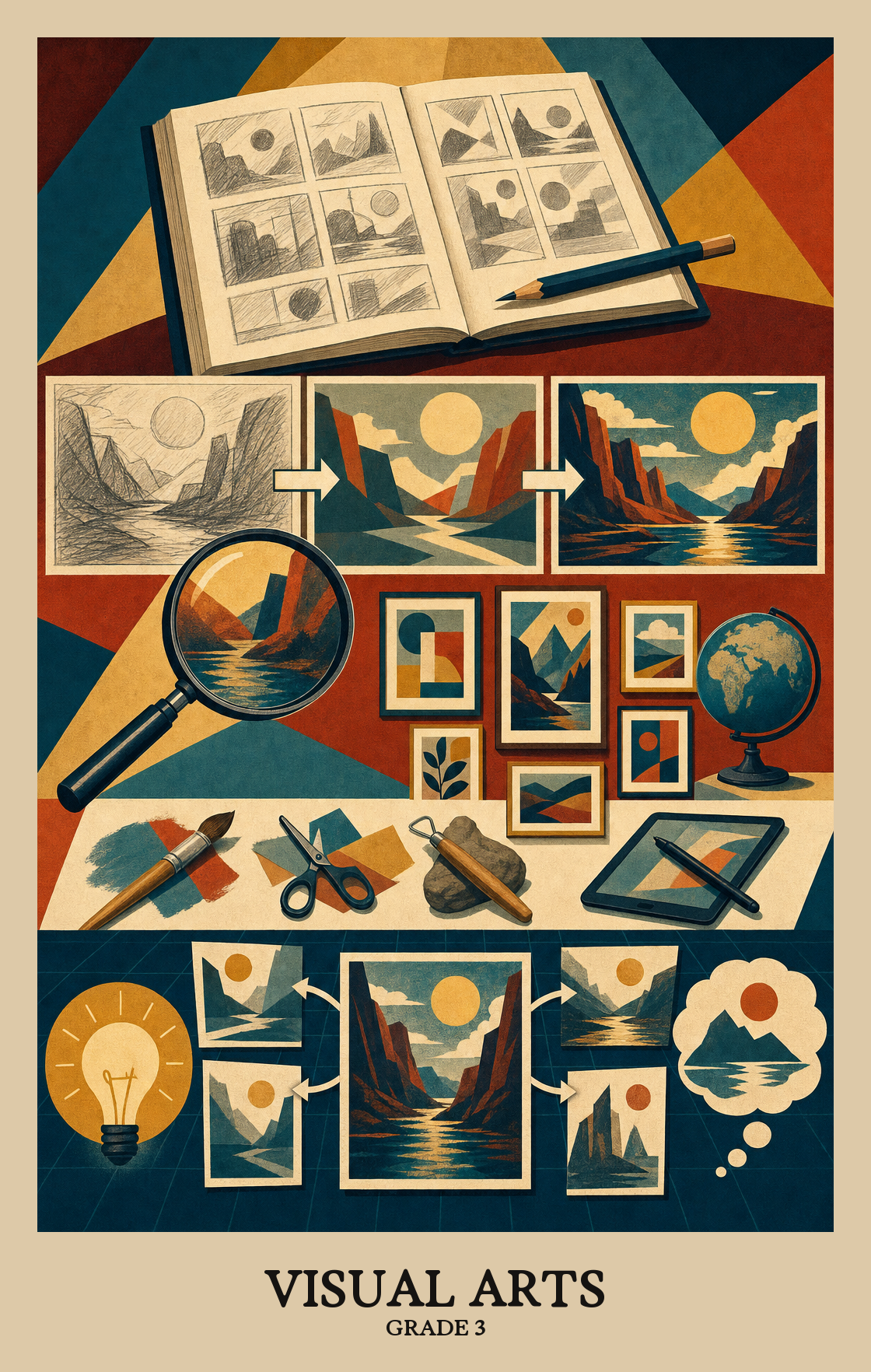
Students start the year by coming up with their own art ideas. They sketch, try things out, and pull from what they already know and care about to plan a piece.
Students practice drawing, painting, cutting, and shaping with more care. They learn to slow down, fix mistakes, and finish work they feel good about.
Students study artwork made by others and talk about what they see. They notice colors, shapes, and choices the artist made, and guess at what the art might mean.
Students connect art to history and to different cultures. They learn that art comes from real people in real places, and they bring their own experiences into the work they make.
Students pick pieces they are proud of and get them ready to show. They think about how the artwork is displayed and what they want a viewer to notice or feel.
Students draw on things they already know and moments from their own lives to make choices in their artwork. Personal experience becomes part of the creative process.
Students look at artwork and connect it to the time, place, or community it came from. Understanding that context helps them see why the artist made the choices they did.
| Standard | Definition | Code |
|---|---|---|
| Synthesize and relate knowledge and personal experiences to make art | Students draw on things they already know and moments from their own lives to make choices in their artwork. Personal experience becomes part of the creative process. | VA:Cn10.3 |
| Relate artistic ideas and works with societal, cultural | Students look at artwork and connect it to the time, place, or community it came from. Understanding that context helps them see why the artist made the choices they did. | VA:Cn11.3 |
Students brainstorm and sketch out ideas before making art. They explore different subjects or feelings they want to express, then choose a direction for their work.
Students take a rough idea for an artwork and work through decisions about color, shape, and composition until the piece does what they intended.
Students look at their own artwork, decide what needs fixing or finishing, and make deliberate changes before calling it done.
| Standard | Definition | Code |
|---|---|---|
| Generate and conceptualize artistic ideas and work | Students brainstorm and sketch out ideas before making art. They explore different subjects or feelings they want to express, then choose a direction for their work. | VA:Cr1.3 |
| Organize and develop artistic ideas and work | Students take a rough idea for an artwork and work through decisions about color, shape, and composition until the piece does what they intended. | VA:Cr2.3 |
| Refine and complete artistic work | Students look at their own artwork, decide what needs fixing or finishing, and make deliberate changes before calling it done. | VA:Cr3.3 |
Students choose which of their artworks to share and explain why that piece best shows what they were trying to create.
Students practice and improve a piece of visual art until it's ready to share with others, making changes to strengthen the work before it goes on display.
Students choose how to display their artwork so viewers understand what the piece is about. The way it is shown, framed, or arranged is part of the message.
| Standard | Definition | Code |
|---|---|---|
| Analyze, interpret, and select artistic work for presentation | Students choose which of their artworks to share and explain why that piece best shows what they were trying to create. | VA:Pr4.3 |
| Develop and refine artistic techniques and work for presentation | Students practice and improve a piece of visual art until it's ready to share with others, making changes to strengthen the work before it goes on display. | VA:Pr5.3 |
| Convey meaning through the presentation of artistic work | Students choose how to display their artwork so viewers understand what the piece is about. The way it is shown, framed, or arranged is part of the message. | VA:Pr6.3 |
Students look closely at a piece of art and describe what they notice, from the colors and shapes used to the mood the artist created.
Students look at a piece of art and explain what they think the artist meant, using details from the image to support their thinking.
Students look at their own artwork or a classmate's and use a short checklist or set of questions to decide what's working and what could improve.
| Standard | Definition | Code |
|---|---|---|
| Perceive and analyze artistic work | Students look closely at a piece of art and describe what they notice, from the colors and shapes used to the mood the artist created. | VA:Re7.3 |
| Interpret intent and meaning in artistic work | Students look at a piece of art and explain what they think the artist meant, using details from the image to support their thinking. | VA:Re8.3 |
| Apply criteria to evaluate artistic work | Students look at their own artwork or a classmate's and use a short checklist or set of questions to decide what's working and what could improve. | VA:Re9.3 |
Students make art that comes from their own lives and ideas. They try out drawing, painting, cutting, building, and other ways of making things. They also talk about what they see in art and explain what they were trying to say in their own work.
Skip the blank page. Ask what they want to show, then suggest sketching three quick versions before picking one. Praise the choices they made, like color or shape, instead of how realistic it looks. Most blocks at this age come from fear of getting it wrong on the first try.
Ask students to pick one or two pieces a month to keep and tell you why. That choice is part of the learning. It builds the habit of looking back at their work and noticing what they did well and what they would change.
Start with idea generation and sketchbooks so students get used to making choices. Move into a few focused techniques like line, shape, color mixing, and simple sculpture. Save the longer projects with revision and presentation for the second half of the year, once routines are in place.
Build in at least one revision step on bigger projects. Have students stop partway, look at their piece, and name one thing to change or add before finishing. This is where the standards around refining and completing work actually live.
Students should be able to describe what they see, guess what the artist meant, and say what they like or would change. Simple prompts work best: What is going on here? What makes you say that? What would you do differently?
Some exposure helps, but the goal is not memorizing names. Students should connect art to the people and times it came from, including their own culture and family. Visiting a museum, looking at picture books, or talking about art in your neighborhood all count.
By spring, students should be able to plan a piece, work on it across more than one sitting, revise part of it, and explain what it means. They should also be able to look at someone else's art and say something specific about it beyond liking or not liking it.
Keep paper, pencils, and a few colors within reach and let students draw without a prompt. Once a week, ask them to tell the story behind one drawing. That short conversation does more than any worksheet.