Healthy habits and daily choices
Students start the year learning what keeps a body well. They look at sleep, food, movement, and handwashing, and practice naming small choices that help them feel good each day.
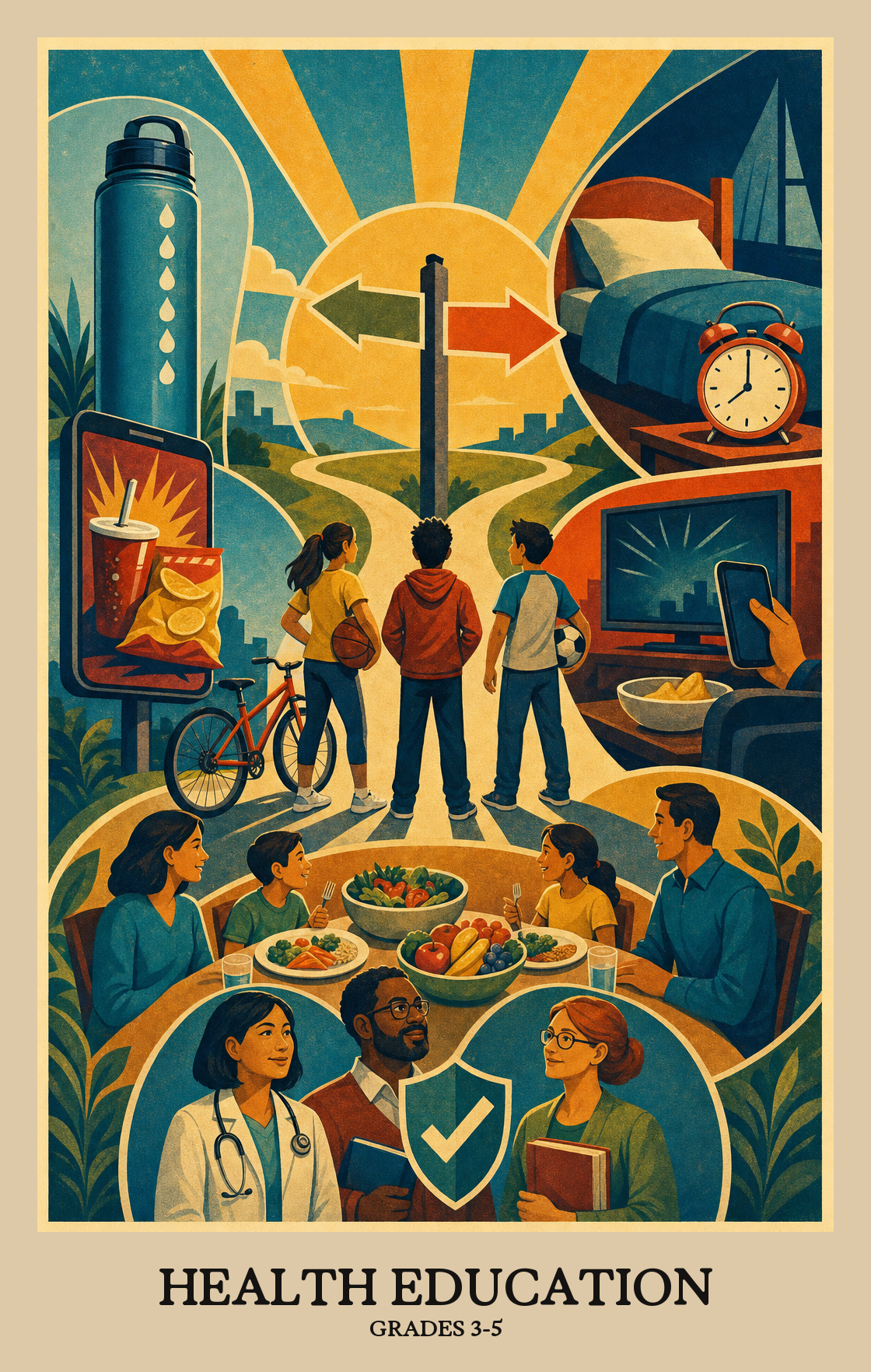
These are the years health class shifts from naming healthy habits to making real choices about them. Students learn how friends, ads, and family shape what they eat, watch, and do, and they practice steps for setting a goal or working through a tough decision. They also figure out which adults and sources to trust when they have a question about their body or feelings. By spring, students can walk through a simple plan for a goal like drinking more water or getting more sleep, and explain why they picked it.
Students start the year learning what keeps a body well. They look at sleep, food, movement, and handwashing, and practice naming small choices that help them feel good each day.
Students think about why people make the choices they do. They notice how family, friends, ads, and screens can pull a kid toward or away from healthy habits.
Students learn where to go when they have a health question or a worry. They practice asking a parent, school nurse, or doctor, and start to tell a reliable source from a shaky one.
Students work on how they speak and listen when feelings run high. They practice saying no, asking for help, and working through a small conflict without making it worse.
Students walk through a simple way to think before they act, weighing what might happen next. They also pick a small health goal, like drinking more water, and track how it goes.
Students put it all together by sharing what they know with others. They might write a poster, give a short talk, or encourage a friend to make a healthier choice.
Students apply basic health facts to make real decisions, like choosing foods that give them energy or helping a friend who feels sick.
Students look at what shapes health choices, like ads, friends, family, and habits, and figure out whether those influences push toward healthier or less healthy decisions.
Students learn to find trustworthy sources of health information, like a school nurse, a doctor, or a reputable website. They practice using those sources to answer health questions for themselves and the people around them.
Students practice how to speak up, listen, and respond in everyday situations that affect their health or someone else's. That might mean asking for help, saying no, or checking in on a friend.
Students practice a step-by-step process for making choices that protect their health and the health of people around them. They learn to think through options before deciding.
Students pick a health goal, like getting more sleep or being more active, then map out the steps to reach it. They also think about how their plan might help a friend or family member, not just themselves.
Students practice real habits, like washing hands, staying active, or speaking up when someone feels unsafe, that protect their own health and the health of people around them.
Students learn to speak up for healthy choices, for themselves and for people around them. That might mean encouraging a friend to drink water instead of soda or asking a teacher for help with a stressful situation.
| Standard | Definition | Code |
|---|---|---|
| Use functional knowledge of health concepts to support health and well-being of… Grades 3-5 | Students apply basic health facts to make real decisions, like choosing foods that give them energy or helping a friend who feels sick. | CT-HE.1.3-5 |
| Analyze influences that affect health and well-being of self and others Grades 3-5 | Students look at what shapes health choices, like ads, friends, family, and habits, and figure out whether those influences push toward healthier or less healthy decisions. | CT-HE.2.3-5 |
| Access valid and reliable resources to support health and well-being of self… Grades 3-5 | Students learn to find trustworthy sources of health information, like a school nurse, a doctor, or a reputable website. They practice using those sources to answer health questions for themselves and the people around them. | CT-HE.3.3-5 |
| Use interpersonal communication skills to support health and well-being of self… Grades 3-5 | Students practice how to speak up, listen, and respond in everyday situations that affect their health or someone else's. That might mean asking for help, saying no, or checking in on a friend. | CT-HE.4.3-5 |
| Use a decision-making process to support health and well-being of self and… Grades 3-5 | Students practice a step-by-step process for making choices that protect their health and the health of people around them. They learn to think through options before deciding. | CT-HE.5.3-5 |
| Use a goal-setting process to support health and well-being of self and others Grades 3-5 | Students pick a health goal, like getting more sleep or being more active, then map out the steps to reach it. They also think about how their plan might help a friend or family member, not just themselves. | CT-HE.6.3-5 |
| Demonstrate practices and behaviors to support health and well-being of self… Grades 3-5 | Students practice real habits, like washing hands, staying active, or speaking up when someone feels unsafe, that protect their own health and the health of people around them. | CT-HE.7.3-5 |
| Advocate to promote health and well-being of self and others Grades 3-5 | Students learn to speak up for healthy choices, for themselves and for people around them. That might mean encouraging a friend to drink water instead of soda or asking a teacher for help with a stressful situation. | CT-HE.8.3-5 |
Students learn habits that keep their bodies and minds healthy, like sleep, food, exercise, hygiene, and handling feelings. They also practice talking through problems with friends and family, asking trusted adults for help, and making safer choices when something feels off.
Pick one small routine and stick with it for a few weeks. Brushing teeth twice a day, a regular bedtime, drinking water with meals, or a short walk after dinner all count. Talk about why the habit matters so it sticks past the reminder.
Start with personal habits like sleep, food, and hygiene, since those anchor everything else. Move into feelings and friendships in the middle of the year, then safety and decision-making in the spring. Revisit each unit briefly so students see how the skills connect.
Use short, regular check-ins instead of long talks. Ask what went well today and what felt hard. Name feelings out loud when they come up in books, shows, or real life so students hear that words like frustrated, left out, or proud are normal.
Decision-making and finding trustworthy information. Students can list steps but freeze in the moment, and many treat the first website or video they see as the right answer. Build in short role-plays and source checks across every unit, not just one lesson.
By spring, students should be able to set a small health goal and track it, ask a trusted adult for help with a real problem, and explain one influence shaping their choices, such as ads or friends. If those three feel solid, the foundation is there.
Talk about who made the message and what they want students to do or buy. A quick conversation about a food ad, a game, or a video can teach the same skill as a full lesson. The goal is for students to pause and ask questions before acting.
Listen first and thank them for telling someone. Then connect them to the right adult, whether that is the school counselor, nurse, or a parent. Students at this age need to see that asking for help works, so follow up the next day.
Most of it is practice. Students need to know basics like food groups, body systems, and safety rules, but the bigger work is using that knowledge to make a choice, set a goal, or speak up. Plan more role-plays and discussions than worksheets.