Exploring tools and materials
Students get their hands on crayons, markers, paint, paper, and clay. They learn how each tool works and start making marks, shapes, and simple pictures of things they know.
This is the year art class begins as a real practice, not just play with crayons. Students try out simple tools and materials, then talk about what they made and why. They also start looking carefully at other people's art and saying what they notice. By spring, students can finish a piece, share it with the class, and explain one idea behind it.
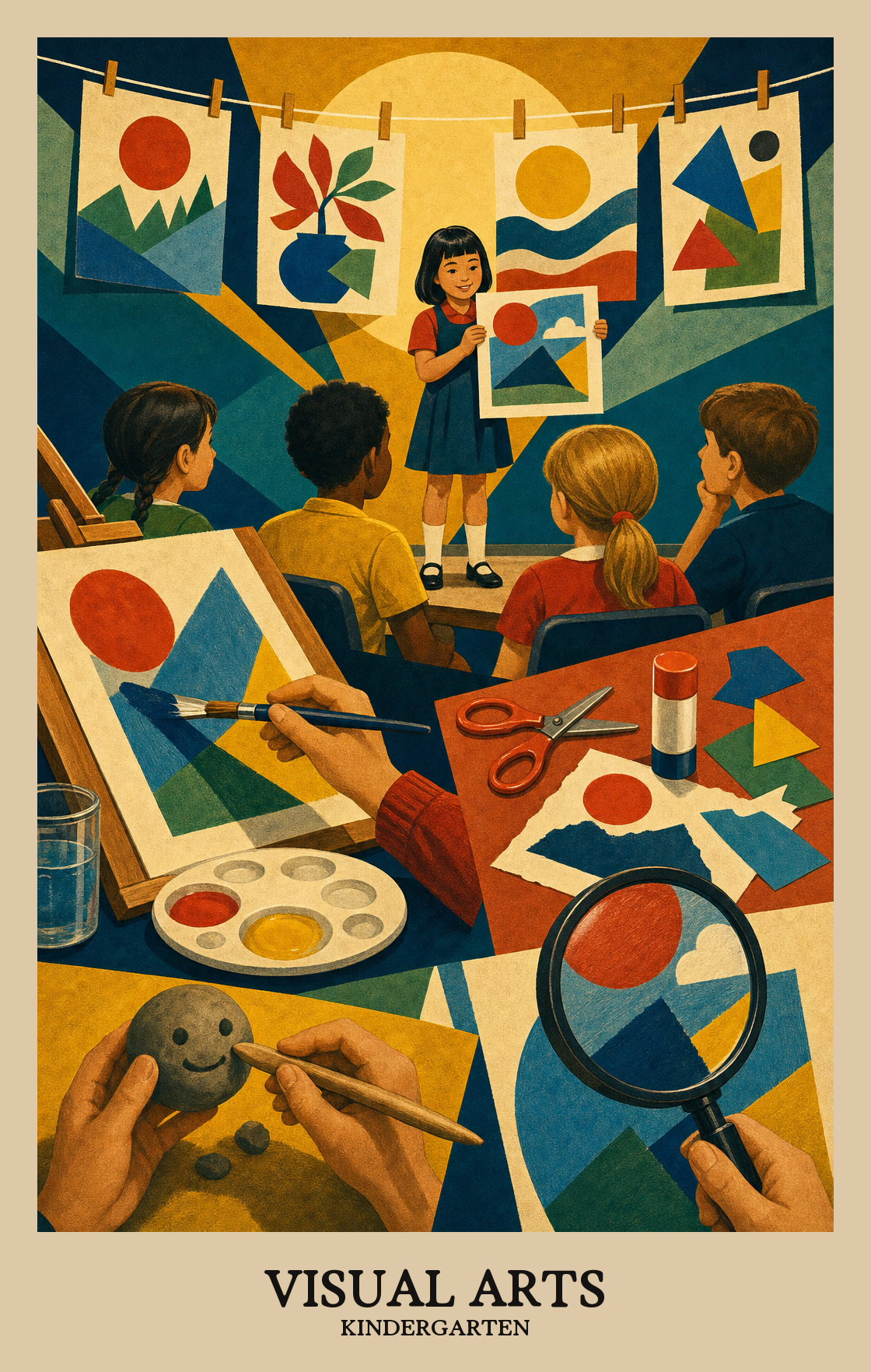
Students get their hands on crayons, markers, paint, paper, and clay. They learn how each tool works and start making marks, shapes, and simple pictures of things they know.
Students come up with their own ideas for what to draw or build. They pull from family, pets, favorite books, and things they see at home or on the way to school.
Students learn that art takes more than one try. They add details, fix parts they want to change, and decide when a piece is done.
Students pick pieces to show others and explain what they made and why. They also look at art by classmates and famous artists and say what they notice.
Students draw on things they already know and moments from their own lives to make art. A picture of a pet, a memory of a birthday, or a feeling about home can all become the starting point for a piece.
Art tells stories about real people and real times. Students look at artwork and talk about what it shows about how people lived, what they believed, or where they came from.
| Standard | Definition | Code |
|---|---|---|
| Synthesize and relate knowledge and personal experiences to make art | Students draw on things they already know and moments from their own lives to make art. A picture of a pet, a memory of a birthday, or a feeling about home can all become the starting point for a piece. | VA:Cn10.k |
| Relate artistic ideas and works with societal, cultural | Art tells stories about real people and real times. Students look at artwork and talk about what it shows about how people lived, what they believed, or where they came from. | VA:Cn11.k |
Students come up with ideas for their own artwork, deciding what to make and how to make it before they start.
Students take their drawing or craft idea and work it out by making choices about color, shape, and how to arrange things on the page.
Students finish a piece of artwork by looking it over and making small changes before calling it done.
| Standard | Definition | Code |
|---|---|---|
| Generate and conceptualize artistic ideas and work | Students come up with ideas for their own artwork, deciding what to make and how to make it before they start. | VA:Cr1.k |
| Organize and develop artistic ideas and work | Students take their drawing or craft idea and work it out by making choices about color, shape, and how to arrange things on the page. | VA:Cr2.k |
| Refine and complete artistic work | Students finish a piece of artwork by looking it over and making small changes before calling it done. | VA:Cr3.k |
Students choose which of their drawings or artwork to share with others and start to explain why they picked it.
Students practice a drawing or craft until it looks the way they want, then prepare it to show others.
Students share their artwork with others and explain what they made and why. The piece itself tells a story, and students learn that what they create can mean something to the people who see it.
| Standard | Definition | Code |
|---|---|---|
| Analyze, interpret, and select artistic work for presentation | Students choose which of their drawings or artwork to share with others and start to explain why they picked it. | VA:Pr4.k |
| Develop and refine artistic techniques and work for presentation | Students practice a drawing or craft until it looks the way they want, then prepare it to show others. | VA:Pr5.k |
| Convey meaning through the presentation of artistic work | Students share their artwork with others and explain what they made and why. The piece itself tells a story, and students learn that what they create can mean something to the people who see it. | VA:Pr6.k |
Students look closely at artwork and talk about what they see, such as colors, shapes, and what the picture makes them think or feel.
Students look at a painting or drawing and talk about what they think the artist was trying to say or show.
Students look at their own drawings or a classmate's work and decide what makes it good, using simple questions like "Does it show what I meant to make?"
| Standard | Definition | Code |
|---|---|---|
| Perceive and analyze artistic work | Students look closely at artwork and talk about what they see, such as colors, shapes, and what the picture makes them think or feel. | VA:Re7.k |
| Interpret intent and meaning in artistic work | Students look at a painting or drawing and talk about what they think the artist was trying to say or show. | VA:Re8.k |
| Apply criteria to evaluate artistic work | Students look at their own drawings or a classmate's work and decide what makes it good, using simple questions like "Does it show what I meant to make?" | VA:Re9.k |
Students try out drawing, painting, cutting, gluing, and building with clay or blocks. They learn to come up with their own ideas, finish a piece, and talk about what they made and why. The goal is comfort with materials and confidence sharing their work.
Keep a basket of crayons, markers, scrap paper, and tape where students can reach it. When they finish a drawing, ask what is happening in the picture and why they chose those colors. Listening matters more than fixing anything.
No. At this age the point is exploring ideas and materials, not making realistic pictures. A scribble of a family or a lumpy clay dog both count as real art if students can talk about what they made.
Start with drawing and torn paper in the fall while students learn routines for getting supplies out and cleaning up. Add paint, glue, and scissors once those habits are solid. Save clay and group projects for later in the year.
Students can come up with an idea, pick materials, finish a piece, and say a sentence or two about it. They can also look at someone else's art and say what they notice. Neatness and skill will keep growing for years.
Skip praise like "it's beautiful" and ask questions instead. Try "tell me about this part" or "what were you thinking about when you drew this?" Students relax when an adult is curious about the idea rather than judging the picture.
Show one artwork at a time from different places and time periods, and ask what students notice. Pair a project with a picture book or a piece students have already seen. Keep the talk short and concrete, not a lecture.
Students should be able to plan a small project, stick with it until it is finished, and put materials away. They should also be willing to share what they made with a grown-up or a friend without falling apart if someone asks a question.