Playing and pretending together
Students step into make-believe with classmates. They take on simple roles like a parent, a pet, or a shopkeeper, and use their bodies and voices to bring those characters to life.
This is the year make-believe becomes a first taste of theatre. Students turn their own ideas and everyday experiences into short pretend scenes, trying on characters, voices, and simple movements. They also watch classmates perform and start saying what they noticed and what it made them feel. By spring, students can act out a short story or scene in front of the class and talk about what happened.
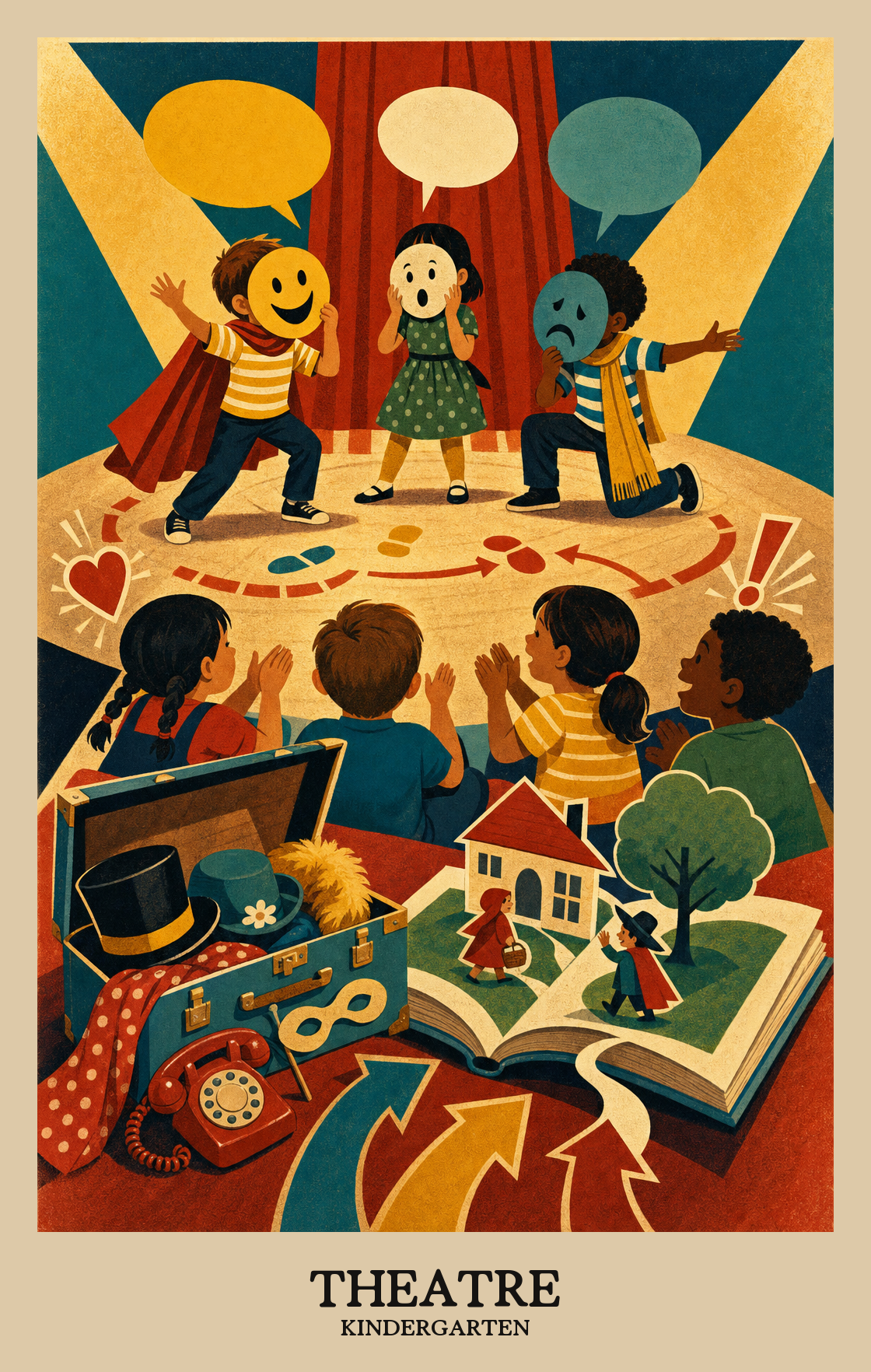
Students step into make-believe with classmates. They take on simple roles like a parent, a pet, or a shopkeeper, and use their bodies and voices to bring those characters to life.
Students start inventing their own scenes from a picture, a prop, or a story they know. They decide who the characters are, where the scene happens, and what happens next.
Students practice a short scene and perform it for the class. They learn to face the audience, speak so others can hear, and stay in their part from start to finish.
Students watch classmates perform and notice what they liked, what felt funny or sad, and what the story was about. They begin connecting plays to their own lives and the people around them.
Students draw on things they know and moments they remember to build a character or act out a story.
Stories and plays come from real places, times, and communities. Students notice how a song, costume, or character connects to where and when a story happened.
| Standard | Definition | Code |
|---|---|---|
| Synthesize and relate knowledge and personal experiences to make art | Students draw on things they know and moments they remember to build a character or act out a story. | TH:Cn10.k |
| Relate artistic ideas and works with societal, cultural | Stories and plays come from real places, times, and communities. Students notice how a song, costume, or character connects to where and when a story happened. | TH:Cn11.k |
Students come up with ideas for a character or a short scene. They use their imagination to decide who a character is and what that character might do.
Students act out a simple story or scene by deciding what their character does and says. They make basic choices, like where to stand or how to move, to bring the idea to life.
Students pick a favorite story or character idea they have been acting out and practice it until it feels just right. They learn that creative work gets better the more you work on it.
| Standard | Definition | Code |
|---|---|---|
| Generate and conceptualize artistic ideas and work | Students come up with ideas for a character or a short scene. They use their imagination to decide who a character is and what that character might do. | TH:Cr1.k |
| Organize and develop artistic ideas and work | Students act out a simple story or scene by deciding what their character does and says. They make basic choices, like where to stand or how to move, to bring the idea to life. | TH:Cr2.k |
| Refine and complete artistic work | Students pick a favorite story or character idea they have been acting out and practice it until it feels just right. They learn that creative work gets better the more you work on it. | TH:Cr3.k |
Students choose a character or scene to act out and practice showing it to an audience. The focus is on picking something they can perform and making deliberate choices about how to present it.
Students practice and polish a short performance until it's ready to share with others.
Students use movement, voice, and simple props to share a story or feeling with an audience. The performance itself is how they communicate the idea.
| Standard | Definition | Code |
|---|---|---|
| Analyze, interpret, and select artistic work for presentation | Students choose a character or scene to act out and practice showing it to an audience. The focus is on picking something they can perform and making deliberate choices about how to present it. | TH:Pr4.k |
| Develop and refine artistic techniques and work for presentation | Students practice and polish a short performance until it's ready to share with others. | TH:Pr5.k |
| Convey meaning through the presentation of artistic work | Students use movement, voice, and simple props to share a story or feeling with an audience. The performance itself is how they communicate the idea. | TH:Pr6.k |
Students watch a short performance and talk about what they noticed, such as what the characters did or how the story felt.
Students look at a short play or puppet show and say what they think it means or how it made them feel. They explain why the story or characters matter to them.
Students look at a short performance or scene and say what they liked, what was hard to follow, and why. They practice using simple reasons to explain what worked and what did not.
| Standard | Definition | Code |
|---|---|---|
| Perceive and analyze artistic work | Students watch a short performance and talk about what they noticed, such as what the characters did or how the story felt. | TH:Re7.k |
| Interpret intent and meaning in artistic work | Students look at a short play or puppet show and say what they think it means or how it made them feel. They explain why the story or characters matter to them. | TH:Re8.k |
| Apply criteria to evaluate artistic work | Students look at a short performance or scene and say what they liked, what was hard to follow, and why. They practice using simple reasons to explain what worked and what did not. | TH:Re9.k |
Theatre at this age is mostly pretend play with a purpose. Students act out short stories, take on character voices, and use their bodies to show feelings like happy, scared, or sleepy. There are no scripts to memorize and no big performances to worry about.
Act out favorite picture books together. Take turns being different characters, change your voice, and ask questions like what would the wolf do next or how does the bunny feel right now. Ten minutes of pretend play counts.
Start with imagination and body work, such as moving like animals or weather. Move into character and voice in the middle of the year. Save short story dramatizations and simple sharing for the spring once students are comfortable being watched.
No. Most of the work happens in the classroom in small groups or as a whole class. Sharing might mean acting out a scene for classmates on the rug, not a formal show with costumes and an audience.
Watching as an audience is the hardest part. Students want to join in or talk while others perform. Plan to practice audience behavior often, and revisit how to give a kind comment about what a classmate did well.
Shy students can still grow a lot through theatre. Pair acting with a stuffed animal or puppet, or let students act alongside a friend instead of alone. The goal is taking on a character, not being loud or being on a stage.
By spring, students should be able to pretend to be a character with a different voice or walk, act out a short scene from a familiar story, and watch a classmate perform without interrupting. They should also be able to say one thing they liked about a scene.
Acting out stories builds vocabulary, listening, and memory for what happens first, next, and last. Students also practice sharing, taking turns, and reading faces and tone, which helps with reading and friendships.