Exploring tools and ideas
Students try out cameras, tablets, and recording tools for the first time. They share ideas from home and pictures they like, and start to notice that media art is something people make on purpose.
This is the year students discover that pictures, sounds, and videos are things they can make, not just watch. Students play with cameras, drawings, and simple recordings to share an idea or a story from their own life. They practice picking a favorite piece to show others and saying what they like about a classmate's work. By spring, students can create a short media piece and explain what it means to them.
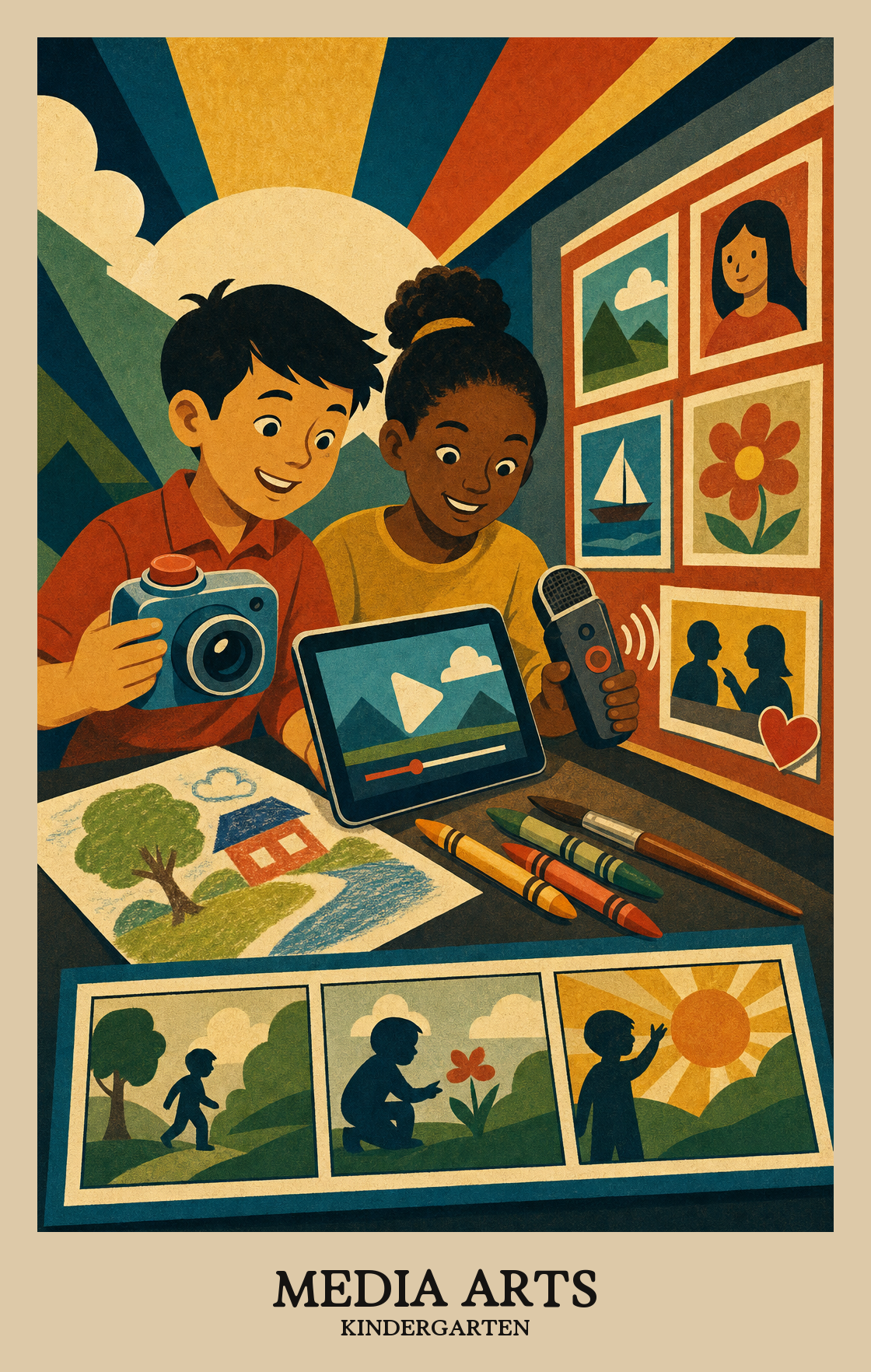
Students try out cameras, tablets, and recording tools for the first time. They share ideas from home and pictures they like, and start to notice that media art is something people make on purpose.
Students plan small projects like a photo, a short video, or a digital drawing. They pick what to include, arrange the pieces, and decide when the work feels finished.
Students get their projects ready to show classmates and family. They practice presenting, fix small parts that did not come out right, and explain what their work is about.
Students watch and listen to videos, photos, and sounds made by classmates and artists. They notice what they see and hear, talk about what it might mean, and say what works well.
Students connect something from their own life to a media arts project, using what they know and what they've experienced as the starting point for making something new.
Students look at a piece of media art, like a photo or video, and talk about where it came from or what was happening in the world when it was made.
| Standard | Definition | Code |
|---|---|---|
| Synthesize and relate knowledge and personal experiences to make art | Students connect something from their own life to a media arts project, using what they know and what they've experienced as the starting point for making something new. | MA:Cn10.k |
| Relate artistic ideas and works with societal, cultural | Students look at a piece of media art, like a photo or video, and talk about where it came from or what was happening in the world when it was made. | MA:Cn11.k |
Students come up with their own ideas for a media arts project, like drawing a picture to put on a screen or making up a short story to act out.
Students arrange images, sounds, or simple digital tools to build a short media project, then make choices about what to keep or change.
Students finish a media art project by making small improvements before calling it done. They learn that good work often takes more than one try.
| Standard | Definition | Code |
|---|---|---|
| Generate and conceptualize artistic ideas and work | Students come up with their own ideas for a media arts project, like drawing a picture to put on a screen or making up a short story to act out. | MA:Cr1.k |
| Organize and develop artistic ideas and work | Students arrange images, sounds, or simple digital tools to build a short media project, then make choices about what to keep or change. | MA:Cr2.k |
| Refine and complete artistic work | Students finish a media art project by making small improvements before calling it done. They learn that good work often takes more than one try. | MA:Cr3.k |
Students pick which of their media projects to share with the class and explain why they chose it.
Students practice and improve a simple media project, like a drawing or short video, until it is ready to share with others.
Students share their media art project with an audience and explain, in their own words, what they were trying to show or say.
| Standard | Definition | Code |
|---|---|---|
| Analyze, interpret, and select artistic work for presentation | Students pick which of their media projects to share with the class and explain why they chose it. | MA:Pr4.k |
| Develop and refine artistic techniques and work for presentation | Students practice and improve a simple media project, like a drawing or short video, until it is ready to share with others. | MA:Pr5.k |
| Convey meaning through the presentation of artistic work | Students share their media art project with an audience and explain, in their own words, what they were trying to show or say. | MA:Pr6.k |
Students look closely at a piece of media, like a photo or short video, and describe what they notice. This builds the habit of slowing down and really seeing what's in front of them.
Students look at a piece of artwork and talk about what they think it means or how it makes them feel. There is no single right answer.
Students look at a piece of artwork and say what they like about it and why. They start learning to give a reason for their opinion, not just "I like it."
| Standard | Definition | Code |
|---|---|---|
| Perceive and analyze artistic work | Students look closely at a piece of media, like a photo or short video, and describe what they notice. This builds the habit of slowing down and really seeing what's in front of them. | MA:Re7.k |
| Interpret intent and meaning in artistic work | Students look at a piece of artwork and talk about what they think it means or how it makes them feel. There is no single right answer. | MA:Re8.k |
| Apply criteria to evaluate artistic work | Students look at a piece of artwork and say what they like about it and why. They start learning to give a reason for their opinion, not just "I like it." | MA:Re9.k |
Media arts means making things with cameras, tablets, recorders, simple animation, and other tools that capture pictures, sound, or video. At this age, students try out the tools, take photos, record short sounds or videos, and talk about what they made.
Students should come up with an idea for a picture, sound, or short video, make it with help, and share it with the class. They should also be able to say what they like about their own work and a classmate's work.
Let students use a phone or tablet to take photos of things they care about, then ask them to pick a favorite and say why. Five minutes of looking at pictures together and asking what is happening counts as real practice.
No. A phone camera, a voice recorder app, or even crayons and paper used to make a flipbook are plenty. The point is the idea and the choices behind it, not the device.
Start with looking and noticing, then move to making short pieces with one tool at a time, such as a camera or a recorder. Save sharing and giving feedback for later in the year, once routines for taking turns and listening are steady.
Finishing a piece and talking about why they made the choices they made. Many five-year-olds want to keep starting new things, so plan short routines for stopping, looking, and saying one thing about the work.
Give a small starting point, such as take three photos of something red, or record the sound of breakfast. A narrow prompt is easier than a blank screen, and students can always add their own twist once they begin.
Sharing is short. A student holds up the picture or plays the clip, says one sentence about it, and classmates say one thing they noticed. Keep feedback to what is in the work, not whether it is good or bad.