Sparking ideas from experience
Students start the year by turning memories, family stories, and things they care about into art ideas. They keep a sketchbook of drawings and notes they can return to later.
This is the year art becomes a thinking practice, not just a making one. Students plan their work, try different approaches, and revise pieces before calling them finished. They also start looking closely at art and asking what the artist meant and why it matters. By spring, students can talk about a piece they made, explain the choices behind it, and prepare it for others to see.
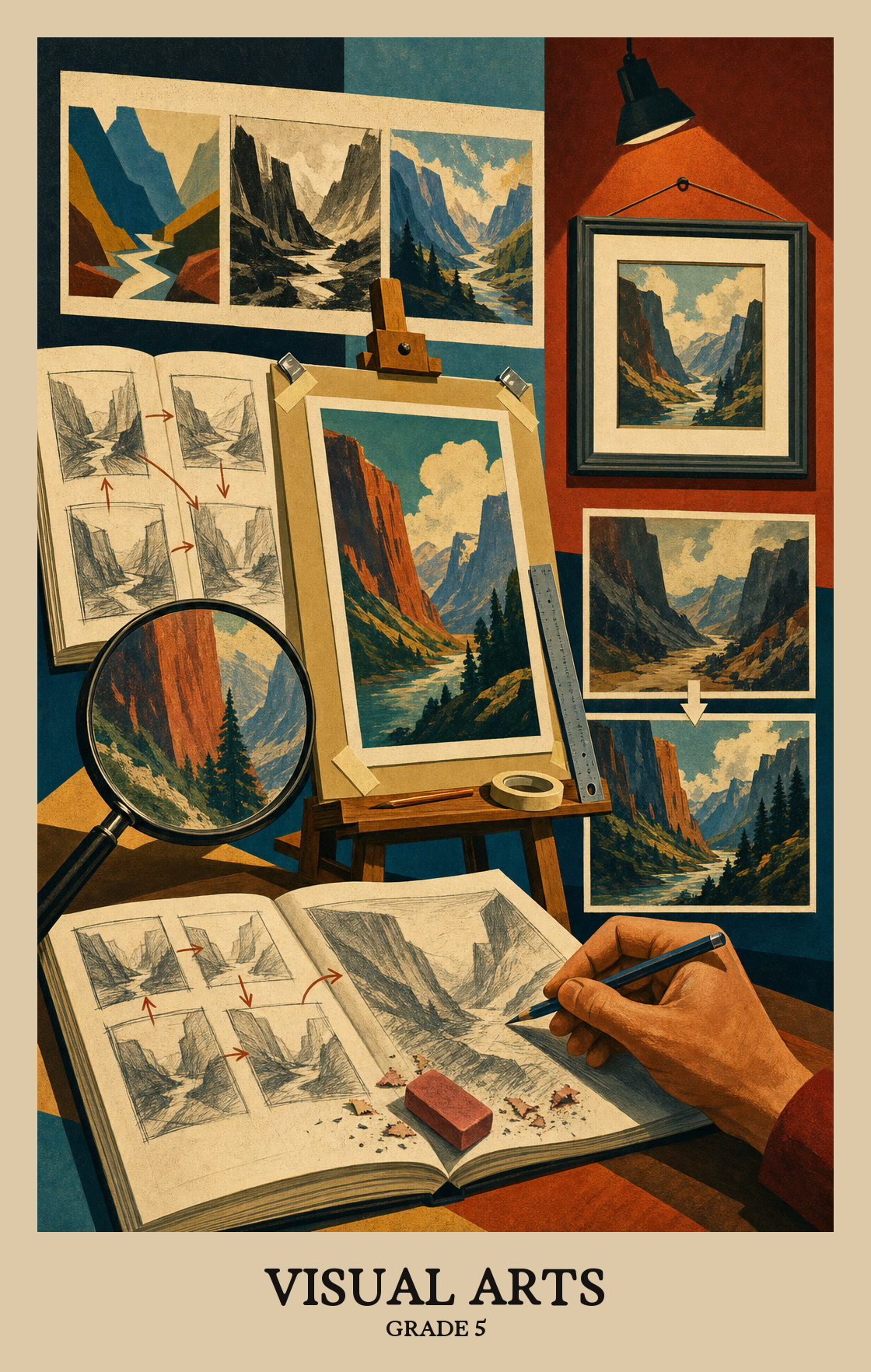
Students start the year by turning memories, family stories, and things they care about into art ideas. They keep a sketchbook of drawings and notes they can return to later.
Students practice with pencils, paint, clay, and collage. They learn how to plan a piece, fix mistakes as they go, and stick with a project long enough to finish it well.
Students look at art from different places and time periods and notice what the artists were trying to say. They use those ideas to shape their own pieces.
Students learn to talk about what they see in a painting or sculpture and back up their opinions with reasons. They use the same kind of thinking to improve their own work.
At year's end students choose pieces they are proud of, decide how to display them, and explain the meaning behind each one. Parents may see a portfolio or class show.
Students draw on what they know and what they've lived through to make choices in their artwork. Personal experience shapes what they make and how they make it.
Students look at a painting, sculpture, or other artwork and connect it to the time, place, and culture it came from. That context helps explain why the work looks the way it does and what it meant to the people who made it.
| Standard | Definition | Code |
|---|---|---|
| Synthesize and relate knowledge and personal experiences to make art | Students draw on what they know and what they've lived through to make choices in their artwork. Personal experience shapes what they make and how they make it. | VA:Cn10.5 |
| Relate artistic ideas and works with societal, cultural | Students look at a painting, sculpture, or other artwork and connect it to the time, place, and culture it came from. That context helps explain why the work looks the way it does and what it meant to the people who made it. | VA:Cn11.5 |
Students practice coming up with original ideas for art projects, sketching out concepts before picking up a brush or tool.
Students plan and refine their artwork by experimenting with materials and making deliberate choices about how the finished piece will look.
Students revisit a piece of artwork, make deliberate changes to improve it, and decide when it's finished.
| Standard | Definition | Code |
|---|---|---|
| Generate and conceptualize artistic ideas and work | Students practice coming up with original ideas for art projects, sketching out concepts before picking up a brush or tool. | VA:Cr1.5 |
| Organize and develop artistic ideas and work | Students plan and refine their artwork by experimenting with materials and making deliberate choices about how the finished piece will look. | VA:Cr2.5 |
| Refine and complete artistic work | Students revisit a piece of artwork, make deliberate changes to improve it, and decide when it's finished. | VA:Cr3.5 |
Students look at a collection of their own artwork, think about what each piece shows, and choose which ones to present to others.
Students practice and improve a piece of artwork until it's ready to share with an audience, making deliberate choices about how the finished work looks and what it communicates.
Students choose how to display their artwork so a viewer understands what the piece is about. The arrangement, lighting, or setting becomes part of the message.
| Standard | Definition | Code |
|---|---|---|
| Analyze, interpret, and select artistic work for presentation | Students look at a collection of their own artwork, think about what each piece shows, and choose which ones to present to others. | VA:Pr4.5 |
| Develop and refine artistic techniques and work for presentation | Students practice and improve a piece of artwork until it's ready to share with an audience, making deliberate choices about how the finished work looks and what it communicates. | VA:Pr5.5 |
| Convey meaning through the presentation of artistic work | Students choose how to display their artwork so a viewer understands what the piece is about. The arrangement, lighting, or setting becomes part of the message. | VA:Pr6.5 |
Students look closely at a piece of art and describe what they notice: the colors, shapes, lines, and how the parts work together to create a mood or meaning.
Students look closely at a piece of art and explain what the artist was trying to say. They support their interpretation with details from the work itself.
Students look at a piece of art and judge it using a specific set of criteria, such as how well it uses color, composition, or technique. They explain why the work succeeds or falls short based on those standards, not just personal taste.
| Standard | Definition | Code |
|---|---|---|
| Perceive and analyze artistic work | Students look closely at a piece of art and describe what they notice: the colors, shapes, lines, and how the parts work together to create a mood or meaning. | VA:Re7.5 |
| Interpret intent and meaning in artistic work | Students look closely at a piece of art and explain what the artist was trying to say. They support their interpretation with details from the work itself. | VA:Re8.5 |
| Apply criteria to evaluate artistic work | Students look at a piece of art and judge it using a specific set of criteria, such as how well it uses color, composition, or technique. They explain why the work succeeds or falls short based on those standards, not just personal taste. | VA:Re9.5 |
Students make art that connects to their own lives and to what they see in the world. They learn to plan a piece, work through rough drafts, and finish it well. They also look closely at other art and talk about what it means and how it was made.
Ask about something they care about, like a pet, a family story, or a place they love, and suggest they draw it. Keep a small sketchbook on the kitchen table. Five minutes of doodling a few times a week builds the habit of generating ideas.
Start with short idea-generating projects in the fall, then move into longer pieces that go through a rough draft and a revision. Save presentation and critique work for later in the year, once students have a portfolio to choose from and the vocabulary to discuss it.
Focus on effort and ideas, not how realistic the picture looks. Ask what they were trying to show and what they might change next time. Students this age are learning that art improves through practice and revision, the same way writing does.
A student can take an idea from a sketch to a finished piece, explain the choices they made, and respond to feedback. They can also look at someone else's art and talk about what it means and how well it works, using more than just like or dislike.
Refining and finishing work is where many students stall. They want to call a first attempt done. Build in structured revision steps and peer feedback so revising feels normal, not like punishment. Interpreting meaning in others' art also takes repeated practice.
Students look at art from different times and cultures and talk about what it shows about the people who made it. Visiting a museum, watching a short artist documentary, or looking up an artwork from a country your family knows gives students more to draw on.
They should be able to plan a project, stick with it through revision, and present it with a short artist statement. They should also be comfortable giving and receiving specific feedback. If those habits are in place, the techniques will keep growing in sixth grade.