Skills check and goal setting
Students review the basics of how they move, throw, catch, and balance. They set personal fitness goals and learn how to track their own progress through the year.
This is the year P.E. shifts from learning the moves to using them on purpose. Students pick activities they actually want to stick with, set fitness goals they can track, and figure out which workouts fit their bodies and their schedules. They also practice the social side of sports: leading a warm-up, calming a tense moment, including a teammate who is struggling. By spring, students can describe a weekly routine that keeps them active and explain why it works for them.
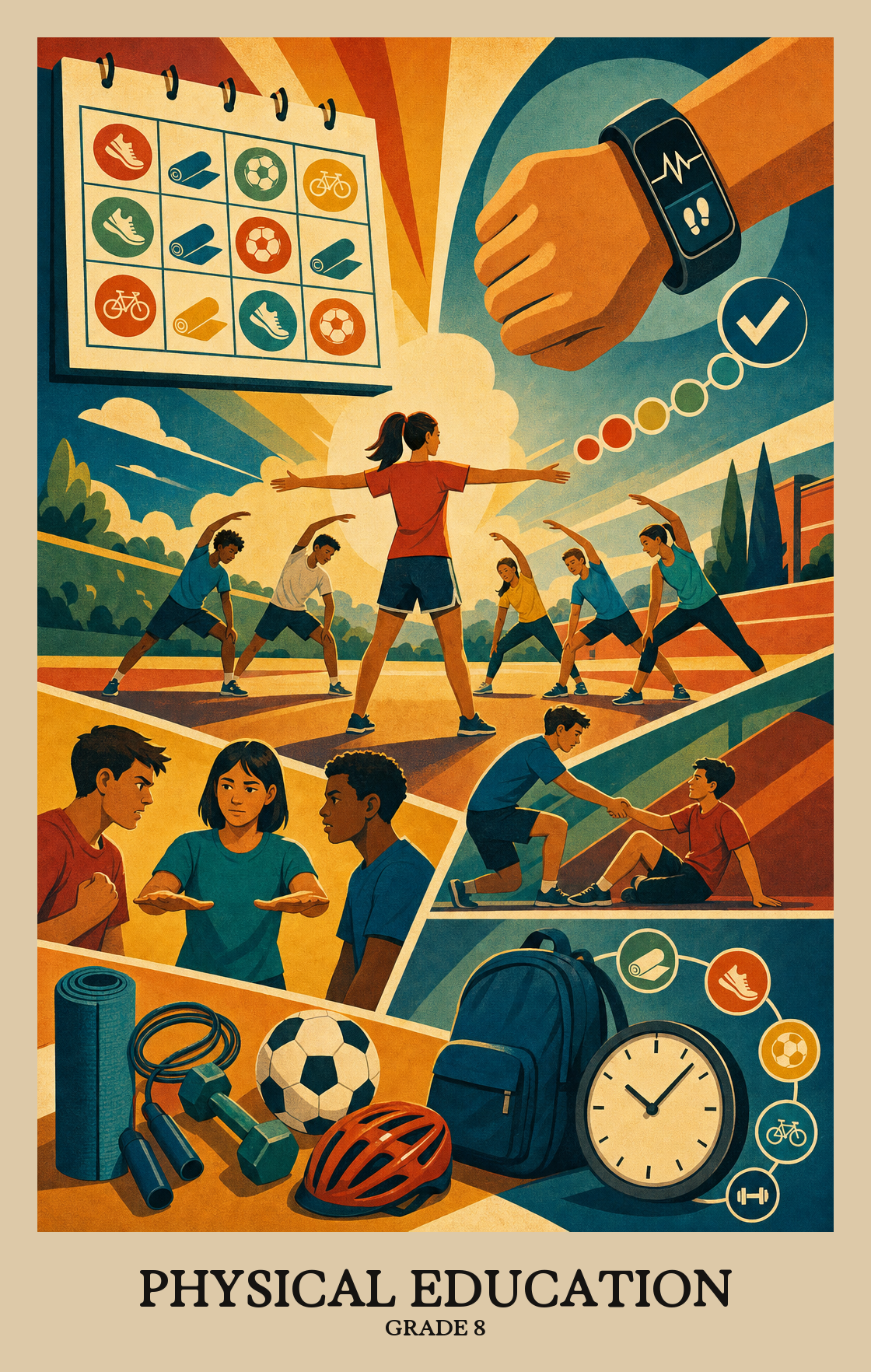
Students review the basics of how they move, throw, catch, and balance. They set personal fitness goals and learn how to track their own progress through the year.
Students play team games that ask them to pass, defend, and call plays together. The focus is on communicating with teammates and handling wins and losses with respect.
Students learn what heart rate, strength, and flexibility mean and how each one improves with practice. They try short workouts and connect what they feel in their body to the science behind it.
Students try activities they can keep doing as adults, such as racket sports, dance, hiking, or yoga. They pick a few favorites and start thinking about how to stay active after school ends.
Students put it all together and build a simple plan for staying active outside of class. They reflect on what worked this year and what they want to keep doing over the summer.
Students practice a range of movement skills, from running and jumping to throwing and catching, that build a foundation for staying active in and out of school.
Students take what they know about how the body moves and apply it during exercise and games. That means understanding why warming up matters, how to pace effort, and how movement choices affect fitness over time.
Students practice working with others during movement activities: taking turns, communicating clearly, and handling competition or teamwork with respect.
Students reflect on why staying active matters to them personally and build habits around movement they actually want to keep. The focus is on finding physical activities that fit their life, not just finishing a unit.
| Standard | Definition | Code |
|---|---|---|
| Develop a variety of motor skills, including locomotor, non-locomotor | Students practice a range of movement skills, from running and jumping to throwing and catching, that build a foundation for staying active in and out of school. | DC-PE.1.8 |
| Apply knowledge related to movement, performance | Students take what they know about how the body moves and apply it during exercise and games. That means understanding why warming up matters, how to pace effort, and how movement choices affect fitness over time. | DC-PE.2.8 |
| Develop social skills through movement, including respect for self and others… | Students practice working with others during movement activities: taking turns, communicating clearly, and handling competition or teamwork with respect. | DC-PE.3.8 |
| Develop personal skills, identify personal benefits of movement | Students reflect on why staying active matters to them personally and build habits around movement they actually want to keep. The focus is on finding physical activities that fit their life, not just finishing a unit. | DC-PE.4.8 |
Students should move well in a range of sports and activities, from team games to fitness work. They should understand why warm-ups, pacing, and rest matter, and they should be able to play fairly with others. Most importantly, they should be choosing to stay active outside of class.
Build short bursts of movement into the day, like a walk after dinner or a quick game in the yard. Ask students what they did in PE and try it together on the weekend. The goal is to make movement a normal part of the week, not a chore.
Team sports are only one slice of PE at this age. Hiking, biking, dancing, lifting, yoga, and martial arts all count. Help students find one or two activities they actually like, since those are the ones they will stick with into high school and beyond.
A common approach is to rotate units every few weeks: invasion games in the fall, fitness and individual activities mid-year, then net and target games in the spring. Revisit core skills like passing, striking, and pacing in each unit so students see them in different contexts.
Students should know the difference between strength, endurance, and flexibility, and pick activities that build each one. They should also be able to set a simple fitness goal, track progress for a few weeks, and adjust when something is not working.
Plan tasks with built-in choices: different distances, weights, or rules that let students work at the right level. Pair students thoughtfully so stronger players are coaches, not just scorers. Most reteaching at this age is about effort, cooperation, and self-management, not raw skill.
Use small-sided games and rotating roles so every student leads, referees, and plays. Set clear expectations for how teammates talk to each other, and stop play when those break down. Brief end-of-class check-ins help students reflect on how the group worked together.
Look for steady stamina in everyday activity, a basic grasp of how to warm up and cool down, and comfort in a few different sports or fitness routines. Just as important: a willingness to try new activities and stick with them when they get hard.