Health basics and the body
Students start by learning how the body changes during the middle school years and what habits keep it working well. They look at sleep, food, movement, and stress, and how small daily choices add up.
These are the middle school years when health choices start belonging to students, not parents. Students learn how friends, social media, and stress shape decisions about food, sleep, screens, and their bodies. They practice finding trustworthy answers instead of guessing, and they rehearse what to actually say in tough moments with peers. By spring, students can set a real health goal, name who influenced a choice, and find a reliable source when something feels off.
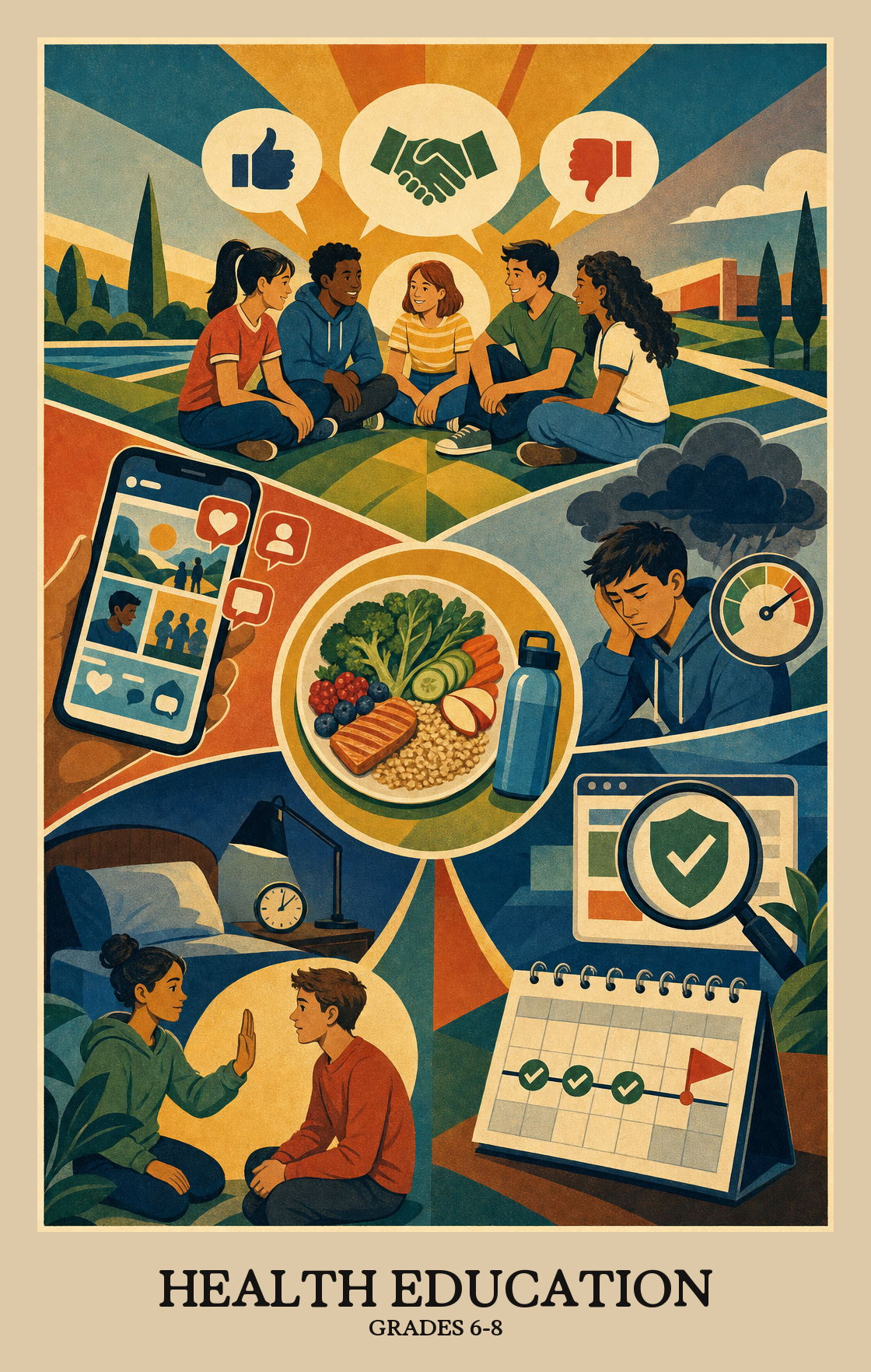
Students start by learning how the body changes during the middle school years and what habits keep it working well. They look at sleep, food, movement, and stress, and how small daily choices add up.
Students look at the pressures around them, from friends and family to ads and social media. They practice spotting when something is pushing them toward a choice and ask whether that choice fits who they want to be.
Students learn where to turn when they have a real question about their body, mood, or safety. They compare sources, tell a reliable website from a shaky one, and know which adults at home, school, or a clinic can help.
Students practice the words for tough conversations: saying no, asking for help, setting a limit with a friend, or speaking up when something feels wrong. They also work on listening when someone else is the one struggling.
Students walk through a simple process for thinking before they act, weighing what could happen, and choosing the next step. They also pick a personal health goal, track it for a few weeks, and adjust when life gets in the way.
Students put it all together by standing up for healthier choices at school, at home, or online. They might write a message, lead a small campaign, or support a friend, showing they can use their voice for their own well-being and others.
Students apply what they know about health to make real decisions, like choosing how to respond to stress or help a friend through a tough situation.
Students look at what shapes health choices, from friends and family to advertising and social media, and explain how those pressures push people toward or away from healthy decisions.
Students practice finding trustworthy sources, like a doctor's website or a public health hotline, to answer real health questions for themselves or someone they know.
Talking clearly with others, listening well, and knowing how to ask for help are all part of this skill. Students practice conversations that protect their own health and support the people around them.
Students practice a step-by-step thinking process for making choices about their health, like deciding how to handle peer pressure or respond to a risky situation. The goal is decisions that protect their own well-being and the people around them.
Students pick a health goal, break it into steps, and track their progress. The focus can be personal (like getting more sleep) or aimed at helping someone else.
Students practice real health habits, like washing hands, getting enough sleep, or speaking up when a friend needs help, and learn why those choices protect both themselves and the people around them.
Students identify a health issue they care about, then make a case for change by speaking up, writing, or organizing others to act.
| Standard | Definition | Code |
|---|---|---|
| Use functional knowledge of health concepts to support health and well-being of… Grades 6-8 | Students apply what they know about health to make real decisions, like choosing how to respond to stress or help a friend through a tough situation. | DC-HE.1.6-8 |
| Analyze influences that affect health and well-being of self and others Grades 6-8 | Students look at what shapes health choices, from friends and family to advertising and social media, and explain how those pressures push people toward or away from healthy decisions. | DC-HE.2.6-8 |
| Access valid and reliable resources to support health and well-being of self… Grades 6-8 | Students practice finding trustworthy sources, like a doctor's website or a public health hotline, to answer real health questions for themselves or someone they know. | DC-HE.3.6-8 |
| Use interpersonal communication skills to support health and well-being of self… Grades 6-8 | Talking clearly with others, listening well, and knowing how to ask for help are all part of this skill. Students practice conversations that protect their own health and support the people around them. | DC-HE.4.6-8 |
| Use a decision-making process to support health and well-being of self and… Grades 6-8 | Students practice a step-by-step thinking process for making choices about their health, like deciding how to handle peer pressure or respond to a risky situation. The goal is decisions that protect their own well-being and the people around them. | DC-HE.5.6-8 |
| Use a goal-setting process to support health and well-being of self and others Grades 6-8 | Students pick a health goal, break it into steps, and track their progress. The focus can be personal (like getting more sleep) or aimed at helping someone else. | DC-HE.6.6-8 |
| Demonstrate practices and behaviors to support health and well-being of self… Grades 6-8 | Students practice real health habits, like washing hands, getting enough sleep, or speaking up when a friend needs help, and learn why those choices protect both themselves and the people around them. | DC-HE.7.6-8 |
| Advocate to promote health and well-being of self and others Grades 6-8 | Students identify a health issue they care about, then make a case for change by speaking up, writing, or organizing others to act. | DC-HE.8.6-8 |
Students learn how to take care of their bodies and minds during a time of big changes. Topics include nutrition, sleep, exercise, mental health, friendships, peer pressure, and online safety. They also practice making decisions and setting goals around their own health.
Talk about real choices as they come up: what to eat for a snack, when to put the phone away, how to handle a tough day. A short walk after dinner or a regular bedtime does more than a lecture. Students this age copy what they see at home.
The eight skills are not eight units. Pick a health topic, then weave the skills through it. A unit on nutrition can hit functional knowledge, analyzing food ads, finding reliable sources, and setting a personal goal. Most teachers spiral the skills across four or five topics.
Students practice checking who wrote something, when it was posted, and whether the source is trying to sell them anything. They compare a social media post to a doctor's site on the same topic. This is one of the most useful skills to keep returning to.
Ask what students at school are talking about, then listen more than you correct. Practice short exit lines together, like what to say if someone offers a vape or asks for a photo. Students who have rehearsed the words use them.
Decision-making and analyzing influences take the longest to stick. Students can list the steps but freeze in a real moment. Short role plays with realistic scenarios, repeated across the year, work better than one big lesson.
Students learn to name feelings like stress, anxiety, and sadness, and to know when to ask for help. Class covers who a trusted adult is and how to check on a friend. The goal is normal language for normal feelings, not diagnosis.
Students can set a realistic health goal, name two or three influences on their choices, find a trustworthy source, and ask for help when they need it. They can also speak up for a healthier school or community, even in a small way.
Some discomfort is normal at this age, especially around bodies, relationships, and emotions. Keep the door open with short, low-pressure conversations in the car or at dinner. If a topic feels heavy, ask what was said in class and go from there.