Sparking ideas for media projects
Students start the year by coming up with ideas for videos, photos, animations, and digital stories. They pull from their own lives and from things they have watched or played to plan what they want to make.
This is the year students start making real media projects, not just playing with tools. Students plan an idea, then build something like a short video, slideshow, or audio clip that tells a story or shares a message. They learn to look at their own work and other people's work and say what is working and what to fix. By spring, students can take a project from a rough idea to a finished piece they share with the class.
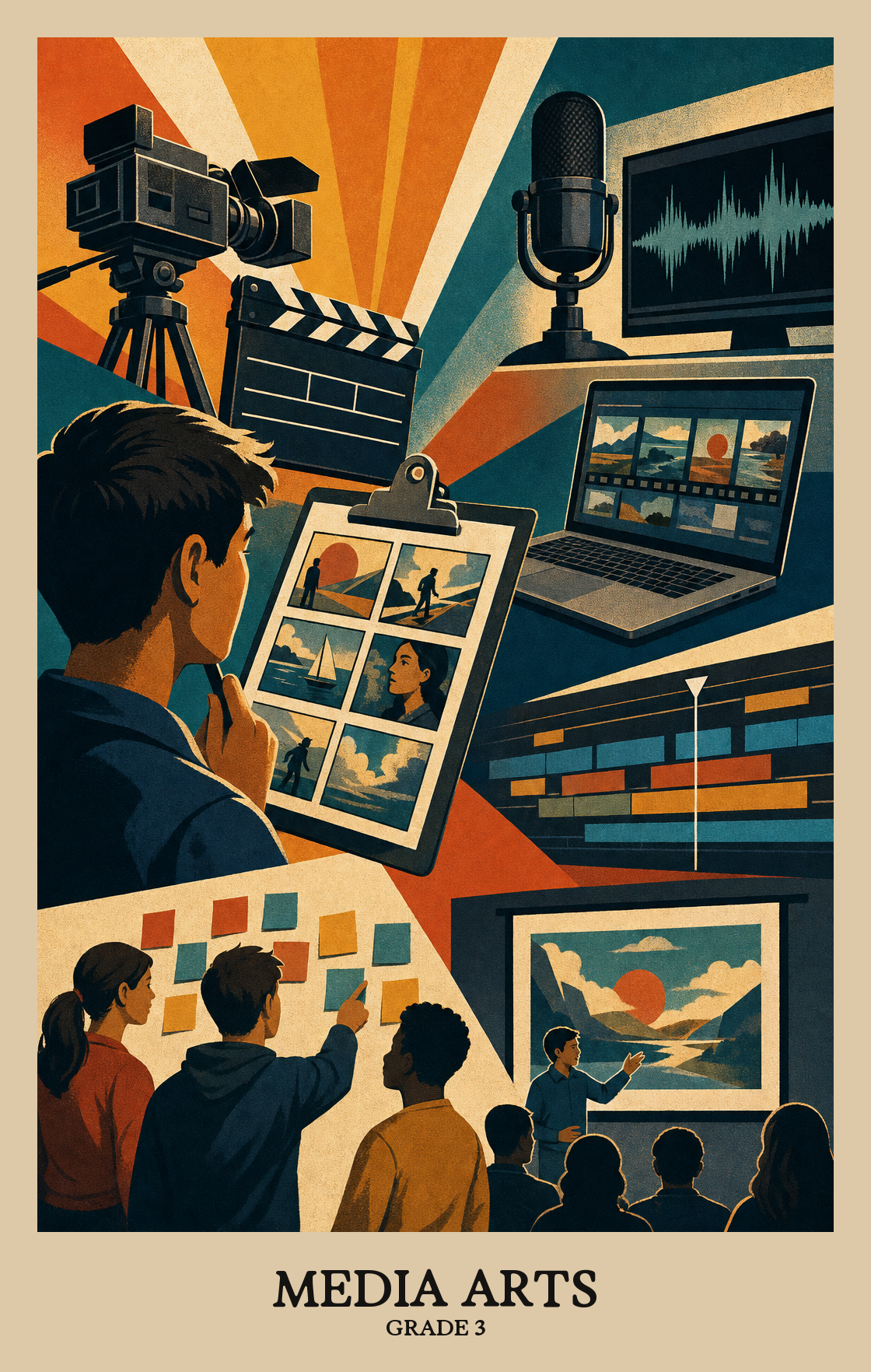
Students start the year by coming up with ideas for videos, photos, animations, and digital stories. They pull from their own lives and from things they have watched or played to plan what they want to make.
Students organize their ideas into a real piece of media. They sketch out a plan, gather images or sounds, and put the parts together in a rough version they can keep improving.
Students learn how to use cameras, recording tools, and simple editing software with more skill. They try out different effects and angles to see how small choices change the feel of the final piece.
Students get their projects ready to show to classmates, family, or a wider audience. They think about what message they want viewers to walk away with and adjust the work so that message comes through clearly.
Students study media made by others and by their classmates. They notice the choices behind it, talk about what the maker might have meant, and use simple guidelines to say what works well and what could be stronger.
Students connect something from their own life to a media arts project, using that personal experience to shape what they make and why they made it.
Students look at a piece of media art and ask where it came from: who made it, when, and why. That context helps them understand what the artist was trying to say.
| Standard | Definition | Code |
|---|---|---|
| Synthesize and relate knowledge and personal experiences to make art | Students connect something from their own life to a media arts project, using that personal experience to shape what they make and why they made it. | MA:Cn10.3 |
| Relate artistic ideas and works with societal, cultural | Students look at a piece of media art and ask where it came from: who made it, when, and why. That context helps them understand what the artist was trying to say. | MA:Cn11.3 |
Students brainstorm ideas for a media project, such as a short video, digital image, or simple animation, and decide on a concept before they start creating.
Students plan and build a media project by choosing images, sounds, or text that work together to share one clear idea.
Students revisit a media arts project, make changes to improve it, and decide when the work is finished.
| Standard | Definition | Code |
|---|---|---|
| Generate and conceptualize artistic ideas and work | Students brainstorm ideas for a media project, such as a short video, digital image, or simple animation, and decide on a concept before they start creating. | MA:Cr1.3 |
| Organize and develop artistic ideas and work | Students plan and build a media project by choosing images, sounds, or text that work together to share one clear idea. | MA:Cr2.3 |
| Refine and complete artistic work | Students revisit a media arts project, make changes to improve it, and decide when the work is finished. | MA:Cr3.3 |
Students look at several pieces of their own media work, compare what makes each one strong, and choose the best one to share with an audience.
Students practice and improve a media project (like a photo, video, or digital story) until it is ready to share with an audience.
Students choose how to share a finished piece, whether that means the order of images, the tone of a recording, or how a video opens, so the audience understands the idea behind it.
| Standard | Definition | Code |
|---|---|---|
| Analyze, interpret, and select artistic work for presentation | Students look at several pieces of their own media work, compare what makes each one strong, and choose the best one to share with an audience. | MA:Pr4.3 |
| Develop and refine artistic techniques and work for presentation | Students practice and improve a media project (like a photo, video, or digital story) until it is ready to share with an audience. | MA:Pr5.3 |
| Convey meaning through the presentation of artistic work | Students choose how to share a finished piece, whether that means the order of images, the tone of a recording, or how a video opens, so the audience understands the idea behind it. | MA:Pr6.3 |
Students look closely at a media artwork (a photo, a short video, or a digital image) and explain what they notice about how it was made and what it means.
Students look at a media artwork, such as a photograph or short video, and explain what the creator was trying to say and why specific choices, like color or sound, give it that meaning.
Students look at a piece of media art and decide how well it works, using a simple set of questions or standards to back up their opinion.
| Standard | Definition | Code |
|---|---|---|
| Perceive and analyze artistic work | Students look closely at a media artwork (a photo, a short video, or a digital image) and explain what they notice about how it was made and what it means. | MA:Re7.3 |
| Interpret intent and meaning in artistic work | Students look at a media artwork, such as a photograph or short video, and explain what the creator was trying to say and why specific choices, like color or sound, give it that meaning. | MA:Re8.3 |
| Apply criteria to evaluate artistic work | Students look at a piece of media art and decide how well it works, using a simple set of questions or standards to back up their opinion. | MA:Re9.3 |
Media arts is the part of the year where students make things like short videos, slideshows, simple animations, photo stories, and sound recordings. They learn to plan an idea, put the pieces together on a screen, and share it with a small audience.
A finished project is short, often under a minute. It might be a stop-motion clip with paper cutouts, a slideshow with narration, or a recorded story with sound effects. The point is that the idea is clear and the pieces fit together.
Watch a short video or ad together and ask what the maker was trying to say and how the music or pictures helped. Let students plan a quick photo story or recording on a phone, then talk about what they would change next time.
No. A basic tablet, phone, or classroom computer is plenty. Free slideshow tools, the built-in camera, and a simple recording app cover almost everything students do this year.
Start with short, low-stakes projects that focus on one tool at a time, such as taking photos or recording a voice clip. Move into combining two or three elements, like images with narration, by midyear. Save longer projects with planning, drafting, and revision for the spring.
Projects pair well with reading and social studies. Students can retell a story as a photo sequence, record a book recommendation, or make a short clip about a person or place they studied. The media piece gives the content a real audience.
Planning before recording is the biggest one. Most students want to jump straight to filming, so a simple storyboard or three-box plan saves a lot of time. Giving useful feedback on a classmate's project also takes practice and clear sentence starters.
By spring, students should be able to plan a short project, put the pieces together with a clear beginning and end, and explain why they made the choices they did. They should also be able to point to one specific thing a classmate did well and one thing to try next.