Greetings and everyday words
Students start with the basics of a new language. They learn to say hello, introduce themselves, and use simple words for family, school, and food.
This is the year a new language stops being a list of vocabulary words and starts feeling like a way to actually say something. Students hold short conversations, read simple texts, and share basic ideas about themselves, their families, and daily life. They also notice how the new culture does things differently, from greetings to food to school. By spring, students can introduce themselves, ask and answer everyday questions, and write a short note in the new language.
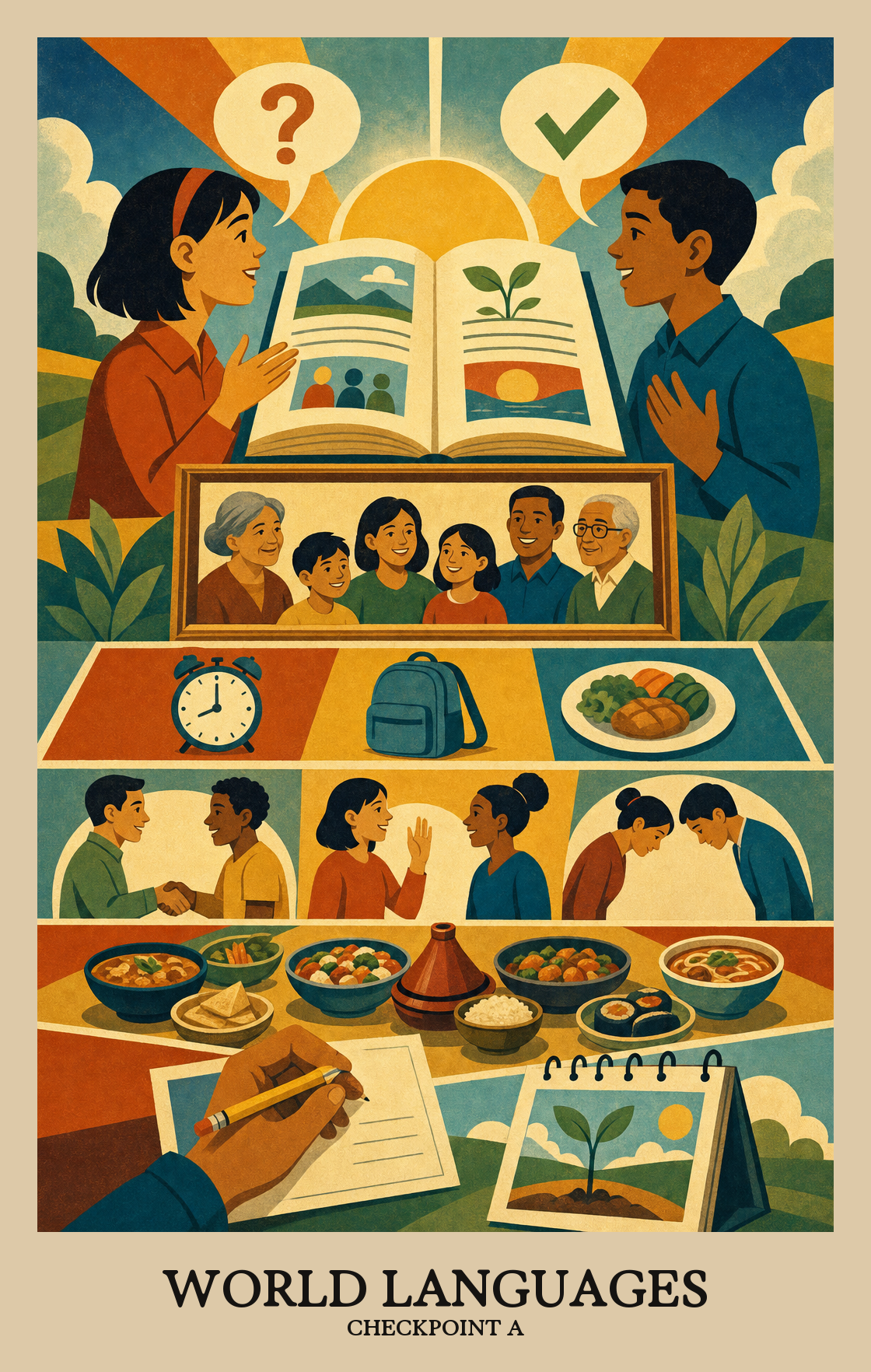
Students start with the basics of a new language. They learn to say hello, introduce themselves, and use simple words for family, school, and food.
Students begin asking and answering simple questions about things like the weather, weekend plans, and what they like. Parents may hear them practice short back-and-forth chats at home.
Students read short stories, menus, and signs in the new language, and write a few sentences of their own. They start to notice how the new language puts words together compared to English.
Students look at holidays, foods, music, and daily routines in places where the language is spoken. They compare those habits with their own and talk about what surprises them.
Students try out the language outside the classroom through videos, songs, pen pals, or community events. They set small goals and reflect on what is getting easier.
Students listen to, read, or watch material in the language they are learning and show they understood it. At this stage, topics stay familiar and concrete, like family, food, or daily routines.
Students hold short back-and-forth conversations in a new language, sharing simple facts, reactions, and opinions with a partner.
Students share what they know by speaking, writing, or creating for an audience. They practice choosing the right words and format for who is listening or reading.
| Standard | Definition | Code |
|---|---|---|
| Learners understand, interpret Checkpoint A | Students listen to, read, or watch material in the language they are learning and show they understood it. At this stage, topics stay familiar and concrete, like family, food, or daily routines. | DE-WL.1.1.wl-checkpoint-a |
| Learners interact and negotiate meaning in spoken, signed Checkpoint A | Students hold short back-and-forth conversations in a new language, sharing simple facts, reactions, and opinions with a partner. | DE-WL.1.2.wl-checkpoint-a |
| Learners present information, concepts Checkpoint A | Students share what they know by speaking, writing, or creating for an audience. They practice choosing the right words and format for who is listening or reading. | DE-WL.1.3.wl-checkpoint-a |
Students look at everyday habits and traditions in the cultures they are studying, then explain what those customs reveal about how people in those cultures think and what they value.
Students explore how everyday objects, foods, traditions, and art from a culture connect to what people in that culture believe and value. They practice describing those connections in the language they are learning.
| Standard | Definition | Code |
|---|---|---|
| Learners use the language to investigate, explain Checkpoint A | Students look at everyday habits and traditions in the cultures they are studying, then explain what those customs reveal about how people in those cultures think and what they value. | DE-WL.2.1.wl-checkpoint-a |
| Learners use the language to investigate, explain Checkpoint A | Students explore how everyday objects, foods, traditions, and art from a culture connect to what people in that culture believe and value. They practice describing those connections in the language they are learning. | DE-WL.2.2.wl-checkpoint-a |
Learning a new language is a chance to practice skills from other subjects too. Students use the target language to think through problems, connect ideas across topics, and approach familiar subjects from a new angle.
Students read, watch, or listen to real materials in another language to learn something new about how people in that culture see the world.
| Standard | Definition | Code |
|---|---|---|
| Learners build, reinforce Checkpoint A | Learning a new language is a chance to practice skills from other subjects too. Students use the target language to think through problems, connect ideas across topics, and approach familiar subjects from a new angle. | DE-WL.3.1.wl-checkpoint-a |
| Learners access and evaluate information and diverse perspectives that are… Checkpoint A | Students read, watch, or listen to real materials in another language to learn something new about how people in that culture see the world. | DE-WL.3.2.wl-checkpoint-a |
Students notice how the language they are learning works differently from their own, then explain what those differences reveal about how languages are built.
Students compare their own culture with the culture of another language community, noticing where the two differ and where they overlap. The goal is to understand both cultures more clearly, not just memorize facts about them.
| Standard | Definition | Code |
|---|---|---|
| Learners use the language to investigate, explain Checkpoint A | Students notice how the language they are learning works differently from their own, then explain what those differences reveal about how languages are built. | DE-WL.4.1.wl-checkpoint-a |
| Learners use the language to investigate, explain Checkpoint A | Students compare their own culture with the culture of another language community, noticing where the two differ and where they overlap. The goal is to understand both cultures more clearly, not just memorize facts about them. | DE-WL.4.2.wl-checkpoint-a |
Students practice the new language in real conversations, not just class exercises. They use it with people outside school too, like neighbors, online groups, or community members from other countries.
Students pick a personal goal for using a new language, then look back at how far they have come. The focus is on learning a language for real life, not just for class.
| Standard | Definition | Code |
|---|---|---|
| Learners use the language both within and beyond the classroom to interact and… Checkpoint A | Students practice the new language in real conversations, not just class exercises. They use it with people outside school too, like neighbors, online groups, or community members from other countries. | DE-WL.5.1.wl-checkpoint-a |
| Learners set goals and reflect on their progress in using languages for… Checkpoint A | Students pick a personal goal for using a new language, then look back at how far they have come. The focus is on learning a language for real life, not just for class. | DE-WL.5.2.wl-checkpoint-a |
Students can handle simple, familiar topics like greetings, family, food, school, and weekend plans. They can ask and answer short questions, read signs and short messages, and write a few sentences about themselves. Long conversations and abstract topics come later.
Label a few household items in the language, watch short videos with subtitles, or listen to music together during dinner. Ten minutes a day of real exposure beats an hour once a week. Students do not need a parent who speaks the language to practice out loud.
Yes. At this stage students understand more than they can say, and that gap is expected. Ask them to teach a word or phrase from class each day. Saying it out loud to someone else helps it stick.
Start with high-frequency topics students can use right away: introductions, classroom language, family, food, daily routines, and free-time activities. Add a culture focus to each unit so language and context grow together. Save complex grammar explanations for when students have enough vocabulary to need them.
Teach grammar in small doses, tied to something students are already trying to say. At this checkpoint, students mostly need present-tense verbs, basic question words, and gendered nouns where they apply. Heavy grammar drills tend to slow speaking confidence.
Students can introduce themselves, ask and answer common questions, read short texts on familiar topics, and write a short paragraph about their life. They can also describe one or two cultural practices and compare them to their own. Errors are still frequent and that is fine.
Tie culture directly to the unit vocabulary. A food unit can include meal times and table customs in the target culture. A school unit can compare a typical school day. Culture should give students a reason to use the words, not replace them.
Change a phone or game setting to the target language, follow a creator who posts in it, or message a pen pal through a class exchange. Even five minutes of daily contact builds the habit. Enjoyment matters more than perfection at this stage.