Skip to content

What does a student learn in ?

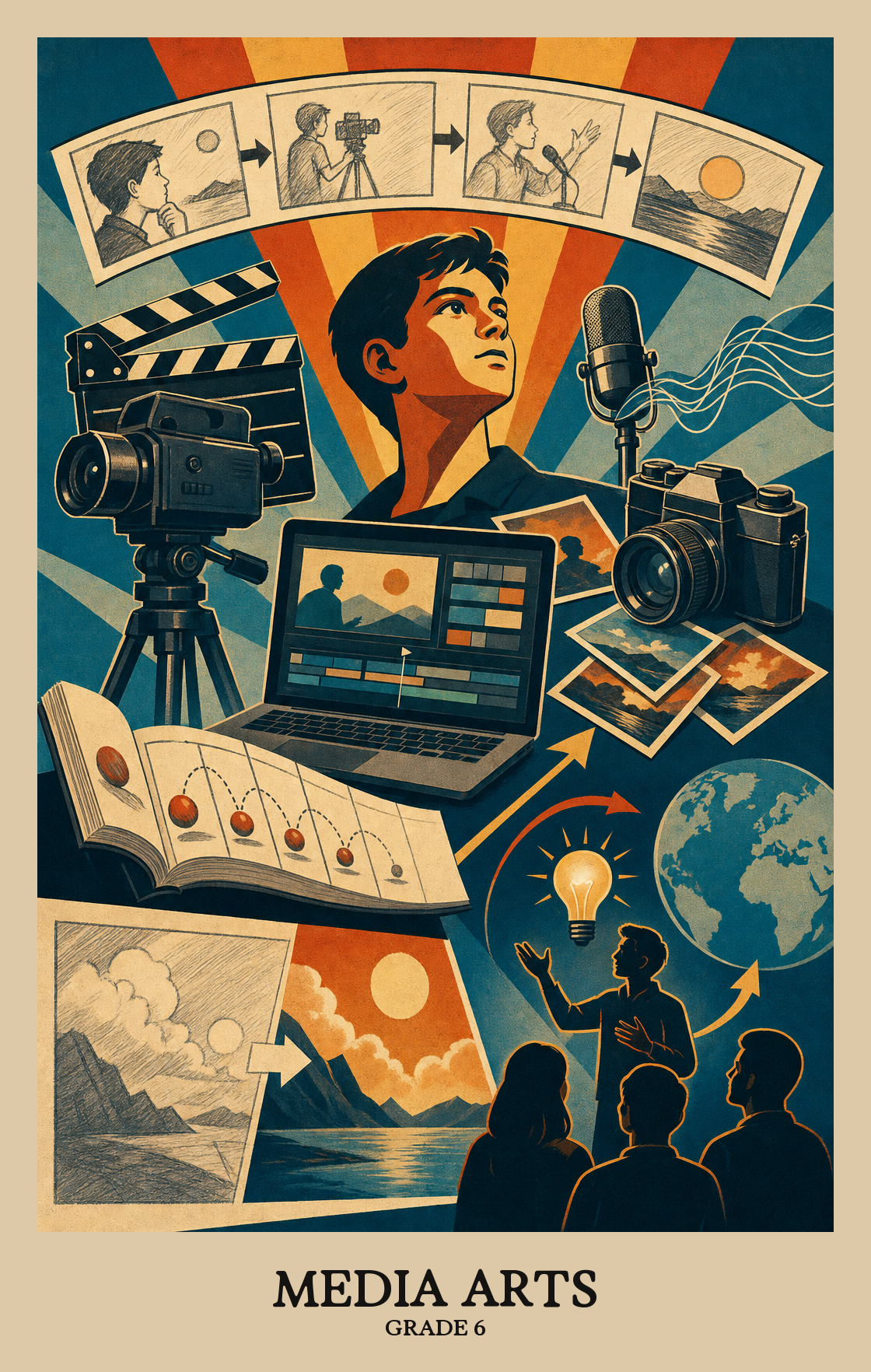
This is the year students start thinking like media makers, not just media watchers. Students plan a project from a rough idea, shape it through drafts, and polish it for an audience using tools like video, audio, photos, or animation. They also start asking why a piece works: what the creator wanted, how it lands with viewers, and how it connects to the world around them. By spring, students can pitch an idea, build a short media project, and explain the choices behind it.

  • Video and audio projects
  • Planning and drafting
  • Editing and revising
  • Sharing finished work
  • Talking about media
  • Real-world connections
Source: Delaware Delaware Content Standards
Year at a glance
How the year usually goes. Every school and district set their own curriculum, so treat this as a guide, not official pacing.
  1. 1

    Finding ideas worth making

    Students start the year by collecting ideas for media projects like videos, podcasts, animations, or digital images. They learn to pull from their own lives and from work they admire, then sketch out a plan before they hit record.

  2. 2

    Building the project

    Students move from plan to draft. They organize footage, sound, or images into something with a beginning, middle, and end, and practice the tools and shortcuts that make a piece look and sound the way they want.

  3. 3

    Editing and polishing

    Students revise their work based on feedback and their own second look. They cut weak parts, fix sound or pacing, and prepare a clean version ready to share with a real audience.

  4. 4

    Sharing and responding

    Students present finished pieces and talk about what they meant to say. They also watch and listen to other work, point out what makes it effective, and use clear reasons to judge whether a piece does its job.

  5. 5

    Media in the wider world

    Students look at how media art connects to history, culture, and the messages around them every day. They compare their own choices to what professionals do and start to see media as something that shapes opinions, not just entertains.

Mastery Learning Standards
The required skills a student should display by the end of Grade 6.
Connecting
  • Synthesize and relate knowledge and personal experiences to make art

    Students pull from what they already know and have lived through to create original media art, connecting personal experience to the choices they make in their work.

  • Relate artistic ideas and works with societal, cultural

    Students look at media art (a short film, a poster, an ad) and explain how the time period, culture, or world events around it shaped what the artist made and why.

Creating
  • Generate and conceptualize artistic ideas and work

    Students brainstorm original ideas for media projects like videos, animations, or digital images, then sketch out a plan before they start making anything.

  • Organize and develop artistic ideas and work

    Students plan and shape a media project by making deliberate choices about images, sound, or text. The goal is a finished piece that reflects a clear creative intent.

  • Refine and complete artistic work

    Students review a media art piece they started, make specific changes to improve it, and finish it to a level they can stand behind.

Performing/Presenting/Producing
  • Analyze, interpret, and select artistic work for presentation

    Students review a collection of media pieces and choose the ones worth sharing, explaining why each selection fits the purpose of the presentation.

  • Develop and refine artistic techniques and work for presentation

    Students practice and revise a media arts project until it's ready to share with an audience. That might mean adjusting audio, editing footage, or reworking a design so the final piece communicates what they intended.

  • Convey meaning through the presentation of artistic work

    Students present their media project to an audience with a clear purpose in mind. Every choice, like layout, sound, or image, is made to communicate a specific idea or feeling.

Responding
  • Perceive and analyze artistic work

    Students look closely at a media piece, like a photo, video, or advertisement, and explain what choices the creator made and why those choices shape how the audience feels or thinks.

  • Interpret intent and meaning in artistic work

    Students look at a media artwork and explain what they think the creator meant, backing up their reading with specific details from the work itself.

  • Apply criteria to evaluate artistic work

    Students use a set of criteria to judge whether a piece of media art is working. They explain what the work does well and where it falls short, using specific reasons rather than personal taste alone.

Common Questions
  • What is media arts in sixth grade?

    Media arts covers work students make with cameras, computers, and sound tools. Think short videos, photos, podcasts, animations, and simple website or game projects. Sixth graders move past playing with the tools and start making finished pieces with a clear message.

  • What should a finished project look like by the end of the year?

    By June, students should be able to plan a short media piece, build a draft, get feedback, and revise it before sharing. The final piece should have a clear point of view and look intentional, not thrown together. Sound, images, and timing should match the message.

  • How can I help my child come up with ideas at home?

    Ask what they noticed today and whether it could be a video or photo. Five minutes of talking through ideas at dinner counts. Let them sketch a quick storyboard on scrap paper before they pick up a phone or laptop.

  • Does my child need fancy equipment to do this work at home?

    No. A phone camera, free editing apps, and headphones are plenty for sixth grade. What matters is that students plan before they record and watch their work back with a critical eye.

  • How should I sequence the year?

    Start with short, low-stakes pieces that build one skill at a time, such as framing a shot or cutting to the beat. Move into longer projects with planning, drafting, and revision in the second half of the year. Save the most open-ended project for spring, once students can give and use feedback.

  • Which skills usually need the most reteaching?

    Two things come up every year: planning before recording, and revising after feedback. Sixth graders want to hit record and call it done. Build in storyboard checks and a required revision step so those habits stick.

  • How do students learn to talk about other people's media work?

    Students look at a short clip, name what the maker did, and say what it made them think or feel. Sixth graders should start using specific words about shots, sound, and pacing instead of just saying a piece is good or bad. Connecting work to its time period or culture is part of this too.

  • How do I know students are ready for seventh grade?

    They can take a project from idea to finished piece without being walked through every step. They can explain the choices they made and point to one thing they would change. They can also give a classmate useful feedback that goes beyond I liked it.