Knowing yourself
Students start the year by noticing their own feelings, strengths, and the things that set them off. They learn to put words to moods that used to just feel like a bad day.
This is the stretch when students start to notice their own patterns. They learn to name what they are feeling, see why they reacted that way, and pick a better move next time. Students also practice the harder social work of middle school: hearing someone whose life looks nothing like theirs, working through a disagreement without blowing it up, and asking for help before things spiral. By spring, students can talk through a real problem, name what they could have done differently, and choose a next step they feel good about.
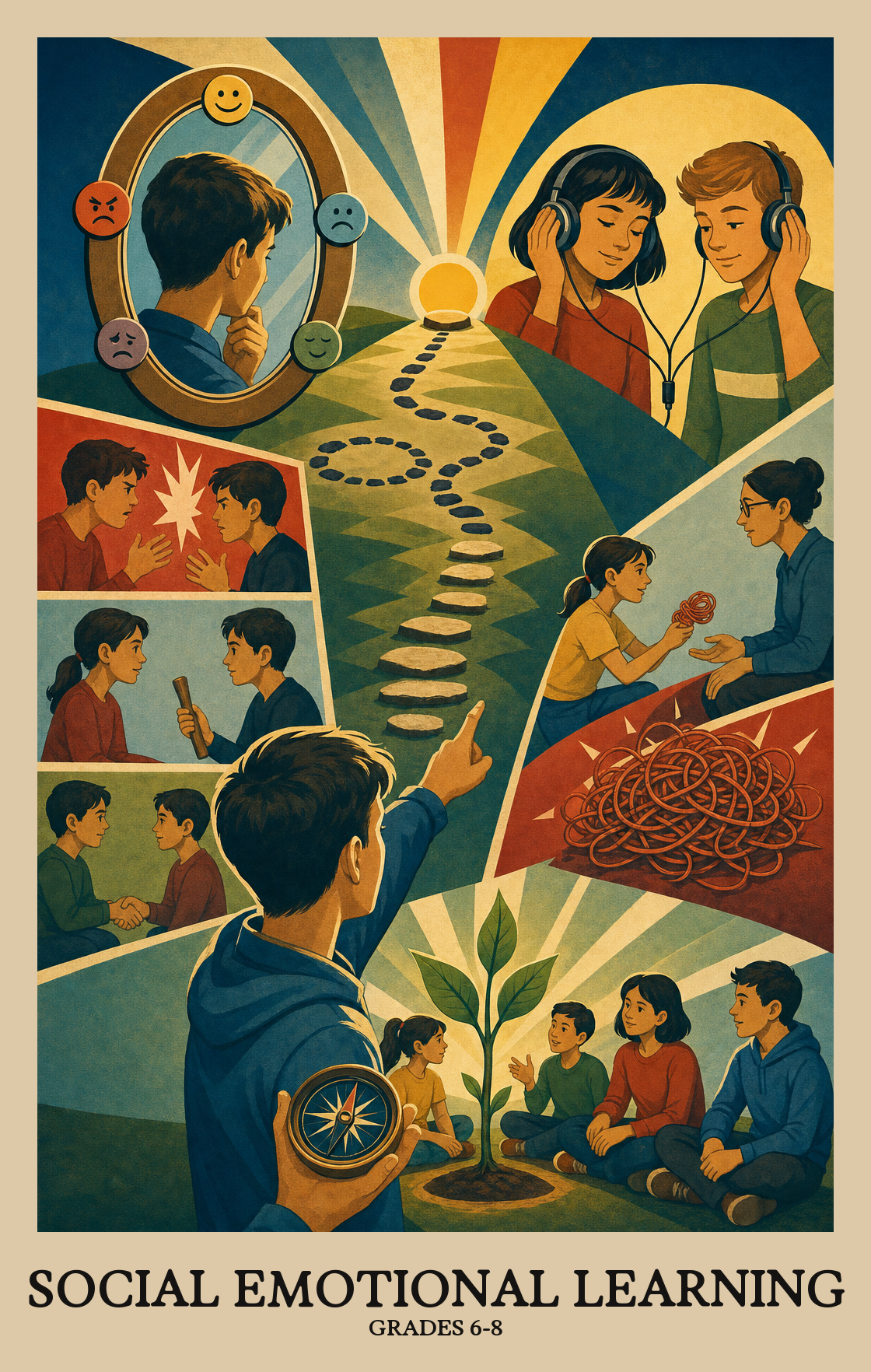
Students start the year by noticing their own feelings, strengths, and the things that set them off. They learn to put words to moods that used to just feel like a bad day.
Students practice ways to calm down, stay organized, and push through homework or nerves before a test. They set small goals and learn what helps them stick with something hard.
Students work on understanding how a classmate or family member might feel in the same situation. They also learn who to turn to at school, at home, or in the neighborhood when things get heavy.
Students focus on how to talk through disagreements, share the work in a group project, and ask for help without shutting down. Friendships get more complicated at this age, and students get tools to keep them healthy.
Students learn to slow down before a decision and think about who it affects. They weigh what happens next, both for themselves and for the people around them, including online.
Students learn to name what they're feeling, notice how those feelings shape their choices, and get an honest read on what they're good at and where they still have room to grow.
Students practice keeping their emotions and reactions in check when situations get hard. That means managing stress, pausing before acting, and staying organized enough to follow through on goals.
Students practice seeing situations from someone else's point of view, including people whose backgrounds differ from their own. They also learn to identify the adults and resources around them at school, at home, and in their community who can help.
Students practice the skills that keep relationships healthy: listening well, working through disagreements, and asking for or offering help when someone needs it.
Students practice weighing the likely outcomes of a choice before acting, thinking about how it affects themselves and the people around them. The goal is to make decisions that are fair and considerate, not just convenient.
| Standard | Definition | Code |
|---|---|---|
| The abilities to understand one's own emotions, thoughts Grades 6-8 | Students learn to name what they're feeling, notice how those feelings shape their choices, and get an honest read on what they're good at and where they still have room to grow. | CT-SEL.1.6-8 |
| The abilities to manage emotions, thoughts Grades 6-8 | Students practice keeping their emotions and reactions in check when situations get hard. That means managing stress, pausing before acting, and staying organized enough to follow through on goals. | CT-SEL.2.6-8 |
| The abilities to understand the perspectives of and empathise with others… Grades 6-8 | Students practice seeing situations from someone else's point of view, including people whose backgrounds differ from their own. They also learn to identify the adults and resources around them at school, at home, and in their community who can help. | CT-SEL.3.6-8 |
| The abilities to establish and maintain healthy and supportive relationships… Grades 6-8 | Students practice the skills that keep relationships healthy: listening well, working through disagreements, and asking for or offering help when someone needs it. | CT-SEL.4.6-8 |
| The abilities to make caring and constructive choices about personal behavior… Grades 6-8 | Students practice weighing the likely outcomes of a choice before acting, thinking about how it affects themselves and the people around them. The goal is to make decisions that are fair and considerate, not just convenient. | CT-SEL.5.6-8 |
Students work on knowing themselves, managing big feelings, getting along with people who are different from them, and making thoughtful choices. The work shifts from naming feelings to handling pressure, friendships, and decisions with more independence.
Talk about what triggers stress and what helps it pass, like a walk, music, or a few minutes alone. Share how adults handle hard feelings too. A short check-in at dinner or before bed works better than a long talk after a tough day.
Skip the broad questions and ask about something specific, like one funny thing at lunch or one annoying thing in math. Quiet car rides and side-by-side activities, like cooking or walking, often open kids up more than face-to-face talks.
Treat planners, checklists, and time estimates as skills that need direct instruction and practice, not assumptions. Model how to break a big project into smaller steps and revisit those routines after every break. Many middle schoolers need this retaught more than once.
Tie it to real texts, current events, and classroom moments where perspectives clash. Ask what someone else might be feeling and why, and push past the first answer. Short, frequent conversations beat one big lesson on empathy.
Coach first, rescue second. Ask what the student wants to happen, what they have tried, and what they could say next. Step in directly when safety, bullying, or exclusion is involved, and let the student know why.
Be explicit about what good group work sounds like, including how to disagree, how to share airtime, and how to ask for help. Assign roles, keep groups small, and debrief how the group worked, not just what it produced.
Look for students who can name what they are feeling, calm themselves down without an adult, ask for help before things fall apart, and think about how a choice affects other people. Perfection is not the bar. Steady use of these skills under normal stress is.