Movement skills and team play
Students sharpen the basic moves behind most sports: running with control, dodging, throwing, catching, and striking with a bat or racket. Parents may hear about pickup games and small-sided matches at home.
This is the year gym class shifts from learning the rules of a game to playing it with real strategy. Students sharpen the skills they already have, like throwing, dribbling, and dodging, and start using them in faster team games. They also begin tracking their own fitness and figuring out which activities they actually enjoy. By spring, students can warm up on their own, play fairly in a group game, and name a few activities they want to keep doing outside of school.
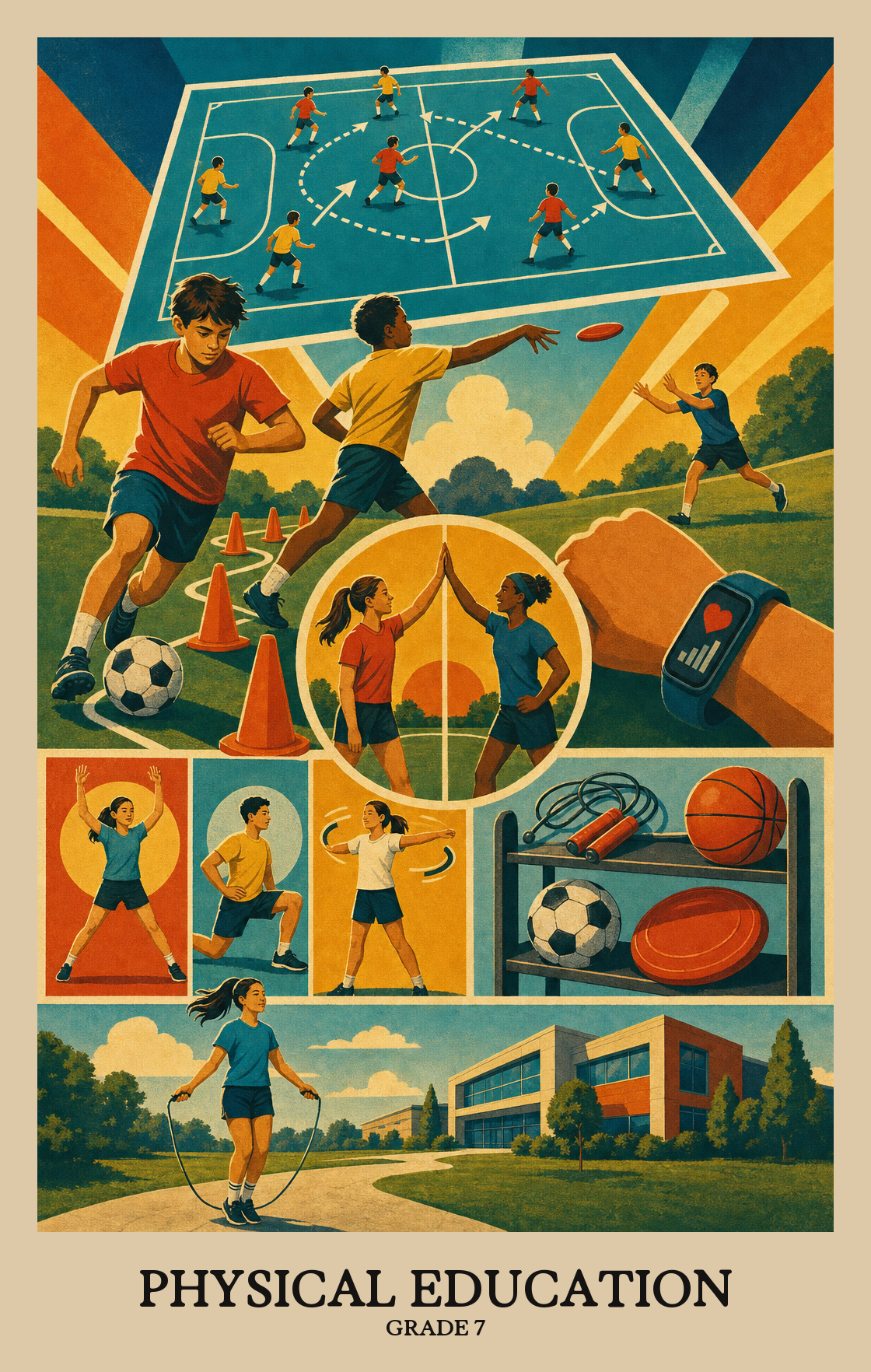
Students sharpen the basic moves behind most sports: running with control, dodging, throwing, catching, and striking with a bat or racket. Parents may hear about pickup games and small-sided matches at home.
Students learn why a good warm-up matters, how pacing works, and what makes a move stronger or steadier. They start using terms like balance, force, and rhythm when they talk about a skill.
Students try different ways to build endurance, strength, and flexibility, from circuits to running games. They track simple fitness goals and learn how rest, water, and food fit in.
Students practice working with people who play at different levels. They learn to communicate during a game, handle wins and losses, and follow rules without an adult standing over them.
Students think about what kinds of movement they actually enjoy, from biking to dance to lifting. They plan a simple weekly routine they could keep up outside of class.
Students practice moving in different ways, like running, balancing, and throwing, to build a body that's ready for sports, games, and staying active for life.
Students use what they know about how the body moves and stays fit to make better choices during physical activity, like adjusting effort, pacing themselves, or understanding why a workout helps their heart and muscles.
Students practice working with others during physical activities: listening, cooperating, and handling wins and losses with respect. The focus is on how students treat teammates and opponents, not just how well they move.
Students learn to recognize what kinds of movement feel good and actually work for them, then build habits around those activities. The goal is staying active by choice, not just for a grade.
| Standard | Definition | Code |
|---|---|---|
| Develop a variety of motor skills, including locomotor, non-locomotor | Students practice moving in different ways, like running, balancing, and throwing, to build a body that's ready for sports, games, and staying active for life. | CT-PE.1.7 |
| Apply knowledge related to movement, performance | Students use what they know about how the body moves and stays fit to make better choices during physical activity, like adjusting effort, pacing themselves, or understanding why a workout helps their heart and muscles. | CT-PE.2.7 |
| Develop social skills through movement, including respect for self and others… | Students practice working with others during physical activities: listening, cooperating, and handling wins and losses with respect. The focus is on how students treat teammates and opponents, not just how well they move. | CT-PE.3.7 |
| Develop personal skills, identify personal benefits of movement | Students learn to recognize what kinds of movement feel good and actually work for them, then build habits around those activities. The goal is staying active by choice, not just for a grade. | CT-PE.4.7 |
Students try a wide mix of activities: team sports, fitness work, dance, racket games, and outdoor games. They practice skills like throwing, catching, dodging, and pacing themselves during a run. They also learn how warm-ups, heart rate, and rest fit together.
Build short bursts of movement into the week. A walk after dinner, tossing a ball in the yard, a bike ride on the weekend, or stretching while watching TV all count. The goal is regular activity, not a perfect workout.
Focus on effort and small wins, not on winning games. Play low-pressure games at home like catch or mini-golf, and talk about what felt easier this week than last. Skill at this age grows fast with practice and patience.
PE at this age is not only team sports. Students also do fitness activities, dance, hiking, yoga, and individual challenges. Helping students find one activity they enjoy outside school often matters more than loving every unit.
Start with cooperative games and fitness basics so students learn group norms and how to pace themselves. Move into invasion games in the fall, individual and net activities in winter, and striking or outdoor units in spring. Revisit fitness concepts inside each unit instead of teaching them in isolation.
Spacing, defensive positioning, and pacing during sustained activity tend to lag behind. Many students can perform a skill in a drill but lose it inside a real game. Short, game-like practice with quick feedback works better than long lines and lectures.
Watch for specific behaviors during play: including quieter classmates, calling fair, handling a bad call, and encouraging a partner. Short observation notes during small-sided games give better evidence than a single rubric at the end of a unit.
By spring, students should be able to join a new activity, follow the rules after a short explanation, and keep moving for most of a class. They should also be able to describe one fitness habit they want to keep up outside school.
It helps, but it is not enough on its own. Most students need activity on most days, including weekends. Treat PE as a base and add family walks, sports, chores that get them moving, or active play at home.