Health basics and personal habits
Students start the year learning what keeps a body and mind healthy at this age, from sleep and food to exercise and screen time. Parents may hear new vocabulary at the dinner table.
This is the stretch when health class shifts from learning rules to making real choices under pressure. Students study how friends, family, social media, and stress shape habits around food, sleep, screens, and feelings. They practice saying no, asking for help, and checking whether a source is trustworthy before believing it. By spring, students can walk through a tough decision out loud, set a small goal they can stick to, and point to where they would go for honest help.
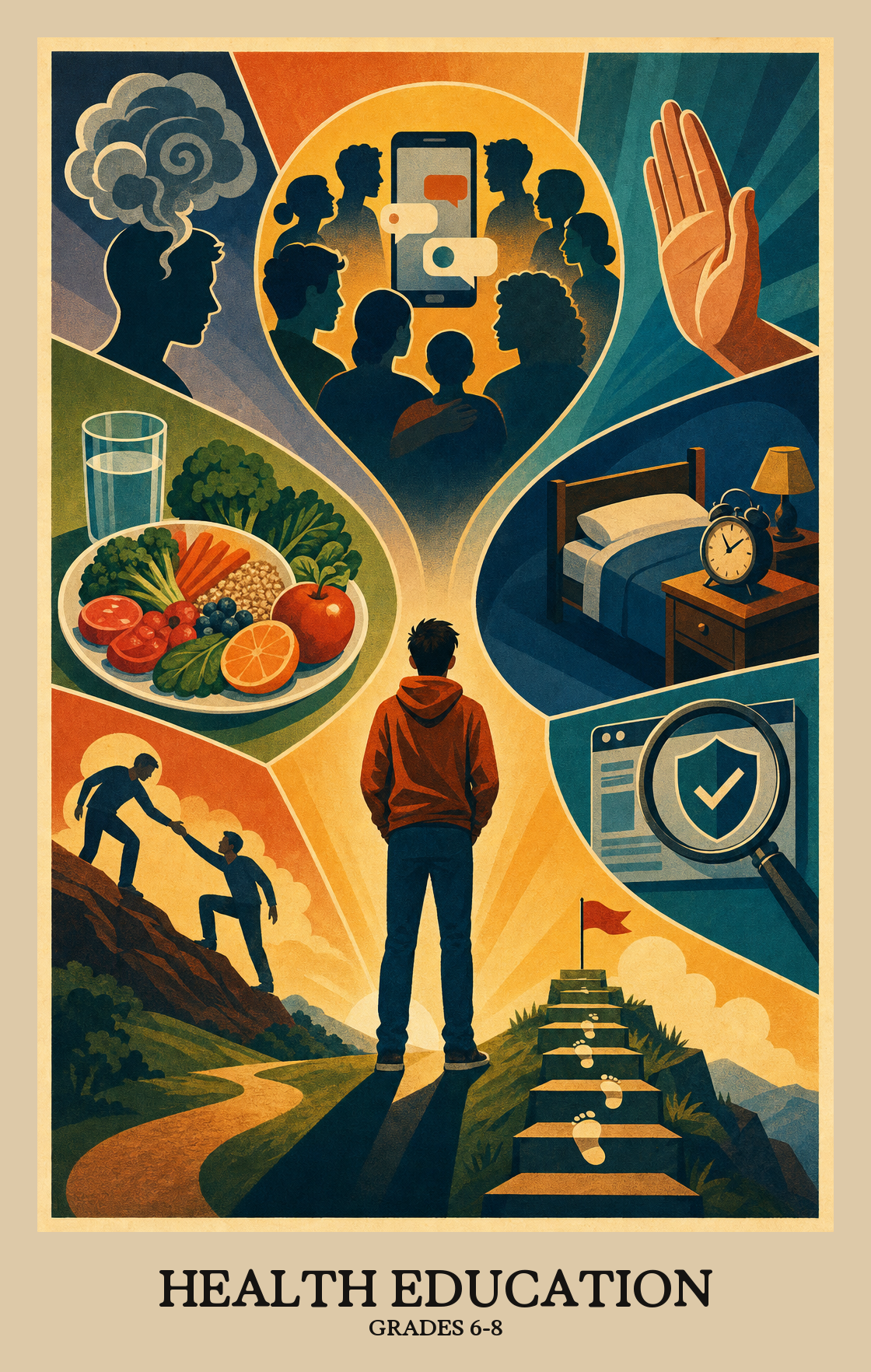
Students start the year learning what keeps a body and mind healthy at this age, from sleep and food to exercise and screen time. Parents may hear new vocabulary at the dinner table.
Students look at how friends, family, ads, and social media shape choices about health. They practice telling a trustworthy source from a sketchy one when they have a question.
Students practice the words to use when something feels off, whether that means saying no to a friend, asking an adult for help, or working through a disagreement without it blowing up.
Students walk through a step-by-step way to make a choice, weighing options before acting. They also set a personal health goal, track progress, and adjust when life gets in the way.
Students put the year together by practicing habits that stick, like managing stress, staying safe, and looking out for the people around them at school and at home.
Students finish the year by taking a stand on a health topic that matters to them. They learn how to share a clear message with classmates, family, or the wider school community.
Students apply what they know about health (nutrition, sleep, stress, and how the body works) to make real decisions that protect their own well-being and help the people around them.
Students look at what shapes their health choices, from friends and family to ads and social media, and explain how those pressures push toward healthier or less healthy decisions.
Students practice finding trustworthy sources, like a doctor's website or a health clinic, when they have questions about their own health or want to help someone else.
Students practice how to speak up, listen, and respond in conversations that affect health, like talking to a friend about stress or asking a trusted adult for help.
Students practice a step-by-step process for making choices that affect their health and the people around them. They learn to weigh options and think through what happens next before deciding.
Students practice setting a personal health goal step by step, then think through how to support someone else's goal too. The focus is on making a real plan, not just stating good intentions.
Students practice real health habits, like washing hands, managing stress, or supporting a friend, that protect their own well-being and the people around them.
Students learn to speak up for healthier choices, whether for themselves or others. That might mean writing to a school board, starting a conversation, or explaining why a policy matters for their community's health.
| Standard | Definition | Code |
|---|---|---|
| Use functional knowledge of health concepts to support health and well-being of… Grades 6-8 | Students apply what they know about health (nutrition, sleep, stress, and how the body works) to make real decisions that protect their own well-being and help the people around them. | CT-HE.1.6-8 |
| Analyze influences that affect health and well-being of self and others Grades 6-8 | Students look at what shapes their health choices, from friends and family to ads and social media, and explain how those pressures push toward healthier or less healthy decisions. | CT-HE.2.6-8 |
| Access valid and reliable resources to support health and well-being of self… Grades 6-8 | Students practice finding trustworthy sources, like a doctor's website or a health clinic, when they have questions about their own health or want to help someone else. | CT-HE.3.6-8 |
| Use interpersonal communication skills to support health and well-being of self… Grades 6-8 | Students practice how to speak up, listen, and respond in conversations that affect health, like talking to a friend about stress or asking a trusted adult for help. | CT-HE.4.6-8 |
| Use a decision-making process to support health and well-being of self and… Grades 6-8 | Students practice a step-by-step process for making choices that affect their health and the people around them. They learn to weigh options and think through what happens next before deciding. | CT-HE.5.6-8 |
| Use a goal-setting process to support health and well-being of self and others Grades 6-8 | Students practice setting a personal health goal step by step, then think through how to support someone else's goal too. The focus is on making a real plan, not just stating good intentions. | CT-HE.6.6-8 |
| Demonstrate practices and behaviors to support health and well-being of self… Grades 6-8 | Students practice real health habits, like washing hands, managing stress, or supporting a friend, that protect their own well-being and the people around them. | CT-HE.7.6-8 |
| Advocate to promote health and well-being of self and others Grades 6-8 | Students learn to speak up for healthier choices, whether for themselves or others. That might mean writing to a school board, starting a conversation, or explaining why a policy matters for their community's health. | CT-HE.8.6-8 |
Middle school health covers how the body works, how friendships and social pressure affect choices, how to find trustworthy information online, and how to make decisions about food, sleep, screens, and safety. Students also practice talking through tough situations and setting personal goals.
Talk about real choices as they come up. Things like sleep, snacks, screen time, and how friends are treating each other. Asking how students decided something, and what they would do differently, builds the same thinking practiced in class.
Start with functional knowledge and influences early, since students need shared vocabulary before deeper work. Build communication and decision-making in the middle of the year, then close with goal-setting and advocacy projects that let students apply everything to a topic they care about.
Students can explain how a health choice affects them and others, find a credible source instead of the first search result, talk through a hard conversation without shutting down, and set a small goal with steps they can track.
Discomfort is normal, especially around bodies, relationships, and mental health. Students can ask questions privately, skip a discussion, or talk with a trusted adult. Letting the teacher know in advance helps plan a respectful way to participate.
Evaluating sources and using a real decision-making process tend to need the most repetition. Students often grab the first link or react on instinct, so short, repeated practice with new scenarios works better than one long unit.
Younger students learn rules and routines. Middle schoolers learn the why behind them and how to handle situations without an adult standing next to them. Expect more discussion about influence, choices, and how to speak up for themselves and friends.
Tie advocacy to something local that students notice, such as vaping in bathrooms, sleep, or stress around testing. Have them identify the audience, pick a clear ask, and choose a format that fits. A short video or a letter to administrators often lands better than a poster.
Health usually shows up on report cards as a grade or a set of skill notes, but the more useful signal is what gets discussed at home. If students can describe a decision they made and why, that is strong evidence the standards are sticking.