Finding ideas worth making
Students start the year gathering ideas from their own lives and the world around them. They sketch, talk through plans, and try out materials before settling on what to make.
This is the year art class starts to feel like real artmaking. Students pull ideas from their own lives and from what they see around them, then plan a piece before they start cutting or painting. They also learn to talk about art, saying what a picture might mean and why an artist made certain choices. By spring, students can finish a piece they planned, get it ready to show, and explain what it is about.
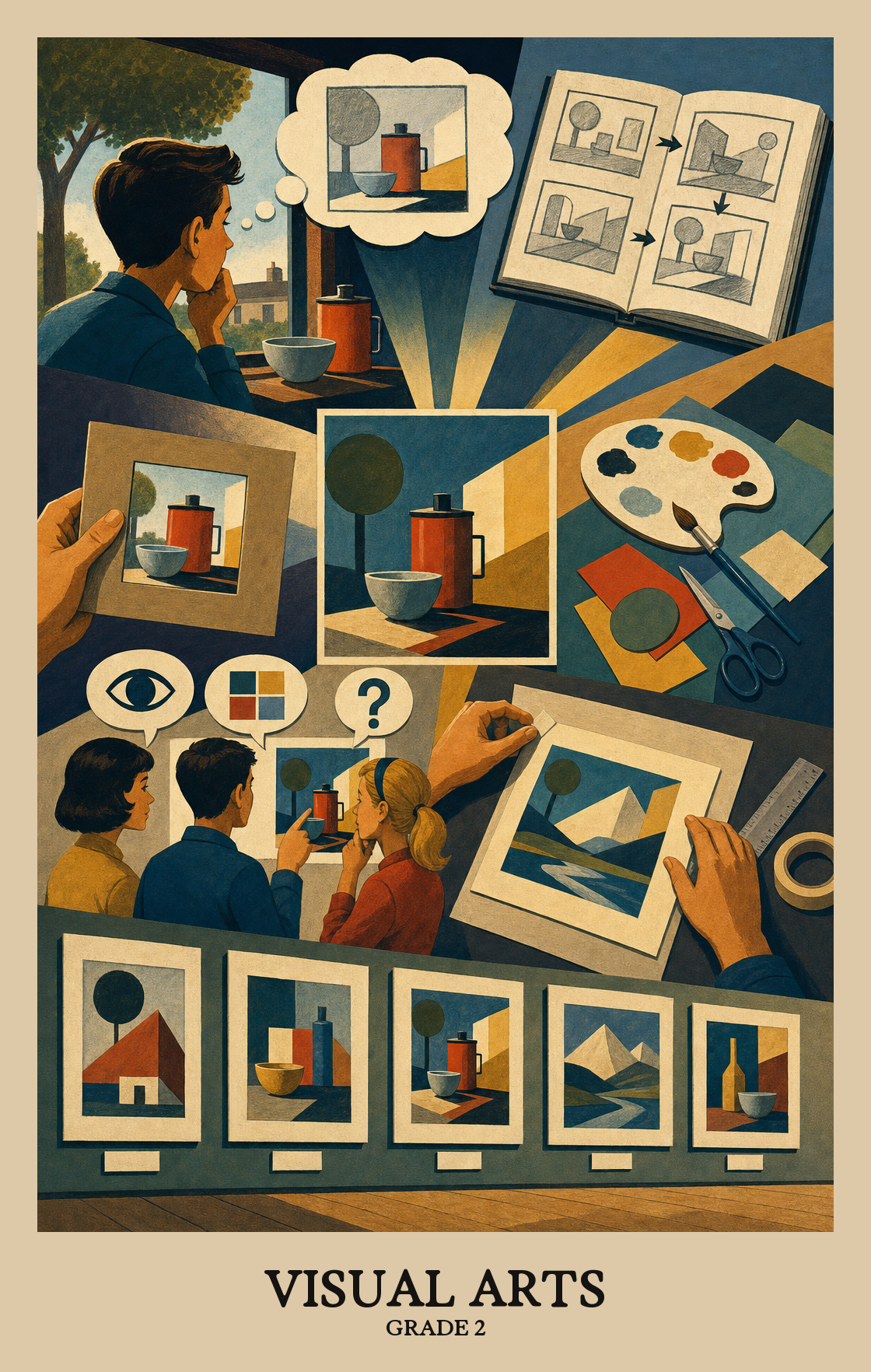
Students start the year gathering ideas from their own lives and the world around them. They sketch, talk through plans, and try out materials before settling on what to make.
Students practice using paint, clay, paper, and drawing tools with more care. They learn how to handle each material and how small choices change the look of a finished piece.
Students slow down and study artwork made by classmates and by artists from different times and places. They notice details, share what they see, and start guessing what the artist wanted to say.
Students revise their pieces, choose which ones to show, and think about how a viewer will see them. They explain their choices and give kind, honest feedback on each other's work.
Students connect something from their own life to an idea and use that connection to make a piece of art. The work reflects what they already know or have lived through.
Students look at artwork from different times and places and think about what was happening in the world when it was made. Connecting a painting or sculpture to its culture helps students understand why it looks the way it does.
| Standard | Definition | Code |
|---|---|---|
| Synthesize and relate knowledge and personal experiences to make art | Students connect something from their own life to an idea and use that connection to make a piece of art. The work reflects what they already know or have lived through. | VA:Cn10.2 |
| Relate artistic ideas and works with societal, cultural | Students look at artwork from different times and places and think about what was happening in the world when it was made. Connecting a painting or sculpture to its culture helps students understand why it looks the way it does. | VA:Cn11.2 |
Students brainstorm ideas for their own artwork before picking up a pencil or brush. They think about what they want to make and why, turning a loose idea into a plan.
Students arrange colors, shapes, and textures in their artwork on purpose, making deliberate choices about what to include and where to place it.
Students revisit a drawing or artwork they started, make changes to improve it, and decide when it feels finished.
| Standard | Definition | Code |
|---|---|---|
| Generate and conceptualize artistic ideas and work | Students brainstorm ideas for their own artwork before picking up a pencil or brush. They think about what they want to make and why, turning a loose idea into a plan. | VA:Cr1.2 |
| Organize and develop artistic ideas and work | Students arrange colors, shapes, and textures in their artwork on purpose, making deliberate choices about what to include and where to place it. | VA:Cr2.2 |
| Refine and complete artistic work | Students revisit a drawing or artwork they started, make changes to improve it, and decide when it feels finished. | VA:Cr3.2 |
Students look at several pieces of their own artwork and choose one to share with others, explaining why that piece is their best or most meaningful work.
Students practice and improve their artwork before sharing it, making choices about how to finish and present what they've made.
Students choose how to display or share their artwork so viewers understand what the work is about. The presentation itself becomes part of the message.
| Standard | Definition | Code |
|---|---|---|
| Analyze, interpret, and select artistic work for presentation | Students look at several pieces of their own artwork and choose one to share with others, explaining why that piece is their best or most meaningful work. | VA:Pr4.2 |
| Develop and refine artistic techniques and work for presentation | Students practice and improve their artwork before sharing it, making choices about how to finish and present what they've made. | VA:Pr5.2 |
| Convey meaning through the presentation of artistic work | Students choose how to display or share their artwork so viewers understand what the work is about. The presentation itself becomes part of the message. | VA:Pr6.2 |
Students look closely at a piece of art and describe what they notice, from the colors and shapes used to what the artwork might mean or show.
Students look at a piece of art and explain what they think the artist meant, using details from the work to back up their idea.
Students look at a piece of art and decide what makes it work well, using specific reasons like color, shape, or detail to explain their thinking.
| Standard | Definition | Code |
|---|---|---|
| Perceive and analyze artistic work | Students look closely at a piece of art and describe what they notice, from the colors and shapes used to what the artwork might mean or show. | VA:Re7.2 |
| Interpret intent and meaning in artistic work | Students look at a piece of art and explain what they think the artist meant, using details from the work to back up their idea. | VA:Re8.2 |
| Apply criteria to evaluate artistic work | Students look at a piece of art and decide what makes it work well, using specific reasons like color, shape, or detail to explain their thinking. | VA:Re9.2 |
Students make art from their own ideas and experiences, try out different materials, and talk about what they and other artists have made. They also learn to plan a piece, fix parts they want to change, and share finished work with others.
Keep paper, pencils, crayons, and scissors easy to reach so students can draw and build whenever they want. Ask open questions about their art, like what it shows or what part was tricky to make. Visiting a local museum or library art display also counts.
No. Sketches, scribbles, half-finished projects, and do-overs are all part of the process. Students learn a lot by trying an idea, looking at it, and changing parts. Saving rough drafts in a folder or box helps students see how their work grows.
Start with idea generation and basic tool skills, then move into longer projects where students plan, make, and revise one piece over several sessions. Save responding and presenting work for later in the year, once students have finished pieces to talk about and display.
Revising work is the hardest habit at this age. Students often want to call a piece done the moment it looks like something. Short structured check-ins partway through a project, with one question about what to add or change, build the habit faster than asking at the end.
Students look at art from different times and places and notice why people made it. A short story about the artist or the community behind a piece is enough. The point is to see that art carries meaning, not to memorize names or dates.
Ask what the piece is about, why those colors or shapes were chosen, and what part took the longest. Avoid jumping to praise or correction. Letting students explain their thinking is more useful than guessing what the picture shows.
By spring, students can come up with their own art idea, stick with a project across more than one sitting, and talk about what they made and why. They can also point to something specific they like or want to change in another piece of art.