Naming feelings and getting to know me
Students start the year learning words for how they feel inside, like happy, frustrated, or worried. They notice what they are good at and what feels hard.
These are the years students learn to name what they feel and start handling it instead of melting down. Students put words to big emotions like frustration or worry, notice when a classmate is upset, and try small fixes like taking a breath or asking for help. They practice taking turns, sharing, and working out small disagreements with words. By spring, a student can name how they feel, calm down with a little support, and play fairly with a friend.
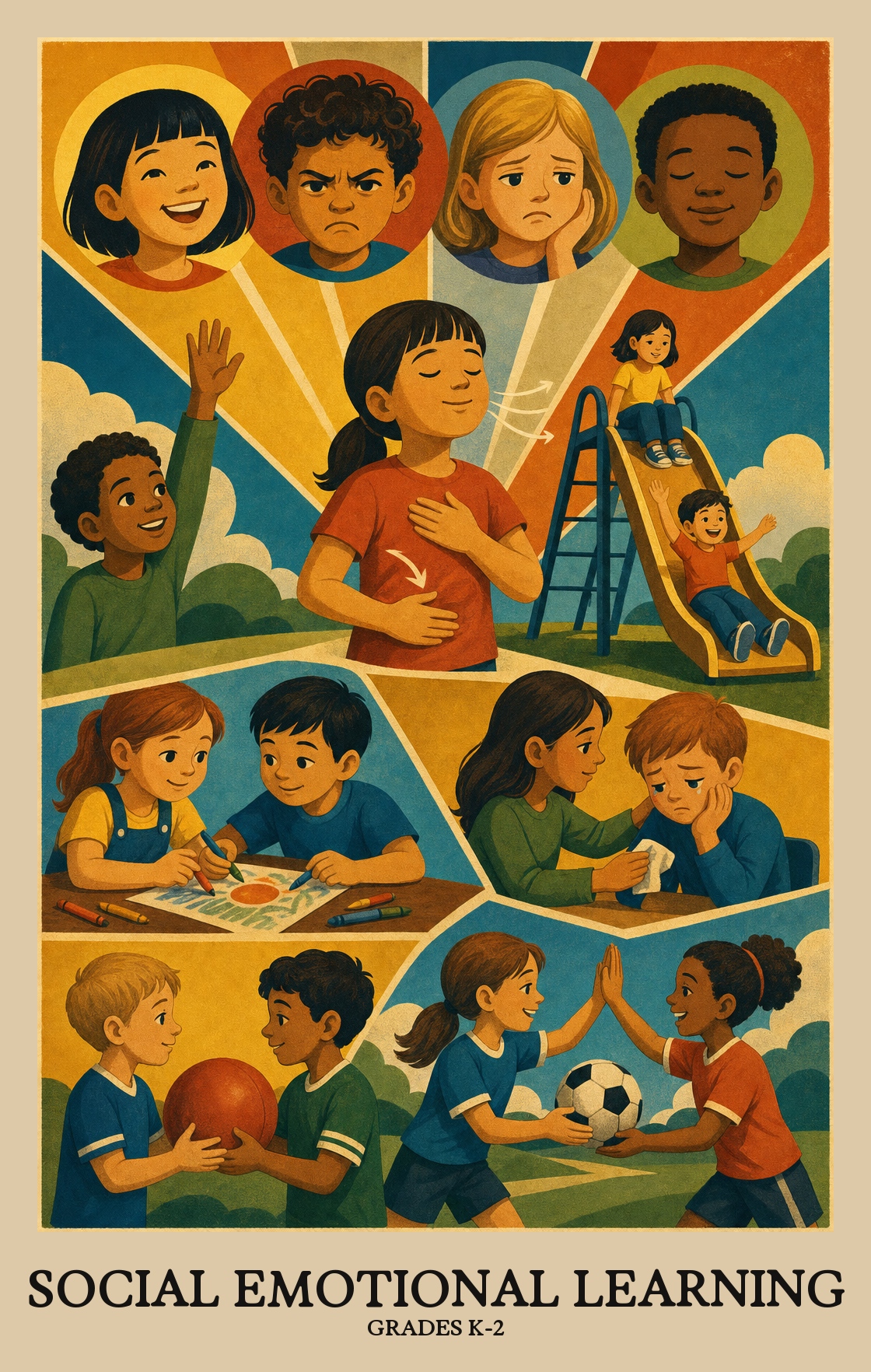
Students start the year learning words for how they feel inside, like happy, frustrated, or worried. They notice what they are good at and what feels hard.
Students practice simple ways to settle big feelings, like slow breathing or counting. They work on waiting their turn and keeping their things in order so they can finish what they start.
Students learn that classmates may feel differently than they do, even in the same moment. They notice when a friend looks sad or left out and find trusted adults who can help.
Students practice sharing, listening, and using kind words during group work and play. When two kids want the same thing, they try to talk it out or ask for help instead of giving up or grabbing.
By the end of the year, students think before they act in tricky moments at recess or in line. They consider what will happen next and how their choice affects the people around them.
Students learn to notice their own feelings and thoughts, name them, and understand how those feelings affect what they do. They also start to recognize what they are good at and where they need more practice.
Students practice noticing their feelings and slowing down before reacting. They learn to stay focused, handle frustrating moments, and work toward small goals even when things get hard.
Students learn to see things from someone else's point of view and notice how other people might feel. They also learn who to turn to for help at school, at home, and in their neighborhood.
Students practice getting along with others by listening, sharing, and asking for help when something feels hard. They also learn to work through disagreements and build friendships with people who may be different from them.
Students learn to stop and think before acting, weighing how a choice might affect themselves and the people around them. This applies at recess, in class, and anywhere a decision needs to be made.
| Standard | Definition | Code |
|---|---|---|
| The abilities to understand one's own emotions, thoughts Grades K-2 | Students learn to notice their own feelings and thoughts, name them, and understand how those feelings affect what they do. They also start to recognize what they are good at and where they need more practice. | CT-SEL.1.k-2 |
| The abilities to manage emotions, thoughts Grades K-2 | Students practice noticing their feelings and slowing down before reacting. They learn to stay focused, handle frustrating moments, and work toward small goals even when things get hard. | CT-SEL.2.k-2 |
| The abilities to understand the perspectives of and empathise with others… Grades K-2 | Students learn to see things from someone else's point of view and notice how other people might feel. They also learn who to turn to for help at school, at home, and in their neighborhood. | CT-SEL.3.k-2 |
| The abilities to establish and maintain healthy and supportive relationships… Grades K-2 | Students practice getting along with others by listening, sharing, and asking for help when something feels hard. They also learn to work through disagreements and build friendships with people who may be different from them. | CT-SEL.4.k-2 |
| The abilities to make caring and constructive choices about personal behavior… Grades K-2 | Students learn to stop and think before acting, weighing how a choice might affect themselves and the people around them. This applies at recess, in class, and anywhere a decision needs to be made. | CT-SEL.5.k-2 |
Students learn to name their feelings, calm down when upset, take turns, and notice when a classmate needs help. It shows up in small moments: asking for a break, sharing a marker, or apologizing after a bump in the hallway.
When emotions run high, pause and offer two or three words: frustrated, disappointed, embarrassed. Hearing a name for the feeling helps students sort it out. Reading picture books and asking how a character feels is another easy five-minute habit.
Stay calm and wait it out before talking. Once things settle, walk through what happened and practice one thing to try next time, like taking three deep breaths or asking for space. Practice the strategy when students are calm, not in the middle of a meltdown.
Pick two or three predictable routines and teach them like academic content: morning check-ins, a calm-down corner, and a clear way to ask for help. Re-teach after every break. Students need many short practice runs, not one big lesson.
Impulse control and conflict resolution take the longest. Expect to coach the same students through the same hallway or recess problem dozens of times before it sticks. Short, in-the-moment conversations work better than long talks after the fact.
Start with self-awareness and naming feelings in the first weeks, then add calming strategies and routines. Move into perspective-taking and friendship skills once students know each other. Save group problem-solving and goal-setting for the back half of the year, when trust is built.
Not fully. At this age students are still learning to use words instead of hands and to listen to a friend's side. Coach them through it: ask what happened, what the other person might be feeling, and what they could try.
By the end of second grade, most students can name how they feel, use a calming strategy with a reminder, work with a partner, and ask an adult for help when stuck. They also start to notice when a classmate is left out or upset.