Moving safely in a group
Students practice walking, running, and stopping without bumping into classmates. They learn to listen for signals, share space, and follow simple directions during active play.
This is the year students learn to move their bodies on purpose. They practice running, jumping, hopping, and skipping, and they start to roll, throw, and catch a ball with more control. Along the way they learn to share space, take turns, and follow simple game rules. By spring, students can play active games with classmates and name a few ways moving their body feels good.
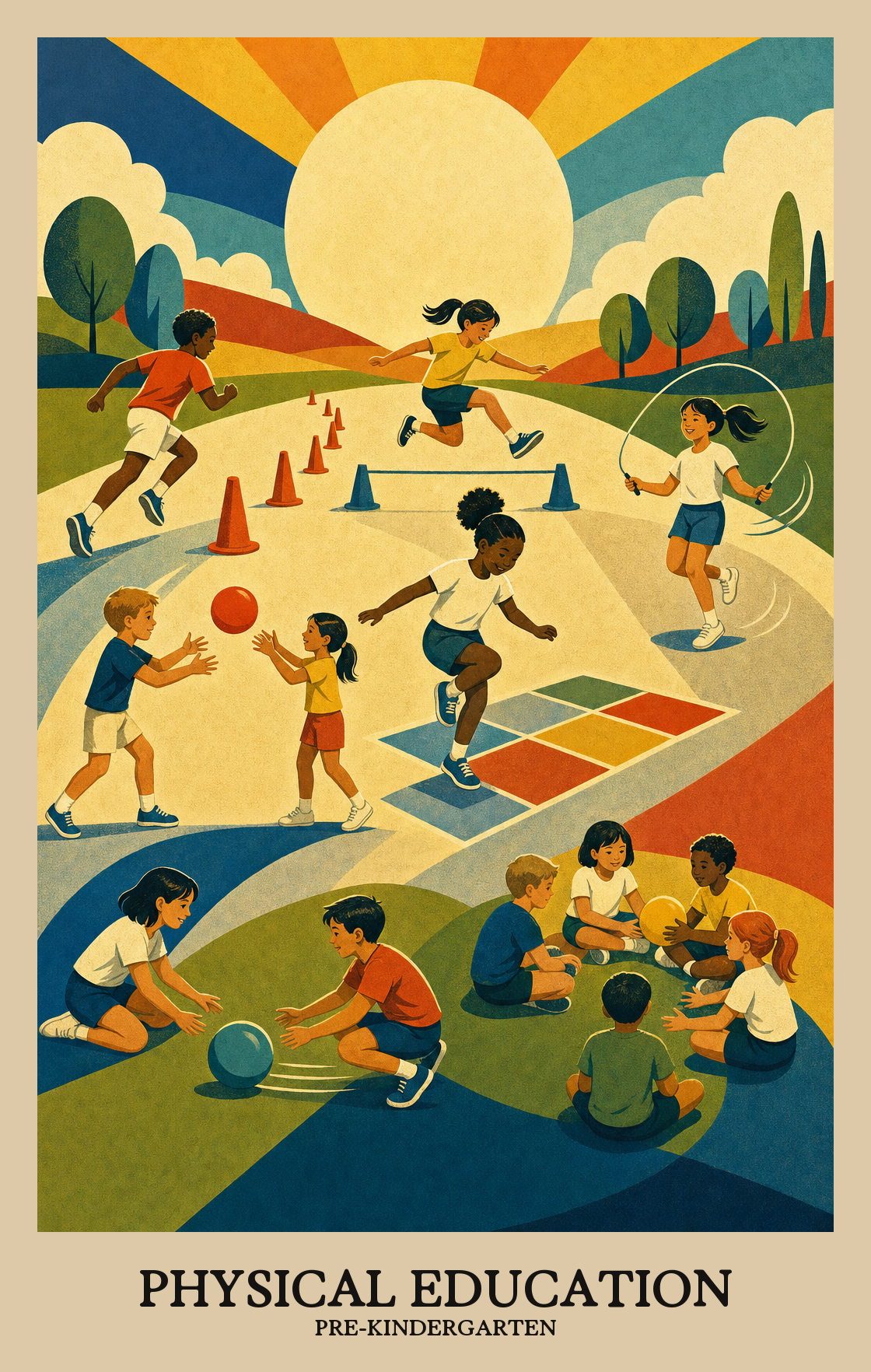
Students practice walking, running, and stopping without bumping into classmates. They learn to listen for signals, share space, and follow simple directions during active play.
Students try hopping, jumping, skipping, balancing, bending, and twisting. They start to notice what their bodies can do and build the coordination that supports everyday play.
Students roll, toss, catch, kick, and bounce balls of different sizes. They get used to handling equipment and aiming at simple targets with a partner or on their own.
Students take turns, share equipment, and play simple group games. They practice kind words, waiting for a turn, and helping classmates who are still learning a skill.
Students notice how their bodies feel after moving, like a faster heartbeat or warm cheeks. They talk about why moving feels good and pick favorite activities they want to do again.
Students practice moving their bodies in basic ways: running, jumping, balancing, and throwing. These early movement skills build the foundation for sports, play, and staying active as they grow.
Students learn basic body-awareness ideas, like how to move safely, control their speed, and stay active. Those ideas help them join games and movement activities with more confidence.
Students practice taking turns, listening to classmates, and moving safely alongside others. These activities build the habits of sharing space and working together that show up in every part of school.
Students practice basic movement skills like jumping and balancing, start to notice how being active makes their body feel good, and begin choosing to move on their own.
| Standard | Definition | Code |
|---|---|---|
| Develop a variety of motor skills, including locomotor, non-locomotor | Students practice moving their bodies in basic ways: running, jumping, balancing, and throwing. These early movement skills build the foundation for sports, play, and staying active as they grow. | FL-PE.1.pk |
| Apply knowledge related to movement, performance | Students learn basic body-awareness ideas, like how to move safely, control their speed, and stay active. Those ideas help them join games and movement activities with more confidence. | FL-PE.2.pk |
| Develop social skills through movement, including respect for self and others… | Students practice taking turns, listening to classmates, and moving safely alongside others. These activities build the habits of sharing space and working together that show up in every part of school. | FL-PE.3.pk |
| Develop personal skills, identify personal benefits of movement | Students practice basic movement skills like jumping and balancing, start to notice how being active makes their body feel good, and begin choosing to move on their own. | FL-PE.4.pk |
Most of the year is active play with a purpose. Students practice running, jumping, hopping, skipping, balancing, and throwing or kicking a ball. They also learn to share space safely, take turns, and follow simple directions during games.
Aim for an hour of movement most days, broken into short bursts. Play catch with a soft ball, set up a hopping path with chalk or tape, or have a quick dance break before dinner. The goal is fun and lots of repetition.
By spring, students should be able to run, jump with two feet, hop on one foot, and gallop. They should also be able to throw, catch, and kick a large ball, and follow safety rules during group games.
Start with body awareness and safe movement in space, then build locomotor skills like running, hopping, and skipping. Add ball skills such as rolling, tossing, and kicking in the middle of the year. Save cooperative games and small group challenges for later, once routines are solid.
At this age, big differences in coordination are normal. Practice one skill at a time at home, like catching a beach ball or balancing on a line of tape. Short, playful repetition matters more than drills.
Skipping, catching, and one-foot balance tend to lag behind running and jumping. Plan to revisit these across the year in short warm-ups rather than single units. Pair tricky skills with familiar games so practice feels like play.
Games are the main tool. Students practice waiting for a turn, sharing equipment, cheering on a partner, and stopping when the signal sounds. Calling out specific behaviors during play helps these habits stick.
Talk about why bodies feel good after moving, like a faster heartbeat or stronger legs. Walk to the park instead of driving when possible, and let students pick a favorite active game once a week. Small choices build the habit of moving every day.
They can move safely around classmates, stop and start on a signal, and try a new skill without giving up after one attempt. They can also name one reason moving is good for the body, such as feeling strong or having more energy.