Skip to content

What does a student learn in ?

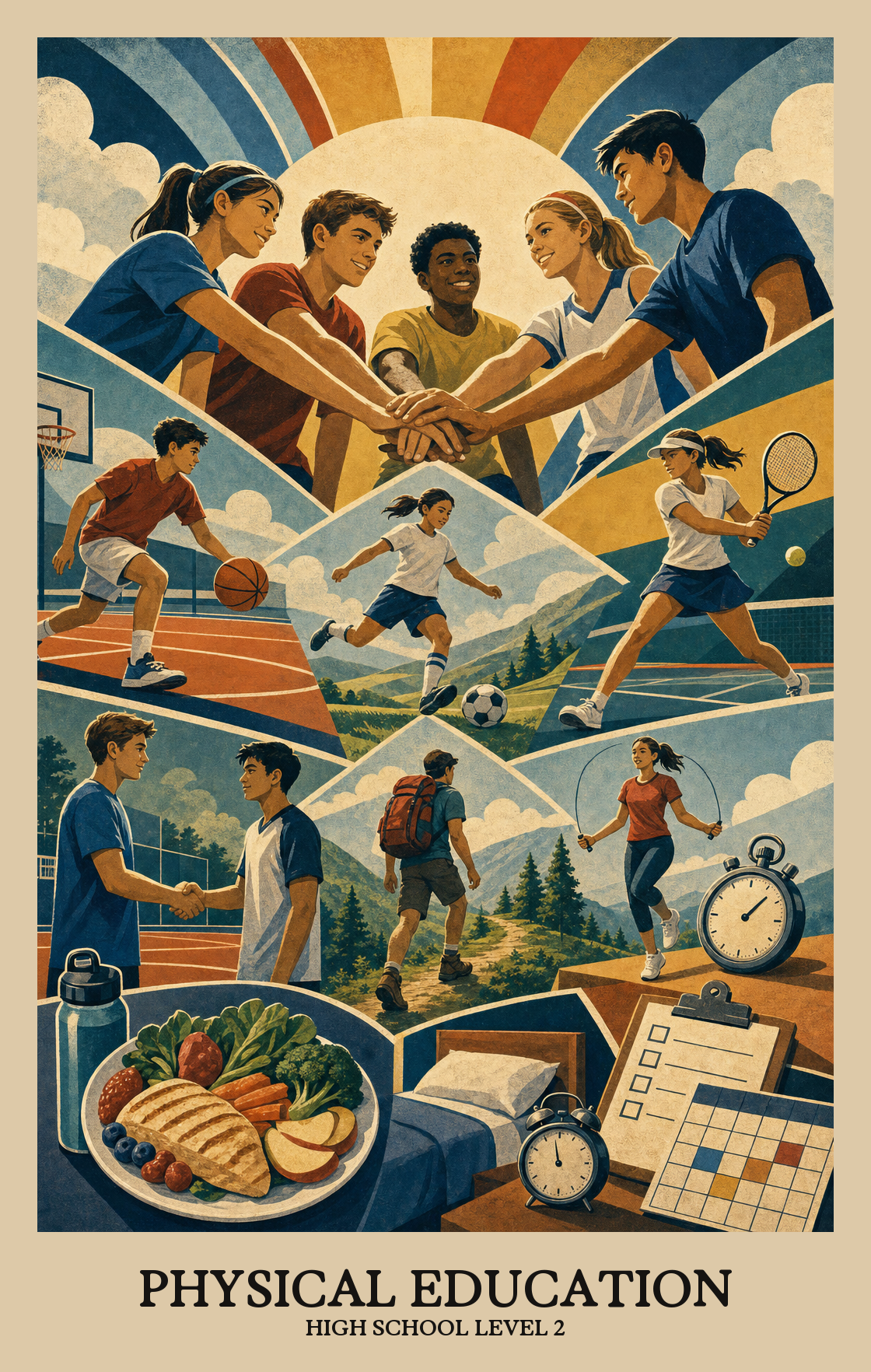
This is the year P.E. shifts from learning skills to building habits students will keep after graduation. Students sharpen their movement in sports, fitness, and lifetime activities while learning how training, nutrition, and rest shape health. They also practice working with teammates and handling competition without losing their cool. By spring, students can design and stick with a personal fitness plan they could actually use as adults.

  • Lifetime fitness
  • Sports skills
  • Personal fitness plan
  • Health concepts
  • Teamwork
  • Healthy habits
Source: Florida B.E.S.T. Standards
Year at a glance
How the year usually goes. Every school and district set their own curriculum, so treat this as a guide, not official pacing.
  1. 1

    Skill check and goal setting

    Students start the year by testing their current fitness, reviewing safe warm-ups, and setting personal goals for strength, stamina, and flexibility. Parents may hear about baseline scores and what students want to improve.

  2. 2

    Sharpening movement skills

    Students refine the running, throwing, kicking, and striking skills used across sports and activities. The focus shifts from learning the basics to moving with better control and accuracy.

  3. 3

    Team games and fair play

    Students put their skills to work in team sports and group activities. Cooperation, communication, and handling wins and losses with respect become as important as the game itself.

  4. 4

    Training for fitness

    Students learn how the body responds to exercise and try different ways to train, such as cardio circuits, strength work, and stretching routines. They track progress against the goals they set earlier.

  5. 5

    Lifelong activity choices

    Students explore activities they can keep doing after high school, from hiking and biking to yoga and recreational sports. The year ends with a plan for staying active on their own.

Mastery Learning Standards
The required skills a student should display by the end of Grade 11.
Physical Education
  • Develop a variety of motor skills, including locomotor, non-locomotor

    High School Level 2

    Students refine movement skills like throwing, balancing, and changing direction until those skills feel comfortable enough to use in sports, workouts, or any physical activity outside of school.

  • Apply knowledge related to movement, performance

    High School Level 2

    Students connect what they know about how the body moves and stays fit to make smarter choices during physical activity. This means using that knowledge to perform better and stay healthy, not just going through the motions.

  • Develop social skills through movement, including respect for self and others…

    High School Level 2

    Students practice working with others during physical activities: listening, taking turns, and adjusting their behavior based on what the group needs. The focus is on how students treat teammates and handle disagreement on the floor or field.

  • Develop personal skills, identify personal benefits of movement

    High School Level 2

    Students build habits around physical activity they actually enjoy and can keep up long after school. They also learn to recognize how regular movement pays off for their health over time.

Common Questions
  • What does Level 2 PE look like compared to Level 1?

    Students go deeper into the skills and fitness habits they started building before. They take more responsibility for their own workouts, track their progress, and start connecting activity to long-term health rather than just finishing a class.

  • How can I help my teen stay active at home?

    Pick something they actually enjoy and make it part of the week. A walk after dinner, a bike ride on Saturday, or a pickup game with friends all count. Aim for activity most days, even short sessions, so it becomes a habit rather than a chore.

  • My teen says they are not athletic. Does this class still matter?

    Yes. The point is not to make athletes. It is to help students find activities they can keep doing for life, like hiking, swimming, dancing, lifting, or yoga. Encourage them to try a few things and see what sticks.

  • How should I sequence skills and fitness across the year?

    Start with skill refreshers and baseline fitness testing so students know where they stand. Build into units that mix sport skills with fitness concepts like heart rate, strength, and flexibility. End the year with student-designed activity plans they could use on their own.

  • What does mastery look like by the end of the year?

    Students can perform a range of movement skills with control, explain why a workout is built the way it is, and design a simple plan to stay active outside of class. They also work well with classmates and handle wins and losses without drama.

  • Which areas usually need the most reteaching?

    Fitness concepts tend to need the most work, especially heart rate zones, how to progress safely, and the difference between strength, endurance, and flexibility. Many students can do the activity but struggle to explain why it helps the body.

  • How is this class graded if my teen is not great at sports?

    Grades lean on effort, participation, knowledge of fitness ideas, and personal growth more than raw athletic skill. A student who shows up, tries, cooperates with classmates, and improves on their own goals can do very well.

  • How do I know my teen is ready for the next level of PE or for staying active as an adult?

    Look for signs they can plan and stick with activity on their own. Setting a goal, choosing an activity, keeping at it for a few weeks, and adjusting when something is not working are all good signs they have built the habits this class is aiming for.