Knowing yourself as a young adult
Students notice how their emotions, values, and habits shape the choices they make at school, at home, and with friends. They start naming their strengths honestly and the spots where they still have growing to do.
This is the year self-awareness turns into self-direction. Students learn to name what they feel, see how it shapes their choices, and manage stress, deadlines, and impulses without an adult standing over them. They practice listening to people whose lives look nothing like their own, working through disagreements, and asking for help before things spiral. By spring, a student can talk through a hard decision out loud, weigh who it affects, and choose a next step they can defend.
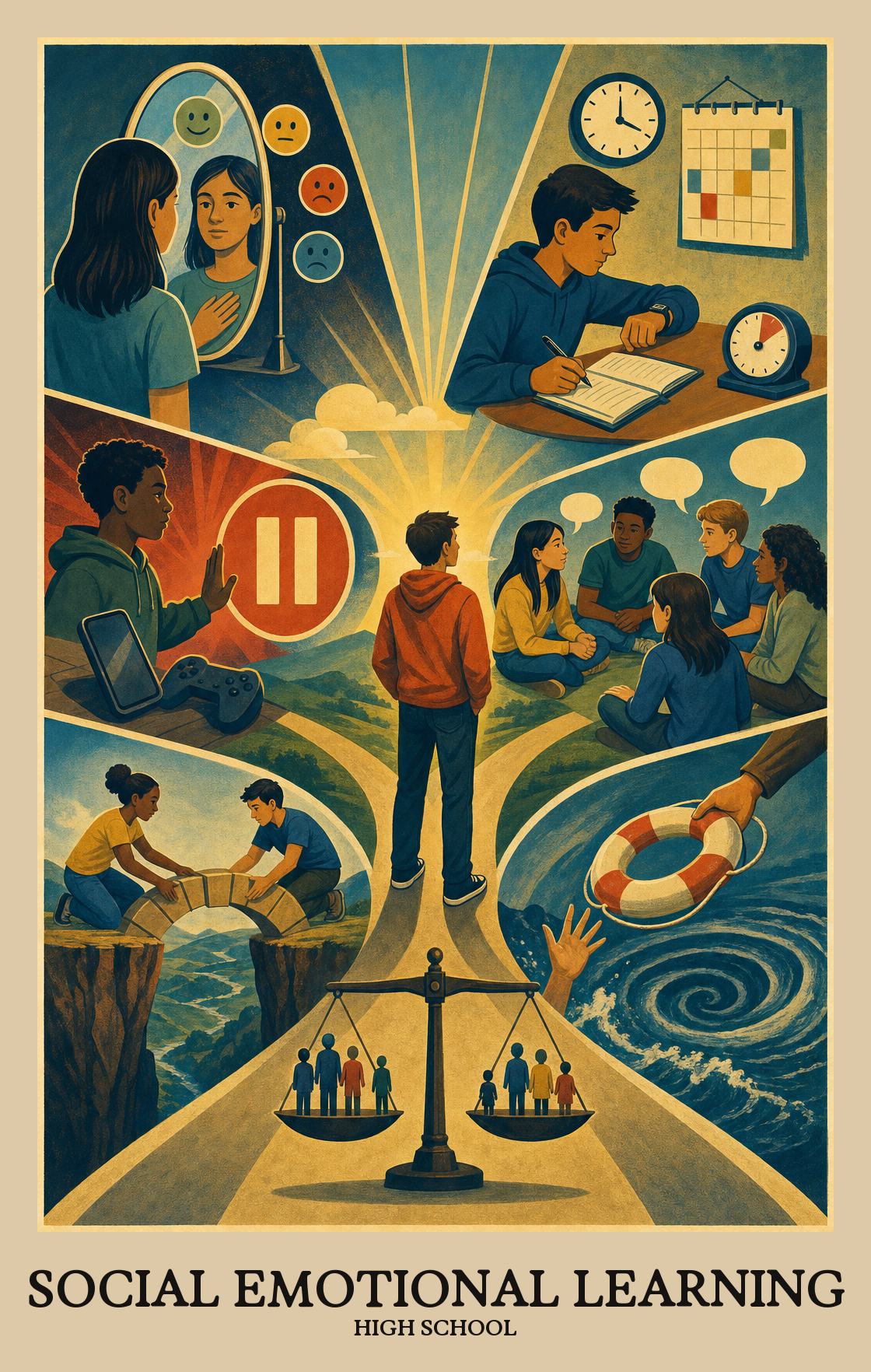
Students notice how their emotions, values, and habits shape the choices they make at school, at home, and with friends. They start naming their strengths honestly and the spots where they still have growing to do.
Students practice handling pressure from classes, jobs, and life outside school. They work on calming down before reacting, organizing their time, and sticking with goals that take more than a day to reach.
Students learn to listen for what someone else is feeling and why, including people whose background or experience is different from their own. They also find the trusted adults and resources they can turn to when something is hard.
Students work on speaking up clearly, hearing teammates out, and repairing a friendship after a disagreement. They practice asking for help when they need it and offering it when a classmate does.
Students think through the real consequences of a decision before they make it, for themselves and the people around them. They practice pausing, weighing options, and standing by a choice they can explain later.
Students examine their own emotions and values to understand why they act the way they do. They take stock of what they're good at and where they struggle, building a clearer picture of who they are and what they want.
Students practice controlling their emotions and impulses, managing stress, and staying organized so they can follow through on goals even when situations get hard.
Students practice seeing situations through someone else's eyes, especially people whose backgrounds differ from their own. They also learn to identify who and what they can turn to for support, at school, at home, and in the community.
Students practice building and keeping healthy relationships: listening well, working through disagreements, and asking for or offering help. These skills apply with classmates, teammates, and people whose backgrounds differ from their own.
Students practice weighing the real costs and benefits of a choice before acting, including how that choice affects other people. This applies to personal decisions and social situations alike.
| Standard | Definition | Code |
|---|---|---|
| The abilities to understand one's own emotions, thoughts High School | Students examine their own emotions and values to understand why they act the way they do. They take stock of what they're good at and where they struggle, building a clearer picture of who they are and what they want. | DC-SEL.1.9-12 |
| The abilities to manage emotions, thoughts High School | Students practice controlling their emotions and impulses, managing stress, and staying organized so they can follow through on goals even when situations get hard. | DC-SEL.2.9-12 |
| The abilities to understand the perspectives of and empathise with others… High School | Students practice seeing situations through someone else's eyes, especially people whose backgrounds differ from their own. They also learn to identify who and what they can turn to for support, at school, at home, and in the community. | DC-SEL.3.9-12 |
| The abilities to establish and maintain healthy and supportive relationships… High School | Students practice building and keeping healthy relationships: listening well, working through disagreements, and asking for or offering help. These skills apply with classmates, teammates, and people whose backgrounds differ from their own. | DC-SEL.4.9-12 |
| The abilities to make caring and constructive choices about personal behavior… High School | Students practice weighing the real costs and benefits of a choice before acting, including how that choice affects other people. This applies to personal decisions and social situations alike. | DC-SEL.5.9-12 |
Students learn to notice their own emotions, manage stress, understand other people's perspectives, build healthy relationships, and make thoughtful choices. The work shifts from naming feelings to actually using those skills under pressure, like before a test or during a disagreement with a friend.
Talk about real situations as they come up. Ask what students were feeling, what they tried, and what they might do differently next time. Short conversations after a hard day or a tough group project do more than any worksheet.
No. Social emotional learning teaches skills like managing stress, listening well, and resolving conflict. It is not treatment for mental health concerns. If a student is struggling, the school counselor is the right starting point.
That is normal at this age. Try side-by-side moments instead of face-to-face talks, like during a drive or while cooking. Asking about a friend's situation or a character in a show often opens more honest conversation than asking directly.
Start with self-awareness and self-management early in the fall, when routines are forming. Move into perspective-taking and relationship skills mid-year, then focus on decision-making and planning for life after high school in the spring. Skills should keep cycling back, not get checked off once.
Most of the work happens inside other classes and routines. A two-minute check-in, a group norms conversation before a project, or a debrief after a hard discussion all count. Standalone lessons help, but the daily moments carry more weight.
Stress management and conflict resolution. Students often know the strategies in theory but freeze when emotions run high. Plan to revisit these after big events like exams, breakups, or election seasons, when students have real situations to practice on.
Look for a student who can name what is stressing them out, ask for help before things fall apart, and work through a disagreement without cutting people off. These habits matter more than any single grade on a transcript.
Students can set a goal, plan steps, manage setbacks, and adjust without giving up. They can work with people who think differently and can weigh consequences before acting. Mastery shows up in how students handle a hard week, not in a quiz score.