Skip to content

What does a student learn in ?

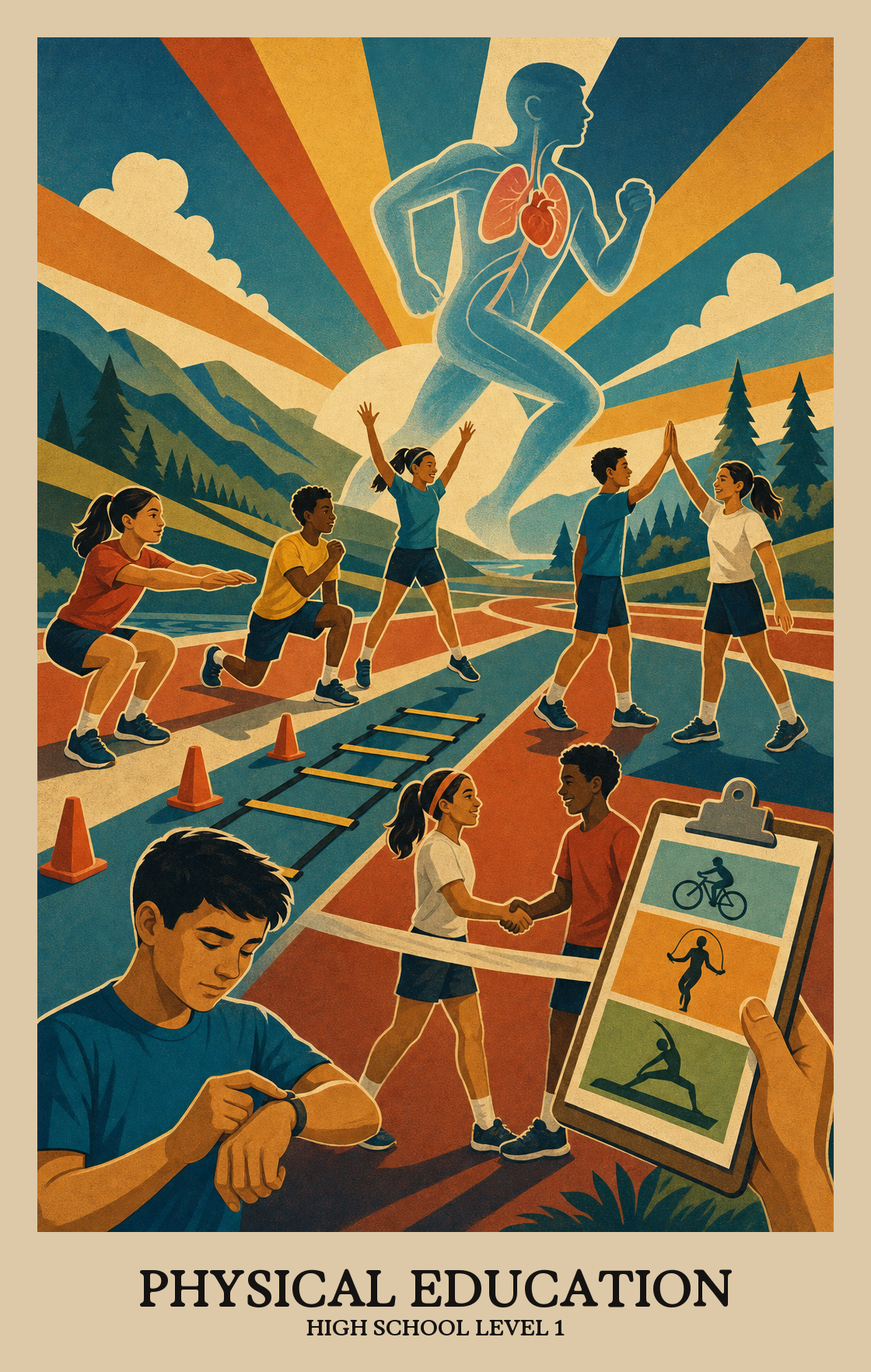
This is the year physical education shifts from playing games to building habits students can keep for life. Students sharpen the basic moves used in sports and fitness, then connect them to how the body actually works during exercise. Class time also builds the social side of activity, like working with a partner and handling competition well. By spring, students can plan a workout they enjoy and explain why it keeps them healthy.

  • Lifelong fitness
  • Motor skills
  • Health concepts
  • Teamwork
  • Personal wellness
Source: District of Columbia DC Academic Content Standards
Year at a glance
How the year usually goes. Every school and district set their own curriculum, so treat this as a guide, not official pacing.
  1. 1

    Movement skills and fitness baseline

    Students try a range of activities to build coordination, strength, and stamina. They learn how their bodies move, set a starting point for fitness, and get comfortable with the routines of a high school P.E. class.

  2. 2

    Team sports and cooperation

    Students play team sports and learn the rules, positions, and basic strategy. The focus shifts to working with others, communicating during play, and handling wins and losses without drama.

  3. 3

    Individual sports and skill building

    Students practice activities they can do on their own or with a partner, like racket sports, track events, or fitness routines. They work on technique, set personal goals, and track their own progress.

  4. 4

    Fitness concepts and healthy habits

    Students learn how exercise affects the body, including heart rate, muscle use, and recovery. They start to see how the choices they make about food, sleep, and activity add up over time.

  5. 5

    Lifelong activity and personal plan

    Students pick activities they actually enjoy and build a plan for staying active beyond P.E. class. They reflect on what worked during the year and how they want to keep moving once school is out.

Mastery Learning Standards
The required skills a student should display by the end of Grade 9.
Physical Education
  • Develop a variety of motor skills, including locomotor, non-locomotor

    High School Level 1

    Students practice moving in different ways, such as jumping, balancing, and throwing, to build a foundation for staying active throughout life.

  • Apply knowledge related to movement, performance

    High School Level 1

    Students connect what they know about how the body moves and stays fit to how they actually perform in class activities. Good technique, pacing, and effort work together in real workouts and games.

  • Develop social skills through movement, including respect for self and others…

    High School Level 1

    Students practice working with others during physical activity: taking turns, listening, and treating teammates with respect. Group activities give students a chance to build the habits they'll use in any team setting.

  • Develop personal skills, identify personal benefits of movement

    High School Level 1

    Students identify why regular movement matters to them personally and start building habits around physical activity they can keep up for life.

Common Questions
  • What will students actually do in PE this year?

    Students take part in a range of activities like team sports, fitness games, dance, and individual challenges. The goal is to build movement skills they can keep using, learn how exercise affects the body, and work well with others. Daily effort matters more than being the best athlete.

  • How can I help my child stay active at home?

    Aim for about 60 minutes of movement most days. That can be a walk after dinner, shooting hoops in the driveway, biking, or following a workout video. Joining in once or twice a week makes it much more likely to stick.

  • What if my child says they are bad at sports?

    PE at this level is not about being good at one sport. It rewards showing up, trying new activities, and tracking personal progress over time. Help students find one or two activities they actually enjoy, like hiking, swimming, or dance, and build from there.

  • Does my child have to be graded on how fit they are?

    Fitness testing is usually about personal growth, not hitting a fixed number. Students learn to set goals, track their own results, and improve from where they started. A student who improves their mile time by 30 seconds can do as well as a student who was already fast.

  • How should I sequence units across the year?

    A common pattern is to open with fitness baselines and cooperative games, move into team sports in the fall and winter, and finish with individual and lifetime activities in the spring. This builds social skills early and lets students apply fitness concepts to activities they can keep doing as adults.

  • Which skills usually need the most reteaching?

    Pacing during cardio work, proper form on strength exercises, and reading game situations tend to lag behind. Short skill stations and quick video review help more than long lectures. Build in two or three checkpoints per unit so issues surface before the final assessment.

  • How do I assess social and personal skills without it feeling subjective?

    Use a short rubric with three or four observable behaviors, such as encouraging teammates, following safety rules, and staying on task during transitions. Score a few students each class rather than the whole roster at once. Students should see the rubric before the unit starts.

  • What does mastery look like by the end of the year?

    Students can perform basic skills in several activities, explain how a workout affects heart rate and muscles, and adjust effort to reach a fitness goal. They also cooperate in group play and can name two or three activities they plan to keep doing outside of class.

  • How do I know students are ready for the next level?

    Look for students who can run a fitness routine on their own, apply strategy in a game without constant coaching, and resolve small conflicts with teammates. If they can plan a simple weekly activity schedule and explain why it works, they are ready to move on.