Building characters and ideas
Students start the year by inventing characters and short scenes drawn from their own lives and imagination. Parents may hear stories about made-up people with names, jobs, and problems to solve.
This is the year theatre shifts from playing pretend to shaping a scene on purpose. Students build characters with clear choices about voice, body, and feelings, then rehearse to make those choices sharper. They also start talking about plays like critics, explaining what a story means and why an actor's choice worked. By spring, students can plan a short scene, perform it for classmates, and give a thoughtful opinion about someone else's performance.
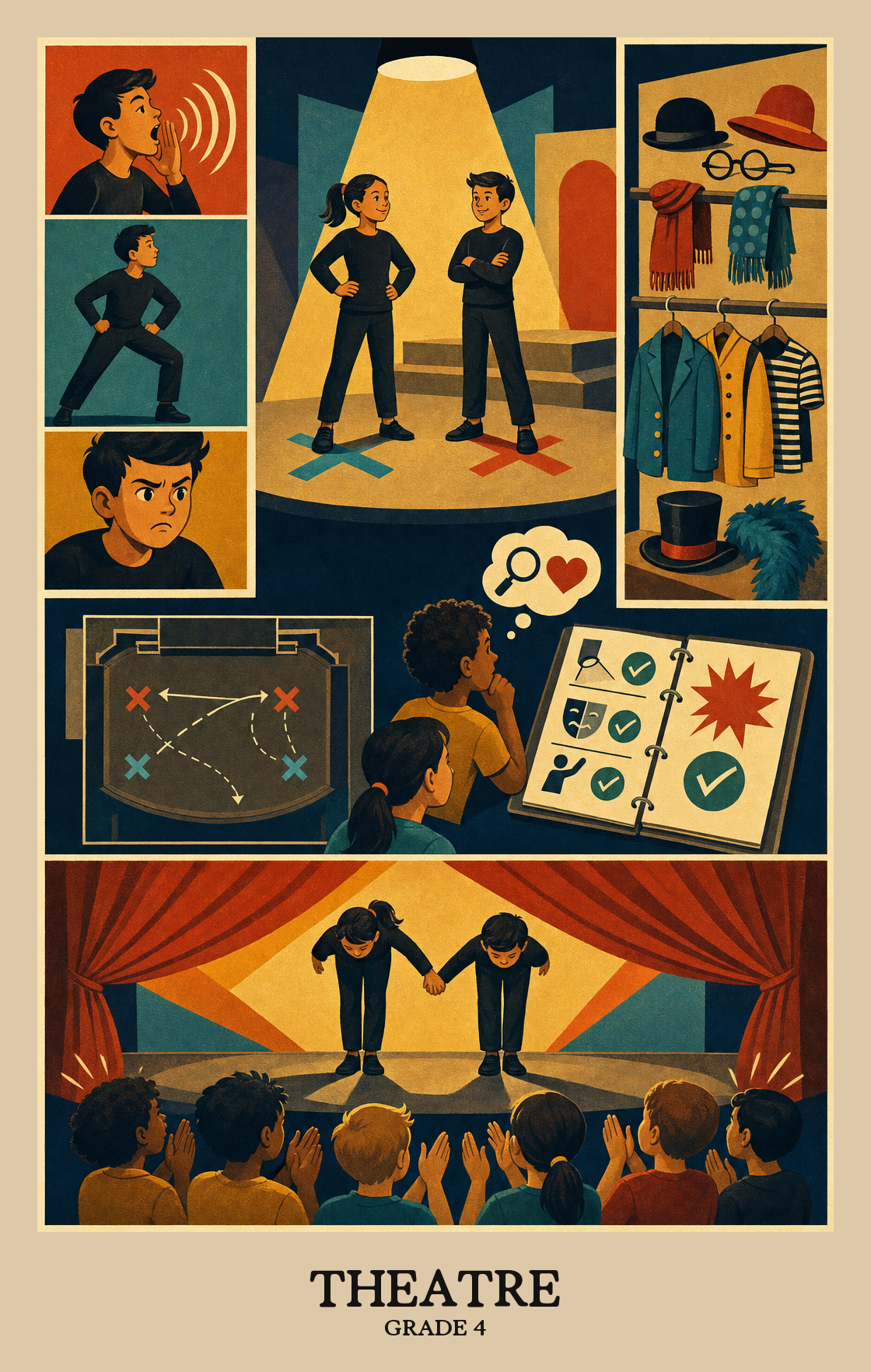
Students start the year by inventing characters and short scenes drawn from their own lives and imagination. Parents may hear stories about made-up people with names, jobs, and problems to solve.
Students work in small groups to turn their ideas into scenes with a beginning, middle, and end. They try out lines, change them, and decide what makes a scene clearer for an audience.
Students read and act out stories from different cultures and time periods. They talk about why the characters act the way they do and connect those choices to what they already know.
Students practice using voice, face, and body to make a character believable. They rehearse the same scene many times and learn that small changes in tone or movement change what the audience feels.
Students share finished scenes with classmates or families and watch each other perform. They learn to say what worked, what was confusing, and what they would try differently next time.
Students connect something from their own life to a scene or character they create. A memory, a feeling, or a real event becomes part of the story they put onstage.
Students connect a play or performance to the time and place it came from. Knowing the history or culture behind a story helps students understand why characters act the way they do.
| Standard | Definition | Code |
|---|---|---|
| Synthesize and relate knowledge and personal experiences to make art | Students connect something from their own life to a scene or character they create. A memory, a feeling, or a real event becomes part of the story they put onstage. | TH:Cn10.4 |
| Relate artistic ideas and works with societal, cultural | Students connect a play or performance to the time and place it came from. Knowing the history or culture behind a story helps students understand why characters act the way they do. | TH:Cn11.4 |
Students brainstorm characters, settings, and story ideas to build a scene or short play. This is the creative spark stage, where ideas get tried out before anything is written down or performed.
Students plan and shape a scene or character by deciding what to say, where to move, and how the story fits together before the performance.
Students revisit a scene or character they have been developing, make specific changes to improve it, and bring the work to a finished, performable state.
| Standard | Definition | Code |
|---|---|---|
| Generate and conceptualize artistic ideas and work | Students brainstorm characters, settings, and story ideas to build a scene or short play. This is the creative spark stage, where ideas get tried out before anything is written down or performed. | TH:Cr1.4 |
| Organize and develop artistic ideas and work | Students plan and shape a scene or character by deciding what to say, where to move, and how the story fits together before the performance. | TH:Cr2.4 |
| Refine and complete artistic work | Students revisit a scene or character they have been developing, make specific changes to improve it, and bring the work to a finished, performable state. | TH:Cr3.4 |
Students choose a scene or character to perform and explain why it fits the story and their own strengths as a performer.
Students practice and improve their acting, voice, and movement skills to get a performance ready to share with an audience.
Students perform a scene or character and make deliberate choices, like how loud to speak or where to stand, so the audience understands what the moment means.
| Standard | Definition | Code |
|---|---|---|
| Analyze, interpret, and select artistic work for presentation | Students choose a scene or character to perform and explain why it fits the story and their own strengths as a performer. | TH:Pr4.4 |
| Develop and refine artistic techniques and work for presentation | Students practice and improve their acting, voice, and movement skills to get a performance ready to share with an audience. | TH:Pr5.4 |
| Convey meaning through the presentation of artistic work | Students perform a scene or character and make deliberate choices, like how loud to speak or where to stand, so the audience understands what the moment means. | TH:Pr6.4 |
Students look at a scene or performance and explain what they notice, describing specific choices an actor or director made and why those choices matter to the story.
Students explain what a scene or character is trying to say, using details from the performance to back up their thinking.
Students watch or read a scene and decide what works well and what doesn't, using a specific set of criteria like believable acting or clear storytelling. They practice making judgments and explaining their reasoning.
| Standard | Definition | Code |
|---|---|---|
| Perceive and analyze artistic work | Students look at a scene or performance and explain what they notice, describing specific choices an actor or director made and why those choices matter to the story. | TH:Re7.4 |
| Interpret intent and meaning in artistic work | Students explain what a scene or character is trying to say, using details from the performance to back up their thinking. | TH:Re8.4 |
| Apply criteria to evaluate artistic work | Students watch or read a scene and decide what works well and what doesn't, using a specific set of criteria like believable acting or clear storytelling. They practice making judgments and explaining their reasoning. | TH:Re9.4 |
Students invent characters, build short scenes, and perform them for classmates. They also watch plays and stories acted out by others and talk about what worked and why. Most of the year is hands-on acting, not reading scripts at a desk.
Start small. Read a picture book aloud together and take turns doing the voices for each character. Five minutes of silly voices at bedtime builds the same skills students use on stage, without the pressure of an audience.
Some short scenes ask for memorized lines, but a lot of the work is improvised or read from a script students helped write. The bigger skill is staying in character and reacting to other actors, not perfect recall.
Start with imagination and movement games to build trust in the room. Move into character work and short improvised scenes by winter, then into scripted scenes and a small performance project in the spring. Saving polished presentation for last gives students something to point to.
They can build a character with a clear voice and body, work with a small group to shape a scene, and give a classmate specific feedback like which moment was funny or confusing. They can also connect a play to something from their own life or from history class.
Giving useful feedback is the hardest one. Students default to good or bad. Pre-teaching two or three things to look for before a scene, such as voice volume or where the actor was looking, gives them language and cuts down on vague comments.
Pick a story, person, or event from their reading or social studies unit and ask small groups to act out one scene from it. This hits the connection standards and also deepens what they remember from the other class. A short tableau, where students freeze in a pose, works well for big history moments.
The games are the lesson. Freeze tag with character traits, mirror exercises, and storytelling circles teach focus, listening, and how to react in the moment. These are the same skills actors use, and they show up later in scene work.