Generating ideas from experience
Students start the year brainstorming media projects rooted in their own lives and interests. They sketch out concepts, gather examples, and learn how a strong idea makes the rest of the work easier.
This is the year students start making media projects with a real audience in mind. They brainstorm ideas, build videos or digital pieces, and rework them based on feedback before sharing. Students also look at media from other times and places to figure out what the creators meant. By spring, they can plan, produce, and present a short media project and explain the choices behind it.
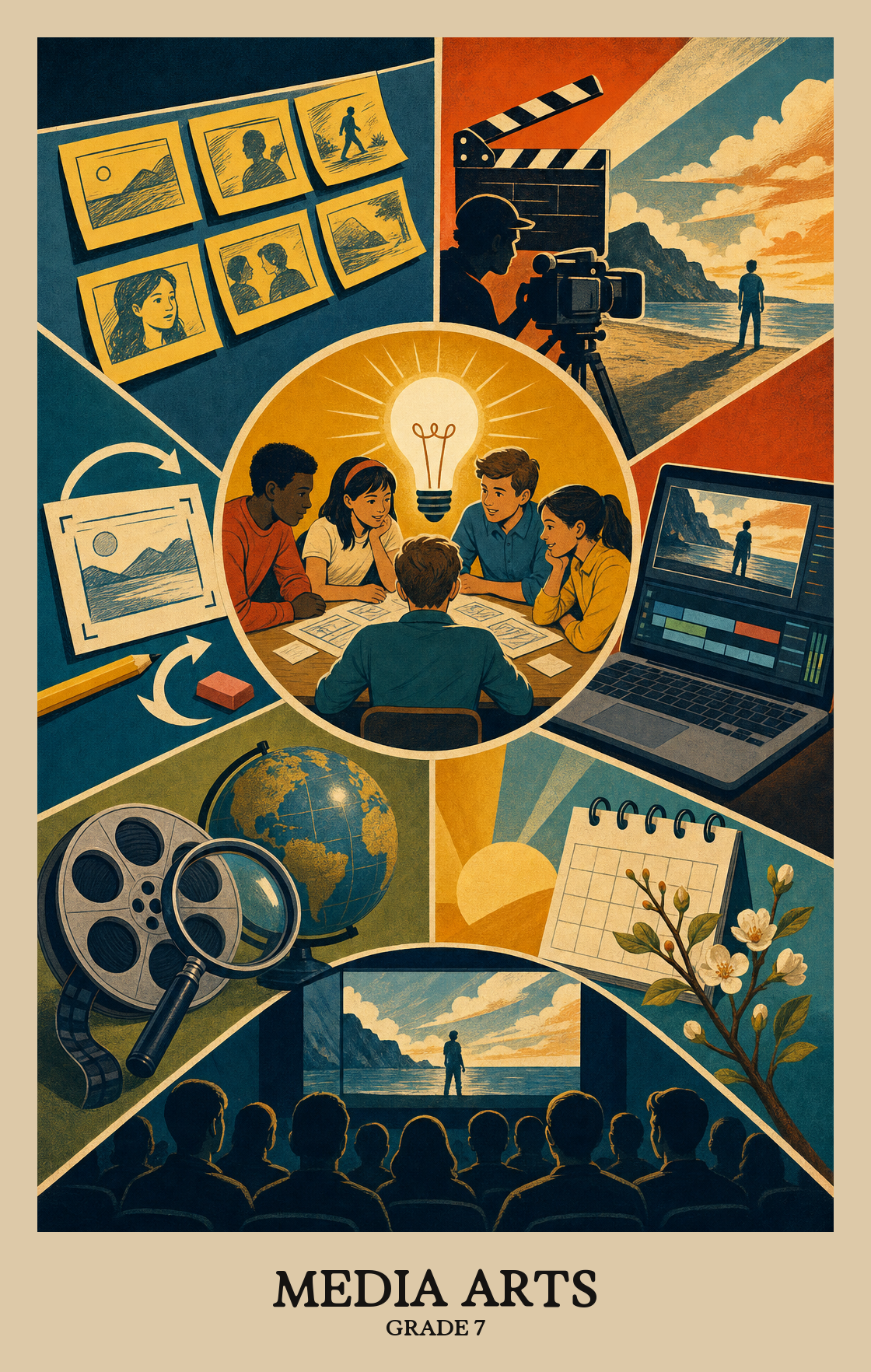
Students start the year brainstorming media projects rooted in their own lives and interests. They sketch out concepts, gather examples, and learn how a strong idea makes the rest of the work easier.
Students move from rough ideas to working drafts of videos, audio pieces, photos, or digital designs. They organize footage and files, try different approaches, and start to see what tools and choices fit their project.
Students study work made by others and discuss what each piece is trying to say. They learn to back up opinions with specifics from the work and to consider when and where a piece was made.
Students revise their projects based on feedback, polish the technical details, and choose pieces to share with an audience. They think about how the final presentation shapes the message a viewer takes away.
Students close the year by judging their own work and the work of peers against clear standards. They use what they have learned to set goals for the kind of media maker they want to be next year.
Students pull from what they already know and what they've lived through to make media art that means something. Personal experience becomes the raw material.
Students look at a piece of media art and explain how the time period, culture, or events around it shaped what the artist made. Context gives the work meaning beyond the screen.
| Standard | Definition | Code |
|---|---|---|
| Synthesize and relate knowledge and personal experiences to make art | Students pull from what they already know and what they've lived through to make media art that means something. Personal experience becomes the raw material. | MA:Cn10.7 |
| Relate artistic ideas and works with societal, cultural | Students look at a piece of media art and explain how the time period, culture, or events around it shaped what the artist made. Context gives the work meaning beyond the screen. | MA:Cn11.7 |
Students brainstorm and develop original ideas for media art projects, deciding what story, message, or visual concept they want to create before they start building.
Students plan and refine a media arts project by making deliberate choices about images, sound, or layout. The goal is a finished piece that clearly reflects their original idea.
Students review their media art project, revise what isn't working, and finish it to the standard they set at the start.
| Standard | Definition | Code |
|---|---|---|
| Generate and conceptualize artistic ideas and work | Students brainstorm and develop original ideas for media art projects, deciding what story, message, or visual concept they want to create before they start building. | MA:Cr1.7 |
| Organize and develop artistic ideas and work | Students plan and refine a media arts project by making deliberate choices about images, sound, or layout. The goal is a finished piece that clearly reflects their original idea. | MA:Cr2.7 |
| Refine and complete artistic work | Students review their media art project, revise what isn't working, and finish it to the standard they set at the start. | MA:Cr3.7 |
Students review and choose their own media projects to share, explaining why each piece represents their best work and fits the purpose of the presentation.
Students practice and polish a media arts project until it's ready to share with an audience. That might mean adjusting timing, sound, or visuals so the final piece works the way they intended.
Students choose how to present a media project so the message lands clearly with an audience. Every decision, from layout to sound, supports what the piece is trying to say.
| Standard | Definition | Code |
|---|---|---|
| Analyze, interpret, and select artistic work for presentation | Students review and choose their own media projects to share, explaining why each piece represents their best work and fits the purpose of the presentation. | MA:Pr4.7 |
| Develop and refine artistic techniques and work for presentation | Students practice and polish a media arts project until it's ready to share with an audience. That might mean adjusting timing, sound, or visuals so the final piece works the way they intended. | MA:Pr5.7 |
| Convey meaning through the presentation of artistic work | Students choose how to present a media project so the message lands clearly with an audience. Every decision, from layout to sound, supports what the piece is trying to say. | MA:Pr6.7 |
Students look closely at a media piece, such as a photo, video, or website, and explain what choices the creator made and why those choices shape how the audience responds.
Students explain what a media artist was trying to say and why specific choices, like color, sound, or framing, support that meaning.
Students use a set of criteria to judge a piece of media art, explaining why it works or falls short based on specific standards rather than personal taste alone.
| Standard | Definition | Code |
|---|---|---|
| Perceive and analyze artistic work | Students look closely at a media piece, such as a photo, video, or website, and explain what choices the creator made and why those choices shape how the audience responds. | MA:Re7.7 |
| Interpret intent and meaning in artistic work | Students explain what a media artist was trying to say and why specific choices, like color, sound, or framing, support that meaning. | MA:Re8.7 |
| Apply criteria to evaluate artistic work | Students use a set of criteria to judge a piece of media art, explaining why it works or falls short based on specific standards rather than personal taste alone. | MA:Re9.7 |
Media arts covers things students make with cameras, computers, and sound: short videos, photos, animations, podcasts, and simple graphic design. Students learn to plan a project, build it, and explain the choices they made along the way.
Ask students to walk through their project and explain why they picked the images, music, or words they used. A phone camera and a free editing app are enough for most homework. Help by listening, asking questions, and giving honest reactions to a draft.
No. A phone or school laptop with a free editor handles almost everything at this level. The thinking behind a project matters more than the tools used to make it.
Start with short projects that build one skill at a time, such as framing a photo or cutting between two clips. Move into projects that combine skills, like a one-minute video with original sound. End the year with a longer piece that students plan, draft, revise, and present.
Students can take an idea from a rough sketch to a finished piece, explain the choices they made, and revise based on feedback. They can also look at someone else's work and talk about how it was put together and what it means.
Planning before producing is the hardest habit to build. Many students jump straight to filming or editing and skip storyboards, shot lists, or rough drafts. Revision is the other sticking point, since students often treat a first cut as a final cut.
Most teachers grade on the process as well as the final piece: the plan, the drafts, the revisions, and a short reflection about the choices made. A polished video with no thinking behind it usually scores lower than a rougher project with strong reasoning.
Pair each project with a short look at a real example from film, advertising, or social media. Ask students to borrow a technique they noticed and use it in their own piece. This builds the habit of seeing media arts as part of a larger conversation.
A ready student can pitch an idea, build it in stages, take feedback without starting over, and present the finished piece with a clear reason for the choices made. They can also give useful feedback to a classmate using shared criteria.