Naming feelings
Students start the year learning to name what they feel inside. They notice when they are happy, sad, frustrated, or excited, and begin to see how those feelings show up in their face and body.
These are the years students start putting words to feelings instead of acting them out. Students learn to name what they feel, take a breath before reacting, and notice when a classmate looks sad or left out. They practice taking turns, asking for help, and working through small playground arguments without melting down. By spring, a student can name a feeling, calm down with a simple strategy like deep breaths, and use kind words to solve a problem with a friend.
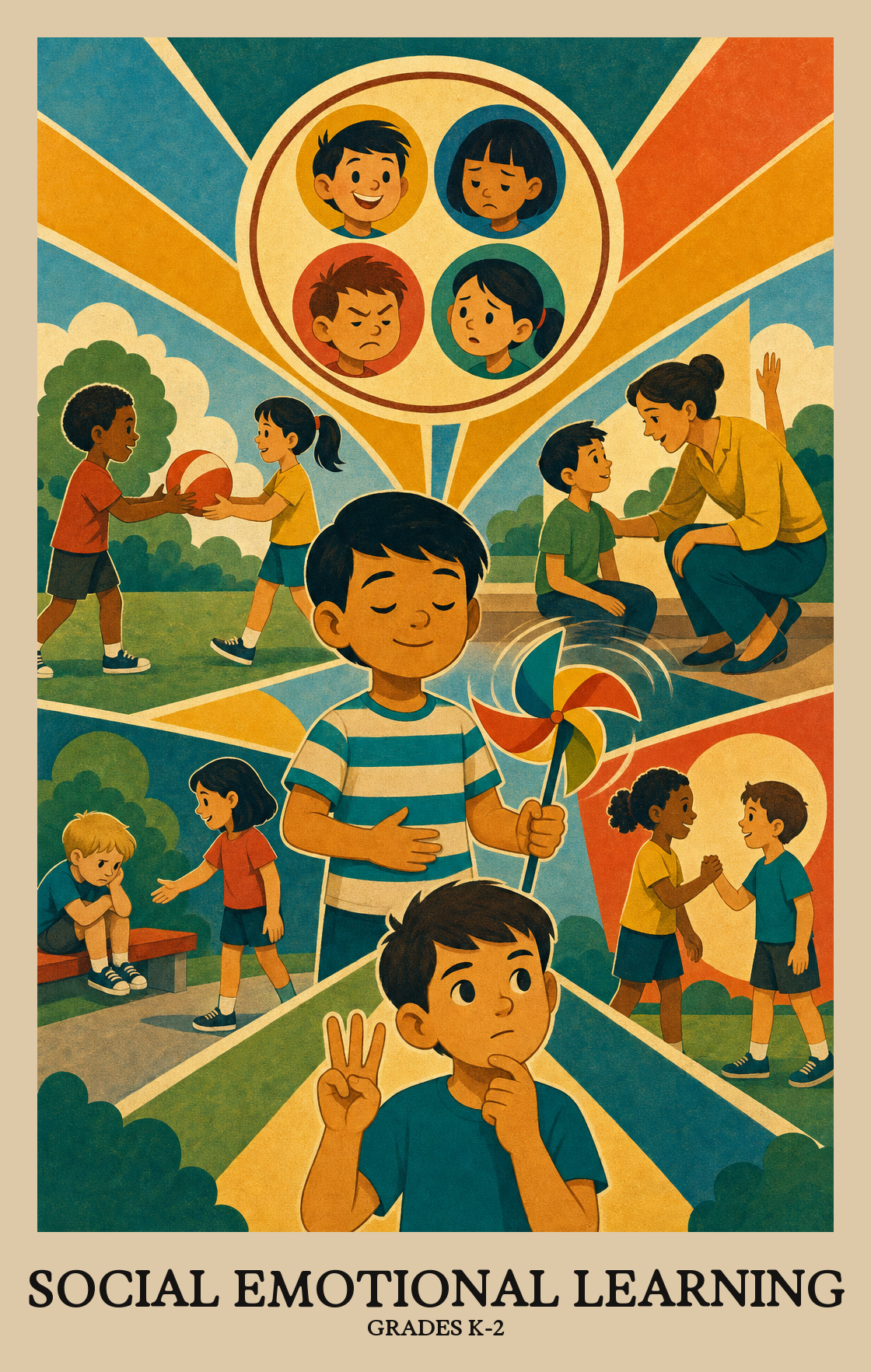
Students start the year learning to name what they feel inside. They notice when they are happy, sad, frustrated, or excited, and begin to see how those feelings show up in their face and body.
Students practice what to do when a feeling gets too big. They learn simple tools like slow breaths, counting, or asking for a break so they can settle down and get back to work.
Students notice that other kids feel things too, and not always the same way they do. They practice listening, asking how a friend feels, and being kind to classmates from different families and backgrounds.
Students work on the daily skills of being part of a class. They share, take turns, ask for help, and try simple ways to work out a problem with a friend instead of giving up or getting upset.
By the end of these grades, students think before they act. They consider what might happen next, who else is affected, and whether a choice is kind and safe for themselves and the people around them.
Students learn to notice their own feelings and thoughts, and understand how those feelings shape the way they act. They also start to recognize what they are good at and where they need more practice.
Students learn to handle big feelings, stay focused, and make thoughtful choices instead of acting on impulse. They also practice simple habits like keeping track of their things and calming down when something feels hard.
Students practice seeing situations through someone else's eyes and recognizing that people's backgrounds shape how they feel. They also learn who to turn to for help, whether that's a teacher, a family member, or someone in the community.
Students practice getting along with others by listening, sharing, solving disagreements, and asking for help when they need it. These skills help students build friendships and work well with people who are different from them.
Students practice stopping to think before acting, weighing how a choice might affect themselves and the people around them. They learn to pick options that are kind and make situations better.
| Standard | Definition | Code |
|---|---|---|
| The abilities to understand one's own emotions, thoughts Grades K-2 | Students learn to notice their own feelings and thoughts, and understand how those feelings shape the way they act. They also start to recognize what they are good at and where they need more practice. | DE-SEL.1.k-2 |
| The abilities to manage emotions, thoughts Grades K-2 | Students learn to handle big feelings, stay focused, and make thoughtful choices instead of acting on impulse. They also practice simple habits like keeping track of their things and calming down when something feels hard. | DE-SEL.2.k-2 |
| The abilities to understand the perspectives of and empathise with others… Grades K-2 | Students practice seeing situations through someone else's eyes and recognizing that people's backgrounds shape how they feel. They also learn who to turn to for help, whether that's a teacher, a family member, or someone in the community. | DE-SEL.3.k-2 |
| The abilities to establish and maintain healthy and supportive relationships… Grades K-2 | Students practice getting along with others by listening, sharing, solving disagreements, and asking for help when they need it. These skills help students build friendships and work well with people who are different from them. | DE-SEL.4.k-2 |
| The abilities to make caring and constructive choices about personal behavior… Grades K-2 | Students practice stopping to think before acting, weighing how a choice might affect themselves and the people around them. They learn to pick options that are kind and make situations better. | DE-SEL.5.k-2 |
Students learn to name what they feel, calm down when upset, take turns, listen to friends, and make fair choices. Most of this happens during normal moments like lining up, sharing toys, or working with a partner. It is not a separate subject so much as a way of handling the school day.
Talk about feelings out loud during everyday moments. Try saying things like, I felt frustrated when traffic was slow, so I took a deep breath. Children copy what they hear. Five minutes of real conversation after school often does more than any worksheet.
Most students can name basic feelings, use a simple calm-down strategy, wait their turn, ask for help, and notice when a friend is upset. They can also talk through a small problem with a grown-up instead of only reacting. Growth in this area is uneven, and that is normal.
Big feelings are typical at this age. The skill being built is recovery, not avoiding the meltdown. After things settle, talk briefly about what happened and what might help next time. Keep it short and warm, not a lecture.
Start with naming feelings and basic classroom routines in the fall. Move into calming strategies and friendship skills in winter. Spend spring on problem-solving, perspective-taking, and making fair choices. Revisit earlier skills often, because students forget them under stress.
Impulse control and conflict resolution come back the most. Students can name a calm-down strategy in a lesson and then forget it the moment a marker gets snatched. Plan to coach these in the moment, not just during morning meeting.
Students who can manage frustration and ask for help learn to read and add faster. When a student shuts down on a hard math problem, the block is often emotional, not academic. Building these habits pays off across every subject.
Look for students who can name a feeling, try a strategy without being prompted, work with a partner they did not choose, and tell an adult when something is wrong. Perfection is not the bar. Consistent effort and recovery after a tough moment are what to look for.