Exploring sound and voice
Students start the year discovering how their voices and bodies can make music. They sing simple songs, clap to a steady beat, and try out classroom instruments to hear how each one sounds different.
This is the year music becomes something students make, not just hear. Students sing simple songs, clap steady beats, and try out instruments to build their own short pieces. They start listening with a purpose, noticing if a song feels fast or slow, loud or soft, and saying why they like it. By spring, students can perform a short song or rhythm in front of others and share what it reminds them of.
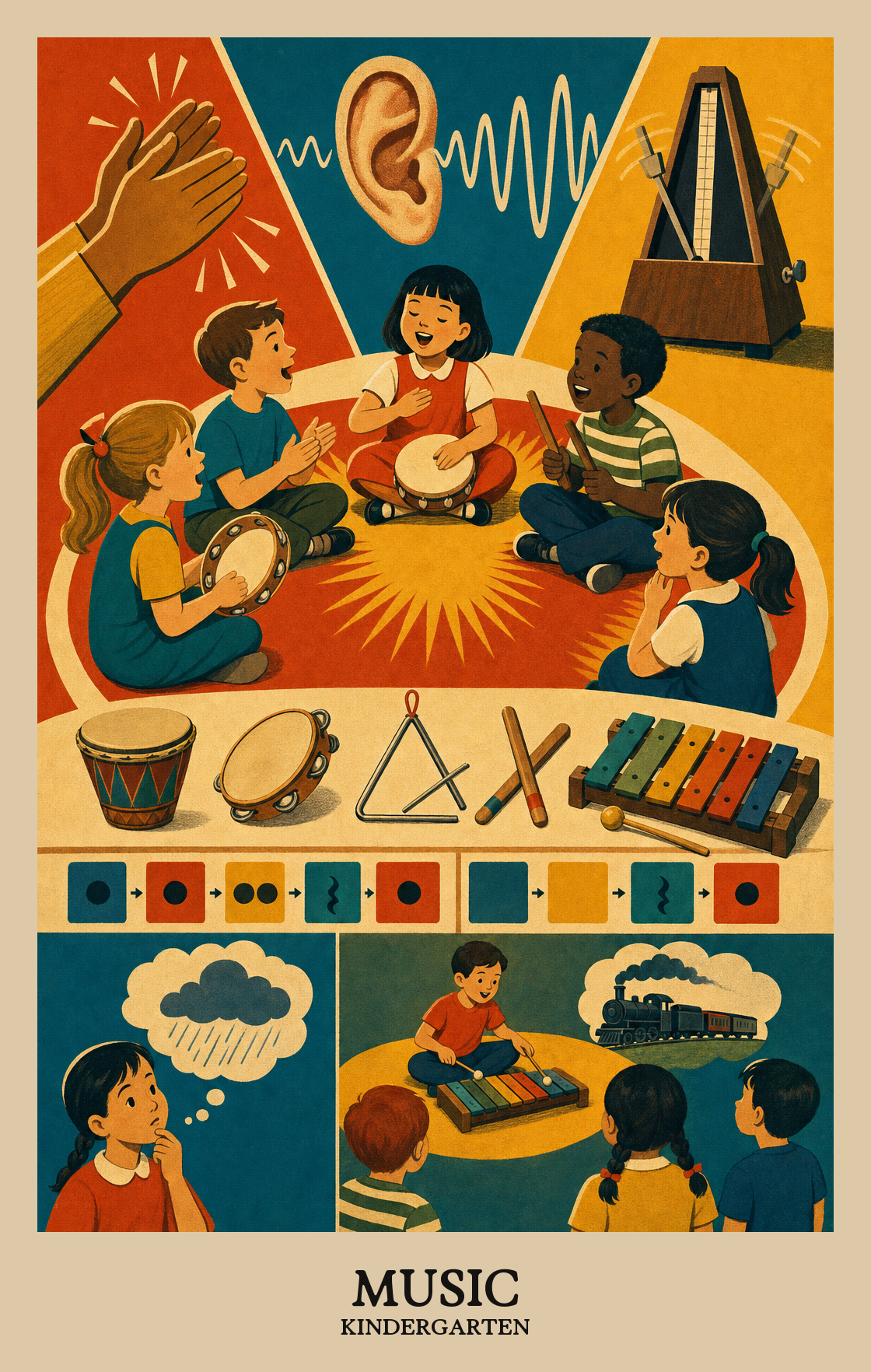
Students start the year discovering how their voices and bodies can make music. They sing simple songs, clap to a steady beat, and try out classroom instruments to hear how each one sounds different.
Students begin inventing their own short musical ideas. They pick sounds, try out patterns, and decide which ones they like best, with a teacher helping them shape their choices.
Students learn what it takes to share music with others. They practice a song or pattern, work on getting better each time, and think about what they want listeners to feel.
Students listen to different kinds of music and talk about what they hear. They notice if music is fast or slow, loud or soft, and connect songs to places, holidays, and family traditions.
Students connect what they already know and feel to the music they make or hear. Their own experiences shape how they create and respond.
Songs and music come from real places and real people. Students begin to notice that the music they hear and sing connects to where people live, what they celebrate, and how they share stories.
| Standard | Definition | Code |
|---|---|---|
| Synthesize and relate knowledge and personal experiences to make art | Students connect what they already know and feel to the music they make or hear. Their own experiences shape how they create and respond. | MU:Cn10.k |
| Relate artistic ideas and works with societal, cultural | Songs and music come from real places and real people. Students begin to notice that the music they hear and sing connects to where people live, what they celebrate, and how they share stories. | MU:Cn11.k |
Students explore sounds, rhythms, and musical ideas through play. They hum, clap, or tap out patterns to start turning a simple idea into a song.
Students arrange sounds and musical ideas into a short piece, making choices about what to keep, change, or leave out.
Students revisit a simple song or rhythm they made and make small changes to improve it before sharing it with the class.
| Standard | Definition | Code |
|---|---|---|
| Generate and conceptualize artistic ideas and work | Students explore sounds, rhythms, and musical ideas through play. They hum, clap, or tap out patterns to start turning a simple idea into a song. | MU:Cr1.k |
| Organize and develop artistic ideas and work | Students arrange sounds and musical ideas into a short piece, making choices about what to keep, change, or leave out. | MU:Cr2.k |
| Refine and complete artistic work | Students revisit a simple song or rhythm they made and make small changes to improve it before sharing it with the class. | MU:Cr3.k |
Students choose a song or piece of music to perform and start to explain why they picked it.
Students practice a song or rhythm until it sounds the way they want it to sound. They learn that rehearsing and fixing small mistakes is part of getting ready to perform.
Students share a song or rhythm they have practiced, performing it for others so the music means something to the listeners.
| Standard | Definition | Code |
|---|---|---|
| Analyze, interpret, and select artistic work for presentation | Students choose a song or piece of music to perform and start to explain why they picked it. | MU:Pr4.k |
| Develop and refine artistic techniques and work for presentation | Students practice a song or rhythm until it sounds the way they want it to sound. They learn that rehearsing and fixing small mistakes is part of getting ready to perform. | MU:Pr5.k |
| Convey meaning through the presentation of artistic work | Students share a song or rhythm they have practiced, performing it for others so the music means something to the listeners. | MU:Pr6.k |
Students listen to a short piece of music and share what they notice, like whether it's loud or soft, fast or slow.
Students listen to a short piece of music and share what they think it feels like or what it makes them picture.
Students listen to a short piece of music and say what they liked or what felt interesting, giving a reason for their answer.
| Standard | Definition | Code |
|---|---|---|
| Perceive and analyze artistic work | Students listen to a short piece of music and share what they notice, like whether it's loud or soft, fast or slow. | MU:Re7.k |
| Interpret intent and meaning in artistic work | Students listen to a short piece of music and share what they think it feels like or what it makes them picture. | MU:Re8.k |
| Apply criteria to evaluate artistic work | Students listen to a short piece of music and say what they liked or what felt interesting, giving a reason for their answer. | MU:Re9.k |
Students sing simple songs, clap and tap steady beats, play small instruments like shakers and drums, and move to music. They also start to notice differences between loud and soft, fast and slow, and high and low sounds.
Sing together in the car, clap along to favorite songs, and let students bang on pots or shake a jar of beans to a beat. Five minutes of music play counts. Asking what a song makes students feel also builds the listening skills used in class.
No. The focus is on trying things, not performing perfectly. Students who sing off-key, miss the beat, or feel shy are exactly where they should be in their first year of music.
Start with steady beat, call-and-response singing, and simple movement. Add high and low, loud and soft, and fast and slow over the fall. Save short performance pieces and basic peer feedback for spring, once routines are solid.
Keeping a steady beat without rushing is the biggest one. Matching pitch when singing is the other. Plan to revisit both all year through games, echo songs, and movement, not as isolated drills.
Students can keep a steady beat, sing a short song with the group, pick an instrument or movement that fits a song, and say something simple about what they heard or liked. They can also share a small idea, like a sound effect for a story.
Students might move their bodies to show a sleepy song, pick a soft shaker for a quiet part, or draw a picture of what a song reminded them of. These small choices are how the year connects feeling, listening, and making music.
Students should join in singing and movement without much prompting, keep a steady beat most of the time, and tell something they noticed about a song. Comfort taking small musical risks in front of classmates matters more than polish.