Moving with control
Students sharpen the basics of running, jumping, skipping, and dodging in games and warm-ups. The focus is steady balance and smooth movement, not speed.
This is the year movement starts to feel like training instead of play. Students combine running, jumping, throwing, and catching into real game situations, and they learn why warm-ups, heart rate, and rest matter. They practice cooperating with teammates, settling disagreements, and including classmates who are still learning a skill. By spring, students can lead a short warm-up and explain one fitness habit they want to keep.
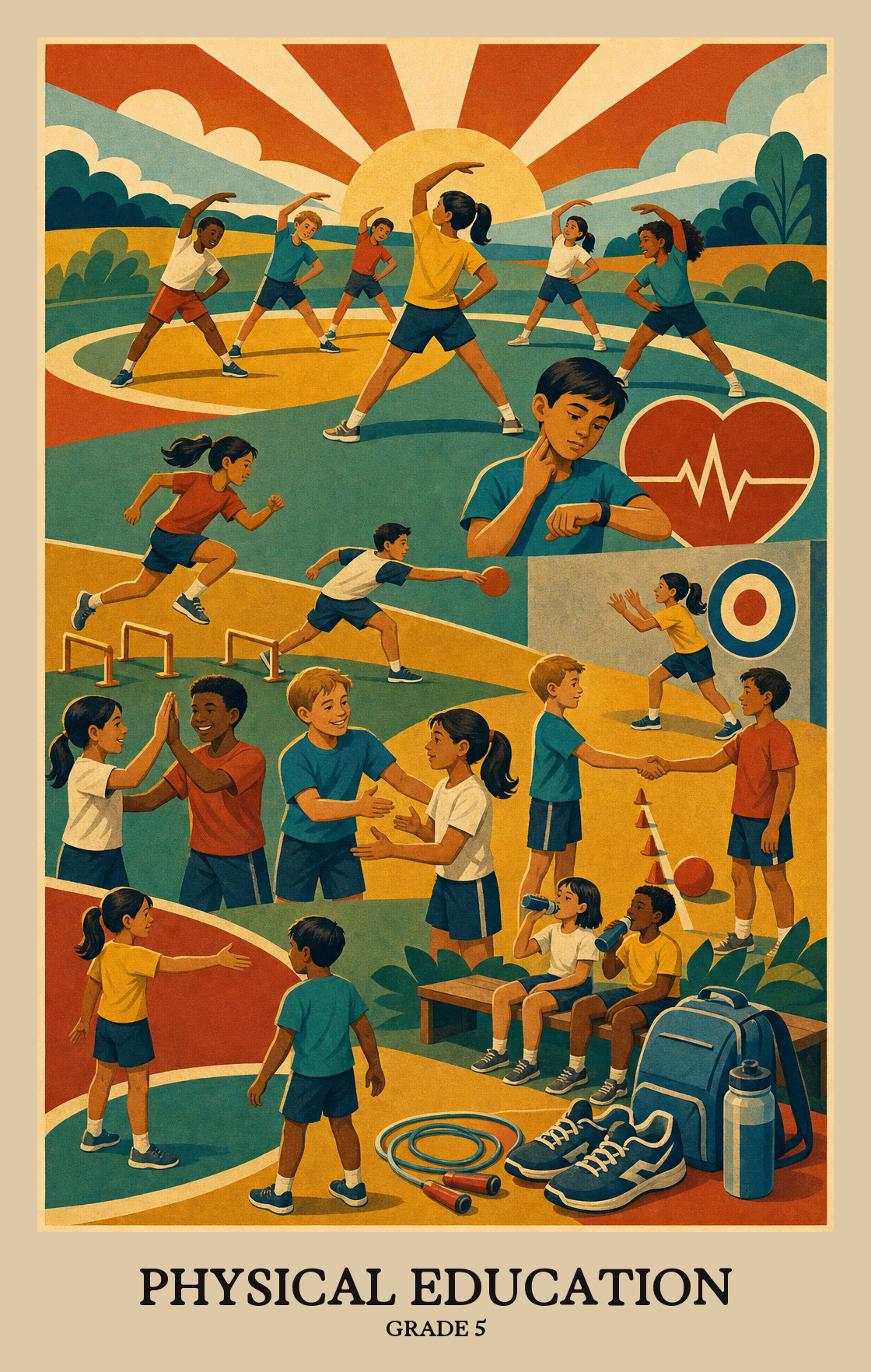
Students sharpen the basics of running, jumping, skipping, and dodging in games and warm-ups. The focus is steady balance and smooth movement, not speed.
Students practice handling balls, paddles, and other equipment in small games. Parents may notice better aim, softer catches, and more confidence in pickup sports at home.
Students learn what makes the heart and muscles stronger and how to pace themselves during activity. They start to notice the link between effort, breathing, and feeling fit.
Students play in small teams where cooperation, clear communication, and respect for teammates and opponents matter as much as the score. Expect fewer arguments and more problem-solving on the field.
Students reflect on which activities they enjoy and set small personal goals for staying active outside of class. The goal is for movement to feel like a choice, not a chore.
Students practice moving in different ways, like running, balancing, throwing, and catching. Building these skills gives them the foundation to stay active in sports, games, and everyday movement.
Students use what they know about how the body moves and stays fit to make smarter choices during exercise and games. That means adjusting effort, form, or pacing based on what the activity actually demands.
Students practice working with others during physical activity, taking turns, following rules, and handling wins and losses with respect. The focus is on how students treat teammates and opponents, not just how well they move.
Students practice setting personal fitness goals and explain why staying active matters to them. The focus is on building habits that keep them healthy now and as they grow up.
| Standard | Definition | Code |
|---|---|---|
| Develop a variety of motor skills, including locomotor, non-locomotor | Students practice moving in different ways, like running, balancing, throwing, and catching. Building these skills gives them the foundation to stay active in sports, games, and everyday movement. | CT-PE.1.5 |
| Apply knowledge related to movement, performance | Students use what they know about how the body moves and stays fit to make smarter choices during exercise and games. That means adjusting effort, form, or pacing based on what the activity actually demands. | CT-PE.2.5 |
| Develop social skills through movement, including respect for self and others… | Students practice working with others during physical activity, taking turns, following rules, and handling wins and losses with respect. The focus is on how students treat teammates and opponents, not just how well they move. | CT-PE.3.5 |
| Develop personal skills, identify personal benefits of movement | Students practice setting personal fitness goals and explain why staying active matters to them. The focus is on building habits that keep them healthy now and as they grow up. | CT-PE.4.5 |
Students build on running, jumping, throwing, catching, kicking, and striking, and they start combining those skills in real games and activities. They also learn about fitness, fair play, and why staying active matters. By spring, students should be able to keep a game going with a small group and explain what their body is doing.
Aim for about 60 minutes of movement a day, even if it comes in short bursts. Play catch in the yard, go for a bike ride after dinner, or put on music and dance for ten minutes. Activities that involve a partner help students practice the cooperation skills they are working on in class.
Focus on effort and improvement, not winning. Pick activities where students can see progress over a few weeks, like jumping rope, shooting baskets, or biking a little farther each weekend. Confidence in fifth grade often comes from getting better at one thing rather than being good at everything.
Start with locomotor and non-locomotor refreshers in the fall, then move into manipulative skills through small-sided games. Layer in fitness concepts and self-assessment as students build stamina. Save full team games for later in the year, once students can cooperate and apply skills under pressure.
Striking with an implement, overhand throwing for accuracy, and defensive positioning tend to lag. Many students also struggle to apply skills inside a game even when they can perform them in isolation. Plan small-sided games with clear constraints so students get repeated chances to practice the skill in context.
No. Walking, biking, swimming, dancing, and active play all count. The goal at this age is to help students find a few activities they enjoy enough to keep doing, since lifelong habits matter more than any single sport.
Students should perform mature forms of basic skills, apply them in modified games, and explain simple fitness ideas like warm-up, heart rate, and muscle groups. They should also work productively with a partner or small group, including students they did not choose. Personal goal-setting around activity is a strong signal of readiness for middle school.
Use stations and modified rules so students can work at their own level without sitting out. Offer two or three versions of each task, such as a closer target, a softer ball, or a slower pace. This keeps stronger students challenged while giving developing students room to build confidence.
Most grading looks at participation, effort, skill progress, and how a student treats classmates. A child who tries hard and cooperates can do well even if they are still building skill. Ask the teacher what they weight most heavily if a grade seems surprising.