Moving safely with others
Students learn how to share space in the gym without bumping into classmates. They practice listening for signals, following directions, and treating teammates with respect during warm-up games.
This is the year movement skills get sharper and more deliberate. Students practice running, skipping, jumping, throwing, catching, and kicking with better control, and they start to notice how their bodies feel during activity. They learn to take turns, follow rules, and work with a partner without getting frustrated. By spring, students can play a simple group game with classmates, follow the rules, and explain why moving every day is good for them.
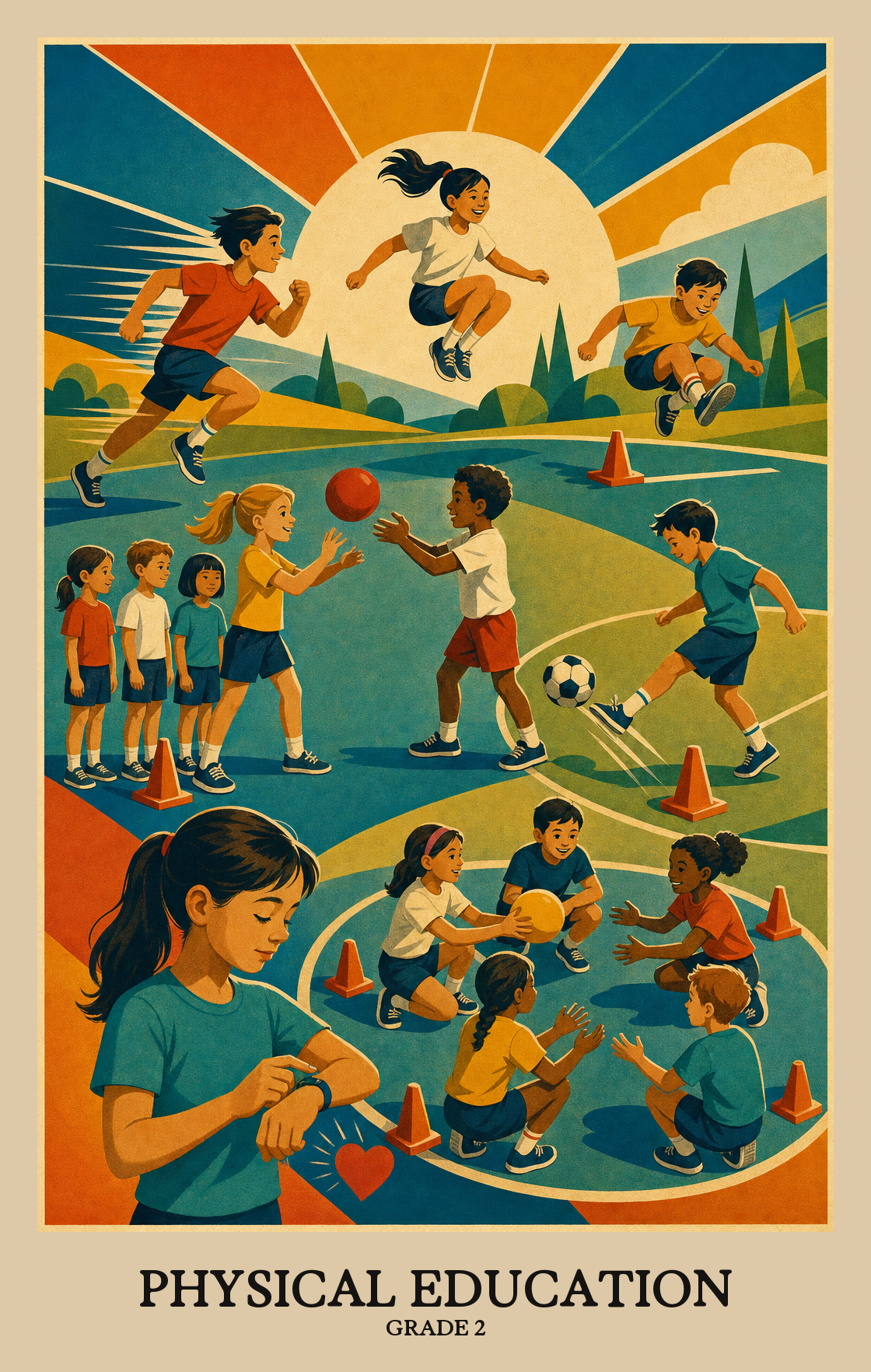
Students learn how to share space in the gym without bumping into classmates. They practice listening for signals, following directions, and treating teammates with respect during warm-up games.
Students sharpen the basic ways the body moves. They run, skip, hop, gallop, and balance on one foot, building the coordination that shows up on the playground and in sports.
Students practice handling balls and other equipment. They work on tossing to a target, catching with two hands, and kicking a rolling ball with more control than last year.
Students notice what a strong heartbeat feels like after running and why stretching matters. They start to connect daily movement with feeling good and staying healthy.
Students put their skills together in simple group games and partner activities. They begin to pick movement they enjoy and see exercise as something to keep doing outside of school.
Students practice moving their bodies in different ways, like running, balancing, throwing, and catching. Building these skills helps them stay active and enjoy physical activities as they grow.
Students connect what they know about how the body moves and stays healthy to make better choices during games, exercise, and active play.
Students practice working with classmates during movement activities, taking turns, listening, and treating others fairly. These habits of cooperation and respect carry into every other part of the school day.
Students learn to notice how moving their body feels good, name a few activities they enjoy, and start building the habit of staying active on their own.
| Standard | Definition | Code |
|---|---|---|
| Develop a variety of motor skills, including locomotor, non-locomotor | Students practice moving their bodies in different ways, like running, balancing, throwing, and catching. Building these skills helps them stay active and enjoy physical activities as they grow. | FL-PE.1.2 |
| Apply knowledge related to movement, performance | Students connect what they know about how the body moves and stays healthy to make better choices during games, exercise, and active play. | FL-PE.2.2 |
| Develop social skills through movement, including respect for self and others… | Students practice working with classmates during movement activities, taking turns, listening, and treating others fairly. These habits of cooperation and respect carry into every other part of the school day. | FL-PE.3.2 |
| Develop personal skills, identify personal benefits of movement | Students learn to notice how moving their body feels good, name a few activities they enjoy, and start building the habit of staying active on their own. | FL-PE.4.2 |
Students practice running, skipping, hopping, jumping, balancing, twisting, throwing, catching, kicking, and bouncing. They learn to do these on their own and with a partner. The goal is steady, controlled movement, not speed or competition.
Give students 30 to 60 minutes of active play most days. Toss a ball back and forth, jump rope, ride a bike, or play tag at the park. Short, frequent bursts of movement matter more than any single workout.
Skills at this age come from practice, not talent. Pick one small skill, like catching a soft ball or balancing on one foot, and work on it for five minutes a few times a week. Praise the effort and the small wins.
Start with locomotor skills like running, skipping, and hopping while reviewing space awareness and safety rules. Move into non-locomotor balances and twists, then build manipulative skills like throwing, catching, and kicking. Layer in fitness concepts and cooperative games as control improves.
Catching a tossed ball, skipping with a smooth pattern, and underhand throwing to a target are the most common sticking points. Plan short skill stations that revisit these every few weeks rather than teaching them once and moving on.
Students learn to share equipment, take turns, follow safety rules, and encourage classmates. Partner and small-group activities give them daily practice with cooperation and kind words. Clear routines for lining up and gathering equipment make this easier.
Students should notice when their heart beats faster, when they are breathing harder, and when their muscles feel tired. They start to connect active play with feeling strong and healthy. Deep fitness vocabulary can wait for later grades.
By spring, students should run, skip, hop, and gallop with control, balance on one foot for several seconds, and throw, catch, and kick a ball with a partner. They should also follow safety rules and work with a partner without constant reminders.