Exploring sound and song
Students start the year by listening to music and trying out their voices, hands, and simple instruments. They notice loud and quiet, fast and slow, and join in on familiar songs.
This is the year music becomes something students make, not just hear. Students sing simple songs, tap along to a steady beat, and make up their own short tunes and movements. They start to notice how a song makes them feel and share what they like about it. By spring, they can perform a familiar song for the class and explain why a piece of music sounds happy or sad.
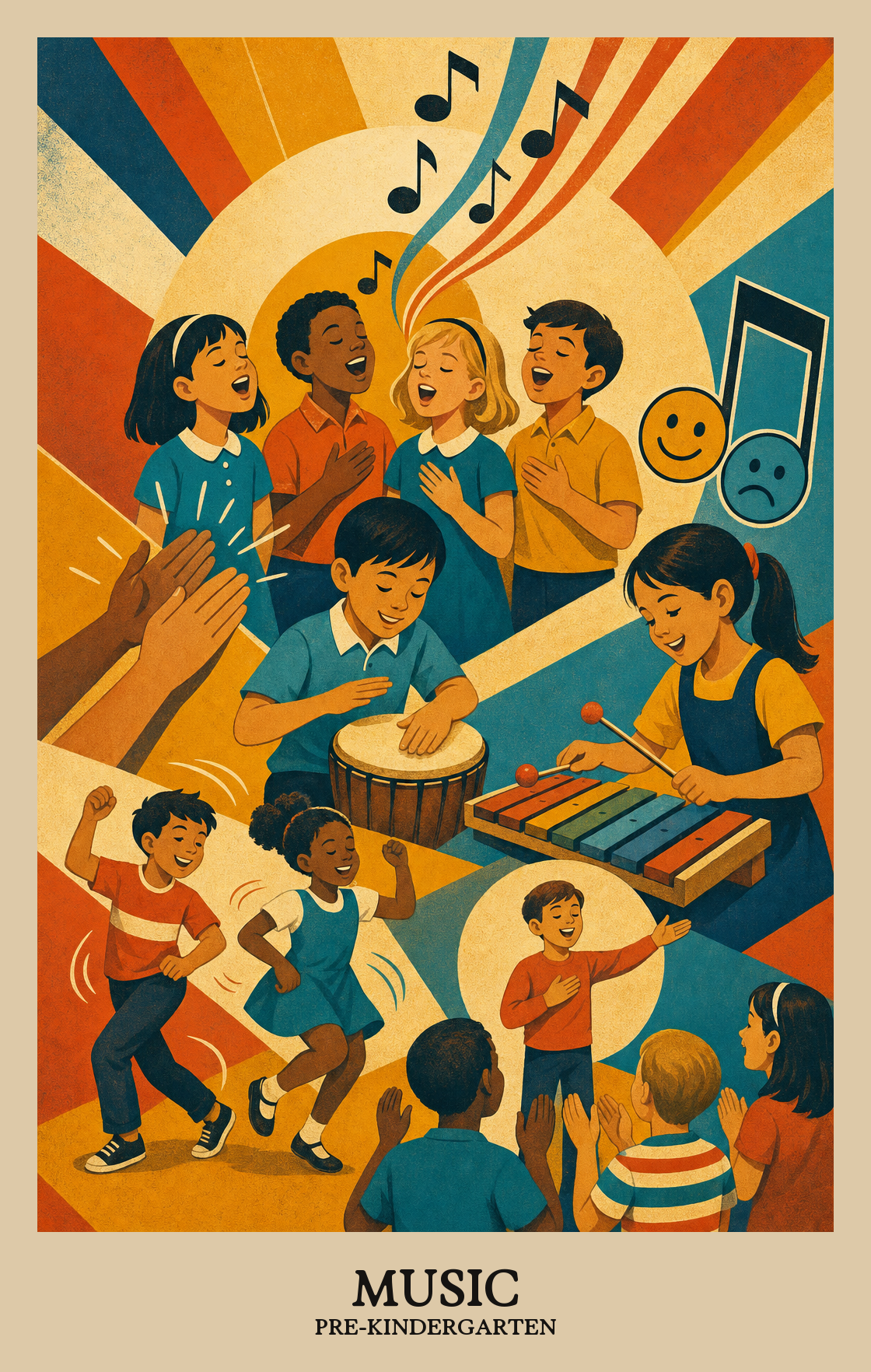
Students start the year by listening to music and trying out their voices, hands, and simple instruments. They notice loud and quiet, fast and slow, and join in on familiar songs.
Students invent their own short songs, claps, and rhythms. They tap out a steady beat, match movements to music, and try new sounds to go with stories or feelings.
Students practice a song or rhythm and perform it for classmates or family. They learn to start together, listen to the group, and show what a song is about through their voice or movement.
Students listen to different kinds of music and talk about what they hear and feel. They connect songs to holidays, family traditions, and stories from books, and say what they liked about a piece.
Students connect what they already know and what they've felt to the music they make and respond to. A favorite song, a memory, or a feeling can shape how they play, move, or listen.
Songs and music come from real places, times, and communities. Students begin noticing how the music they hear connects to people's lives and where they come from.
| Standard | Definition | Code |
|---|---|---|
| Synthesize and relate knowledge and personal experiences to make art | Students connect what they already know and what they've felt to the music they make and respond to. A favorite song, a memory, or a feeling can shape how they play, move, or listen. | MU:Cn10.pk |
| Relate artistic ideas and works with societal, cultural | Songs and music come from real places, times, and communities. Students begin noticing how the music they hear connects to people's lives and where they come from. | MU:Cn11.pk |
Students explore sounds by experimenting with their voices, hands, or simple instruments. They come up with their own musical ideas through play.
Students arrange sounds or songs into a simple pattern or sequence, making musical choices like when to be loud or soft and when to start or stop.
Students pick a song, rhythm, or sound they made and practice it until it feels just right. This is an early form of revising creative work.
| Standard | Definition | Code |
|---|---|---|
| Generate and conceptualize artistic ideas and work | Students explore sounds by experimenting with their voices, hands, or simple instruments. They come up with their own musical ideas through play. | MU:Cr1.pk |
| Organize and develop artistic ideas and work | Students arrange sounds or songs into a simple pattern or sequence, making musical choices like when to be loud or soft and when to start or stop. | MU:Cr2.pk |
| Refine and complete artistic work | Students pick a song, rhythm, or sound they made and practice it until it feels just right. This is an early form of revising creative work. | MU:Cr3.pk |
Students choose a song or musical piece to perform and start to think about how they want to present it to others.
Students practice a song or movement until they can perform it for others. Getting it ready to share is part of the work.
Singing a song or tapping a rhythm for others is how students share what music means to them. They practice performing so the feeling behind the music comes through.
| Standard | Definition | Code |
|---|---|---|
| Analyze, interpret, and select artistic work for presentation | Students choose a song or musical piece to perform and start to think about how they want to present it to others. | MU:Pr4.pk |
| Develop and refine artistic techniques and work for presentation | Students practice a song or movement until they can perform it for others. Getting it ready to share is part of the work. | MU:Pr5.pk |
| Convey meaning through the presentation of artistic work | Singing a song or tapping a rhythm for others is how students share what music means to them. They practice performing so the feeling behind the music comes through. | MU:Pr6.pk |
Students listen to a short song or sound and talk about what they notice, like whether it feels fast or slow, loud or quiet.
Students listen to a short song or piece of music and share what they think it feels like or what it might be about. There are no wrong answers.
Students listen to music and say what they like or don't like about it, giving a simple reason why.
| Standard | Definition | Code |
|---|---|---|
| Perceive and analyze artistic work | Students listen to a short song or sound and talk about what they notice, like whether it feels fast or slow, loud or quiet. | MU:Re7.pk |
| Interpret intent and meaning in artistic work | Students listen to a short song or piece of music and share what they think it feels like or what it might be about. There are no wrong answers. | MU:Re8.pk |
| Apply criteria to evaluate artistic work | Students listen to music and say what they like or don't like about it, giving a simple reason why. | MU:Re9.pk |
Students sing simple songs, clap and tap to a beat, move to music, and play easy instruments like shakers and drums. They also listen to different kinds of music and start to notice things like fast and slow, loud and soft. Most of it happens through play.
Sing in the car, clap along to a favorite song, or bang on pots while cooking. Five minutes counts. The point is for students to hear music, move to it, and try making their own sounds without worrying about doing it right.
No. At this stage students are building their ears and their bodies, not reading notation. Knowing the difference between high and low, fast and slow, or loud and quiet matters more than naming notes on a page.
Plan a steady mix of singing, moving, listening, and playing simple instruments. Start with steady beat and call-and-response songs, then layer in fast or slow, loud or soft, and short rhythm patterns. End the year with students making up their own short songs and sound stories.
By spring, students can keep a steady beat with a song, sing a short tune back, and use words like fast, slow, loud, and quiet to talk about music. They can also share what a song reminds them of or how it makes them feel.
Give them safe ways to make sound and then ask what they made. A student might tap out a rain song on a drum, hum a tune for a stuffed animal, or pick a shaker because it sounds like leaves. Naming the choice is the creative work.
Steady beat is the big one. Many students rush or drift when they clap or play along, so come back to it often with walking, marching, and patting songs. Loud and quiet control on instruments also takes repeated practice.
Ask simple questions after a song: Was it fast or slow? How did it make you feel? What did it remind you of? Short, curious questions help students connect music to their own life without turning it into a quiz.