Fitness baseline and goal setting
Students start the year by checking where they are with strength, endurance, and flexibility. They set personal fitness goals and learn how to track progress over the months ahead.
This is the year fitness becomes a personal habit, not just a class students show up for. Students sharpen the skills they use in sports and everyday movement, and they start planning workouts using ideas like heart rate, strength, and flexibility. They also practice leading, cooperating, and handling setbacks during games. By spring, students can describe a routine they would actually stick with after high school.
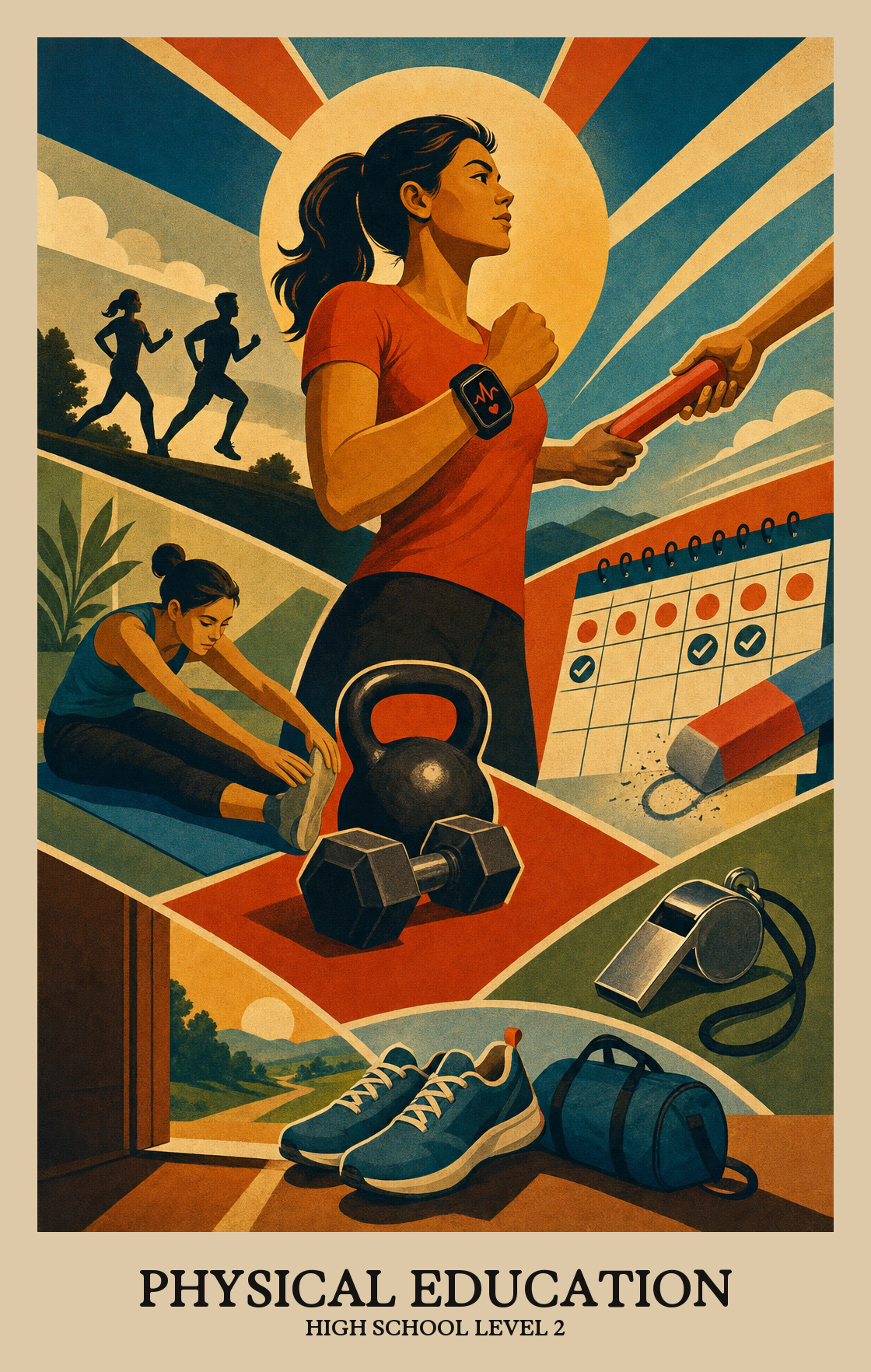
Students start the year by checking where they are with strength, endurance, and flexibility. They set personal fitness goals and learn how to track progress over the months ahead.
Students sharpen the movements behind common sports, like throwing, catching, dribbling, and footwork. They practice in games and drills that build both individual technique and teamwork.
Students learn how the body responds to exercise and how to design a workout that actually works. They connect daily choices around sleep, food, and stress to how they feel and perform.
Students try activities they could keep doing as adults, from hiking and yoga to weight training and recreational sports. They reflect on what they enjoy and build a plan for staying active after high school.
Students practice a range of movement skills, from running and jumping to throwing and catching, to build the physical confidence needed to stay active beyond school.
Students use what they know about how the body moves and stays fit to make smarter choices during physical activity. That means adjusting effort, form, or pacing based on what the activity actually demands.
Students practice working with others during physical activity: listening, taking turns, and handling wins and losses with respect. The focus is on how students treat teammates and opponents, not just how well they play.
Students reflect on why staying active matters to them personally and build habits around physical activities they actually enjoy. The goal is a routine they can keep up long after graduation.
| Standard | Definition | Code |
|---|---|---|
| Develop a variety of motor skills, including locomotor, non-locomotor High School Level 2 | Students practice a range of movement skills, from running and jumping to throwing and catching, to build the physical confidence needed to stay active beyond school. | DC-PE.1.hs-level-2 |
| Apply knowledge related to movement, performance High School Level 2 | Students use what they know about how the body moves and stays fit to make smarter choices during physical activity. That means adjusting effort, form, or pacing based on what the activity actually demands. | DC-PE.2.hs-level-2 |
| Develop social skills through movement, including respect for self and others… High School Level 2 | Students practice working with others during physical activity: listening, taking turns, and handling wins and losses with respect. The focus is on how students treat teammates and opponents, not just how well they play. | DC-PE.3.hs-level-2 |
| Develop personal skills, identify personal benefits of movement High School Level 2 | Students reflect on why staying active matters to them personally and build habits around physical activities they actually enjoy. The goal is a routine they can keep up long after graduation. | DC-PE.4.hs-level-2 |
Students move beyond learning basic skills and start applying them in real activities like team sports, fitness routines, dance, or outdoor games. They also learn how exercise affects the body and how to plan their own workouts. Working well with others is a big part of the grade.
Pick one activity together that gets the heart rate up for 20 to 30 minutes most days, like a walk after dinner, a bike ride, or shooting baskets in the driveway. The goal is building a habit, not training for a sport. Let the student pick what they enjoy.
No. Grades focus on effort, fitness improvement, cooperation, and understanding how the body works, not athletic talent. A student who shows up, tries hard, and treats classmates well can do very well even if they have never played the sport before.
Start with a fitness baseline so students can track their own progress, then rotate through team activities, individual or lifetime activities, and a fitness or wellness planning unit. Revisit fitness testing midyear and at the end so students see growth and connect effort to results.
Pacing during cardiovascular work and proper form during strength activities are the most common gaps. Students also tend to need reminders on respectful communication during competitive games. Build short check-ins on these into each unit rather than saving them for one lesson.
Students can move competently in several different activities, explain how a workout improves strength or endurance, and design a simple weekly fitness plan they would actually follow. They cooperate during team play and handle disagreements without help from the teacher.
Ask what part bothers them, since the issue is often one activity, locker room stress, or feeling watched, not exercise itself. Help them find a physical activity they enjoy outside of school, like hiking, biking, or a dance class. Confidence built outside of class usually shows up in class.
Look for a student who can keep up with moderate activity without quitting, knows the basics of warming up and cooling down, and can talk about why exercise matters for their health. They should also be able to work on a team without major conflict.