Health knowledge and personal habits
Students build a working understanding of how the body, mind, and daily choices connect. They look at sleep, food, movement, and stress, and try out small habits that protect health day to day.
This is the year health class shifts from learning the rules to running their own life. Students take what they know about bodies, relationships, and mental health and use it to make real decisions under pressure. They learn to spot what shapes their choices, from friends to social media to stress, and how to push back when something feels off. By spring, students can talk through a tough situation, find trustworthy help, and set a personal goal they actually follow through on.
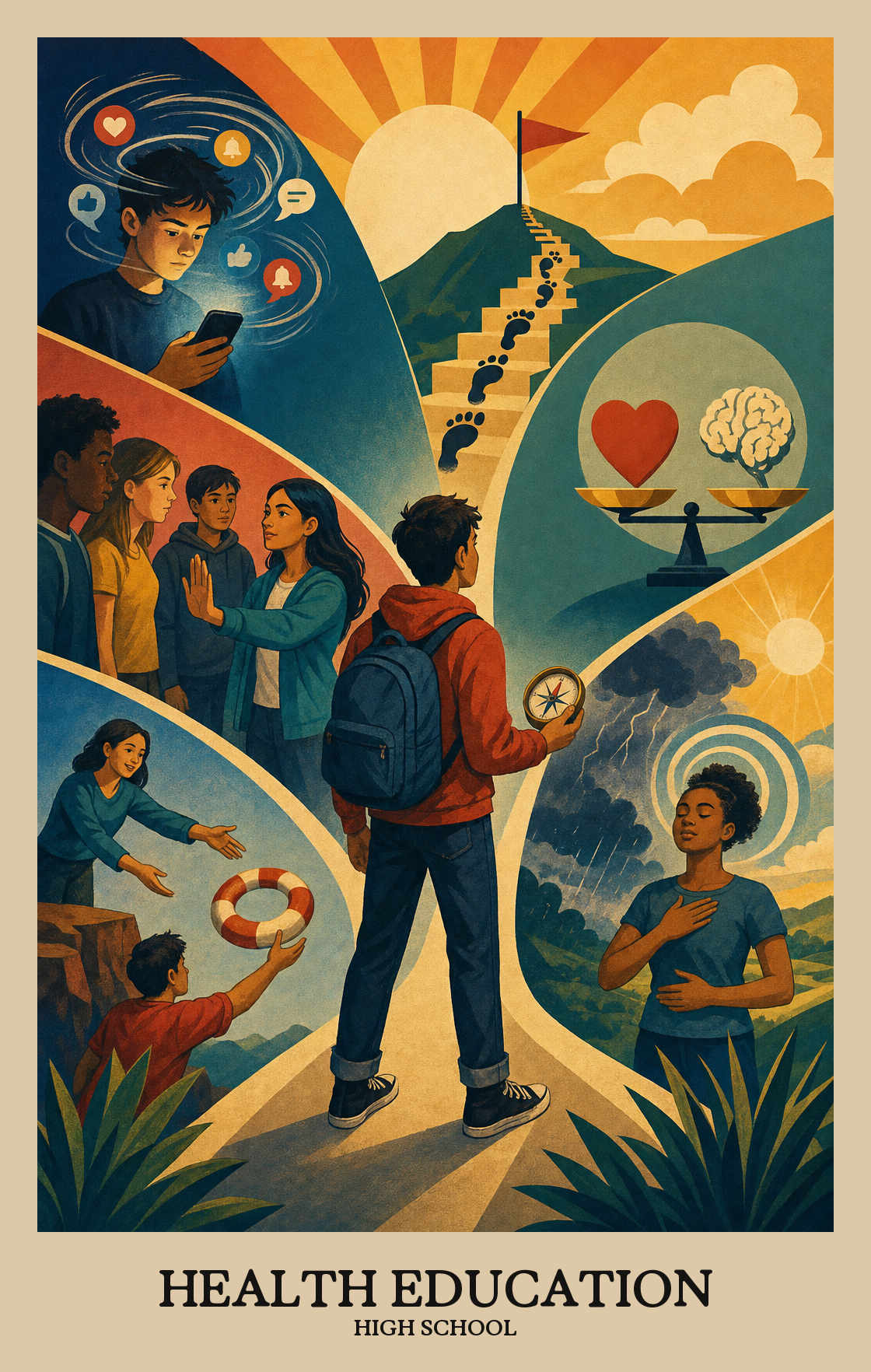
Students build a working understanding of how the body, mind, and daily choices connect. They look at sleep, food, movement, and stress, and try out small habits that protect health day to day.
Students notice what shapes their decisions, from friends and family to social media, advertising, and culture. They start to tell the difference between pressure and personal values.
Students learn where to go for real answers about health, including doctors, clinics, hotlines, and reliable websites. They practice telling solid sources from sketchy ones before acting on what they read.
Students practice the actual words for tough conversations, including saying no, setting limits, asking for help, and resolving a fight without it getting worse. They work on listening as well as speaking.
Students walk through a step-by-step way to make a decision when the stakes are real, then set a personal health goal and track progress. They learn to adjust the plan when life gets in the way.
Students take what they have learned and use it to support someone else or push for change in their school or community. They practice making a clear case for a healthier choice or policy.
Students apply what they know about health to make real decisions, like how to handle stress, recognize warning signs of illness, or help a friend get support.
Students identify what shapes their health choices, from family habits and social media to stress and peer pressure, then think through how those forces actually change the decisions they make.
Students learn to find trustworthy sources of health information, like medical websites or local clinics, and use them to make informed decisions for themselves and the people around them.
Students practice the conversations that affect real health decisions: asking for help, setting limits with a partner, or checking in on a friend who seems off. The goal is saying the hard thing clearly and knowing when to listen.
Students work through a step-by-step decision-making process to choose actions that protect their own health and the health of people around them.
Students pick a health goal, break it into steps, and follow a plan to reach it. The same process works for helping a friend or family member improve their health too.
Students practice specific habits, like sleep routines, stress relief, or helping a friend find support, that protect their own health and the health of people around them.
Students create or share a message (a poster, a speech, a social media post) that encourages others to make healthier choices. The goal is real action, not just awareness.
| Standard | Definition | Code |
|---|---|---|
| Use functional knowledge of health concepts to support health and well-being of… High School | Students apply what they know about health to make real decisions, like how to handle stress, recognize warning signs of illness, or help a friend get support. | DC-HE.1.9-12 |
| Analyze influences that affect health and well-being of self and others High School | Students identify what shapes their health choices, from family habits and social media to stress and peer pressure, then think through how those forces actually change the decisions they make. | DC-HE.2.9-12 |
| Access valid and reliable resources to support health and well-being of self… High School | Students learn to find trustworthy sources of health information, like medical websites or local clinics, and use them to make informed decisions for themselves and the people around them. | DC-HE.3.9-12 |
| Use interpersonal communication skills to support health and well-being of self… High School | Students practice the conversations that affect real health decisions: asking for help, setting limits with a partner, or checking in on a friend who seems off. The goal is saying the hard thing clearly and knowing when to listen. | DC-HE.4.9-12 |
| Use a decision-making process to support health and well-being of self and… High School | Students work through a step-by-step decision-making process to choose actions that protect their own health and the health of people around them. | DC-HE.5.9-12 |
| Use a goal-setting process to support health and well-being of self and others High School | Students pick a health goal, break it into steps, and follow a plan to reach it. The same process works for helping a friend or family member improve their health too. | DC-HE.6.9-12 |
| Demonstrate practices and behaviors to support health and well-being of self… High School | Students practice specific habits, like sleep routines, stress relief, or helping a friend find support, that protect their own health and the health of people around them. | DC-HE.7.9-12 |
| Advocate to promote health and well-being of self and others High School | Students create or share a message (a poster, a speech, a social media post) that encourages others to make healthier choices. The goal is real action, not just awareness. | DC-HE.8.9-12 |
Students learn how to take care of their bodies and minds as they move toward adulthood. Topics include mental health, nutrition, sleep, relationships, safety, substance use, and sexual health. The focus shifts from learning facts to making real decisions and building habits that stick.
Pick low-pressure moments like car rides or making dinner. Ask open questions about what came up in class and share what shaped your own thinking at that age. Listening matters more than lecturing, and short conversations over time work better than one big talk.
Start with functional knowledge and accessing reliable information so students have a base to work from. Layer in analyzing influences and interpersonal communication in the middle of the year. End with decision-making, goal-setting, and advocacy projects that pull everything together.
Listen for whether they can talk through a tough choice, name where they would go for trustworthy information, and set a small goal and follow through. Ready students can spot pressure from friends or social media and explain how they would respond.
Analyzing influences and accessing valid resources tend to be the hardest. Students can name peer pressure but often miss how ads, algorithms, and family patterns shape their choices. Source evaluation also needs practice, since most students default to the first search result.
Take it seriously and ask what kind of support they want before offering advice. Help them build small routines around sleep, movement, and screen breaks. If stress is getting in the way of school, sleep, or friendships, reach out to a counselor or doctor.
Students can pick a health issue they care about, gather accurate information, and make a clear case to a real audience. The work should target a specific group, such as classmates, family, or a community board, and propose a concrete change.
Some units, especially around sexual health, allow families to review materials and request alternatives. Reach out to the teacher or school early in the year to ask what is covered and when. Knowing the schedule also helps you start conversations at home before class does.
Use scenarios, role-plays, and short written reflections where students apply a skill to a realistic situation. Score the reasoning and the steps, not whether students agree with a particular choice. Goal-setting can be assessed across weeks by tracking the plan, the check-ins, and the revision.